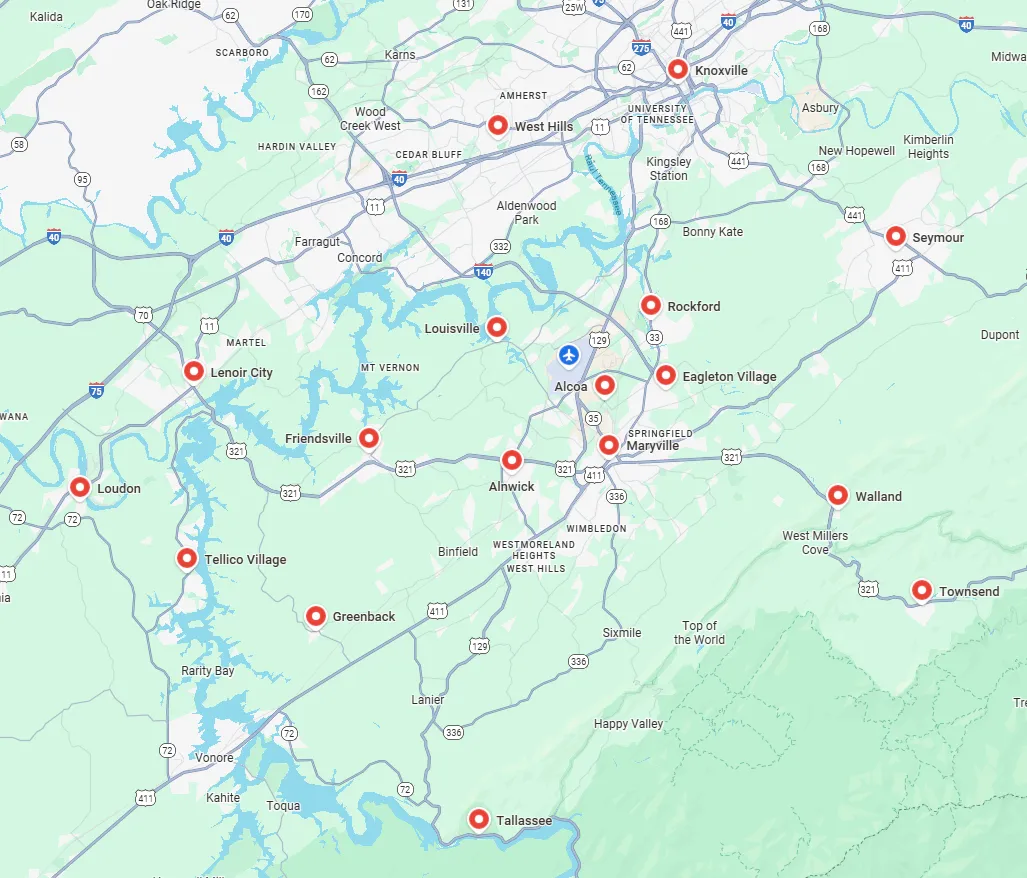


HVAC Replacement in Walland, TN
Replacing an aging or failing HVAC system is one of the most important investments you can make for your Walland, TN home. With humid, warm summers and cool mountain winters, homes in the Walland area truly need equipment that's properly sized and built to control humidity, maintain even temperatures, and run efficiently year-round. At Everest Air Heating and Cooling, we specialize in full system replacement in Walland, TN, helping homeowners like you move from unreliable, inefficient systems to properly matched, high-efficiency heating and cooling equipment that genuinely improves comfort, indoor air quality, and energy costs. You can trust Everest Air Heating and Cooling to guide you through the process.
.avif)
Why consider HVAC replacement for your Walland home
Many Walland homes are older, have unique attic and crawlspace configurations, or sit in valley and mountain microclimates that make heating and cooling loads less predictable. Common pain points that indicate replacement is the right choice include:
- Frequent breakdowns or repeated repairs that add up in cost and downtime.
- Rapidly rising energy bills despite regular maintenance.
- Uneven temperature from room to room, hot or cold spots, and poor humidity control.
- A system older than 12 to 15 years, or equipment that uses phased-out refrigerants.
- Noisy operation or visible rust and corrosion on outdoor units exposed to seasonal humidity and pollen.
- Safety concerns such as cracked heat exchangers in furnaces or persistent carbon monoxide triggers.
If any of these issues match your experience in Walland, TN, a planned HVAC replacement is usually more cost effective and reliable than ongoing repairs. Replacement brings predictable performance and allows you to choose modern equipment matched to your home, not just patched-up components.
Common types of HVAC replacement projects in Walland, TN
- Full split system replacement: Replacing both the outdoor condenser and the indoor air handler or furnace for a like-for-like or upgraded system.
- Heat pump upgrades: Replacing aging air-source heat pumps with modern high-efficiency models or cold-climate heat pumps to better handle the mountain valley winters.
- Furnace replacement: Upgrading older gas or oil furnaces to high-efficiency AFUE-rated models and matching them with modern controls.
- Ductless Mini Split installations: Adding multi-zone or single-zone ductless systems for rooms without ductwork or to supplement an existing system.
- Package unit replacement: Replacing rooftop or packaged units for certain home designs or small commercial properties.
- Ductwork replacement or sealing: Replacing undersized, leaky, or poorly insulated ducts to match the new system and maximize efficiency.
Signs replacement is recommended rather than repair
- System age: Most central air conditioners and heat pumps last 12 to 15 years, furnaces 15 to 20 years. When a system approaches these ages, replacement should be strongly considered.
- Repeated failures: If you have repeat visits in a short span, the hidden cost of those repairs often exceeds planned replacement.
- Poor efficiency: If your system runs constantly to maintain comfort, or you notice persistent humidity problems, a new system sized and configured correctly will perform far better.
- Safety or code issues: Old units that no longer meet code, use banned refrigerants, or have safety risks should be replaced.
- Comfort expectations: If you want quieter operation, smarter controls, or a system that maintains even temperature and humidity, replacement is the best path.
Equipment comparison: efficiency ratings and what they mean
When choosing replacement equipment, efficiency ratings and system type drive operating cost and performance. Understanding the common metrics helps you compare options fairly.
- SEER (Seasonal Energy Efficiency Ratio): Measures air conditioner and heat pump cooling efficiency for cooling season. Higher SEER numbers mean lower cooling energy use. In a humid climate like Walland, higher SEER helps reduce run time and improves dehumidification.
- HSPF (Heating Seasonal Performance Factor): Applies to heat pumps and indicates heating efficiency. A higher HSPF is better for heat pump performance in cold months.
- AFUE (Annual Fuel Utilization Efficiency): Used for gas furnaces. Higher AFUE percentages mean more of the fuel’s energy becomes heat for your home.
- EER (Energy Efficiency Ratio): Useful for steady-state efficiency like peak load operation.
- MERV and IAQ features: Filtration efficiency (MERV ratings), UV germicidal lights, and advanced air cleaners matter for pollen, dust, and seasonal allergens common in Walland.
Typical brand options homeowners consider for replacements include Goodman, Lennox, Trane, Rheem, Carrier, American Standard, and others. Everest Air Heating and Cooling works with these manufacturers and can explain strengths for Walland homes, such as quiet operation models, variable-speed blowers for better humidity control, and cold-climate heat pump options for steadier winter performance.
How we determine the right system for your Walland home
A successful replacement begins with accurate sizing and a full diagnostic review tailored to Walland’s local conditions.
- Load calculation: A Manual J load calculation examines insulation levels, window types, orientation, local climate, and occupancy to determine correct system capacity. Oversized equipment can short cycle and fail to control humidity; undersized equipment will run constantly.
- Duct assessment: Inspect ductwork condition, leakage, trunk sizes, insulation, and return pathways in crawlspaces and attics common to Walland homes.
- Airflow and ventilation review: Check existing registers, return locations, and ventilation needs for indoor air quality, especially in homes with fireplaces or wood stoves.
- Household priorities: Evaluate noise sensitivity, thermostat preferences, zoning needs, and any plans for future home improvements that affect load.
A replacement quote should be based on this diagnostic work so the new system is properly matched, not just a like-for-like swap.
The HVAC replacement process: what to expect
A professional replacement follows a clear, safety-focused process to minimize disruption and maximize performance.
- Pre-install evaluation and permitting
- Site inspection, load calculations, and final equipment selection.
- Secure required local permits and confirm access for equipment staging. Walland permitting requirements can vary; the installation team will handle code compliance.
- Old system removal
- Safe removal of refrigerant by certified technicians, disconnection of electrical and gas components, and responsible disposal of old equipment and refrigerants.
- Careful removal protects landscaping and reduces dust in the home.
- Ductwork upgrades and sealing
- Replace or seal leaky ducts, adjust sizing, and add insulation where needed. Duct sealing in humid Walland summers reduces energy waste and improves humidity control.
- Equipment installation
- Set outdoor unit pad or platform, mount indoor air handler or replace furnace, connect refrigerant lines, make proper electrical and gas connections, and install new thermostats if included.
- Install vibration isolation and line set insulation for quieter, more efficient operation.
- System charging and commissioning
- Charge refrigerant to manufacturer specifications, verify airflow and static pressure, balance the system, and test safety controls.
- Calibrate thermostats and program control settings for seasonal efficiency and comfort.
- Final walkthrough and homeowner orientation
- Explain system operation, maintenance needs, filter schedule, and warranty paperwork. Provide guidance on operating the system for best humidity control and energy savings.
- Follow up services
- Recommended seasonal maintenance as part of a comfort plan helps protect efficiency and verify warranty compliance.
Most straightforward split-system replacements can be completed within one to two days. Complex projects that include major duct replacements, structural work, or custom equipment may take several days.
Ductwork considerations for Walland homes
Ductwork is often the hidden cause of poor comfort and wasted energy, especially in the older homes and crawlspace configurations typical of Walland and surrounding areas.
- Leak reduction: Leaky ducts can waste 20 to 40 percent of conditioned air. Proper sealing and insulation dramatically improve efficiency and comfort.
- Right sizing: New systems often require different airflow rates. Downsized or upsized ducts, additional return paths, and register adjustments ensure balanced rooms.
- Moisture control: In humid climates, ducts in unconditioned crawlspaces must be insulated and sealed to prevent condensation, mold, and decreased cooling capacity.
- Replacement vs. repair: If ducts are crushed, heavily corroded, or poorly routed, replacement will pay back through improved performance and longevity of the new equipment.
Everest Air Heating and Cooling includes duct evaluations as part of the replacement process and outlines the tradeoffs of repair versus replacement so homeowners in Walland can make informed choices.
Expected costs and what drives price
Every replacement is unique, and several factors influence overall cost:
- System type and efficiency: Higher SEER or AFUE models cost more up-front but save more on operating costs. Variable-speed and two-stage systems cost more but deliver better comfort and humidity control.
- Home size and load: Larger homes require larger equipment and more extensive ductwork.
- Complexity of installation: Converting from one fuel type to another, adding zoning, or running new ductwork increases labor and material costs.
- Ductwork condition: Extensive duct replacement or major sealing work raises the total.
- Additional features: Smart thermostats, enhanced filtration, UV lights, or energy recovery ventilators add to cost but can improve air quality and efficiency.
Rather than presenting a single price, expect a tailored estimate that explains where costs come from and how different equipment choices affect long-term operating expenses. A properly sized, higher-efficiency system often results in lower lifetime cost than repeatedly repairing an undersized or failing unit.
Rebates, tax incentives, and financing guidance
Homeowners replacing HVAC equipment in Walland may be eligible for multiple incentives depending on system choice and timing.
- Manufacturer rebates: Many manufacturers offer rebates on high-efficiency models or heat pumps. These incentives vary by season and model.
- Local utility and TVA programs: Utilities and regional programs occasionally offer rebates for equipment that reduces peak demand or improves efficiency. Walland homeowners should check with local programs for current offers.
- Federal incentives: From time to time, federal tax credits or incentives are available for energy-efficient systems, heat pumps, and qualifying home energy improvements. Availability and eligibility criteria change, so please review current guidance when planning a replacement.
- Financing options: Lenders and manufacturer financing programs can spread the cost over time. Options range from short-term promotional plans to longer-term fixed payment plans. Evaluate total interest and term length against projected energy savings when choosing financing.
A smart replacement strategy combines equipment choice with available incentives to optimize both comfort and long-term cost. Everest Air Heating and Cooling will outline potential rebates and typical financing structures in your estimate so you can compare total ownership cost, not just initial price.
Warranty coverage and what to expect
Warranty details are critical for protecting your investment. Understand the two main warranty types:
- Manufacturer warranty: Covers parts for a set period, often longer on compressors and heat exchangers for higher-end models. These warranties vary by brand and model. Proper registration and regular maintenance are usually required to maintain full coverage.
- Labor warranty: Covers installation workmanship. Labor warranty lengths vary by installer; this covers installation errors, refrigerant leaks from poor brazing, or improper wiring.
Key points to verify in any warranty:
- What components are covered and for how long.
- Whether extended or registered warranties are available for additional years.
- Maintenance requirements to keep warranties valid, such as annual Tune-Ups or filter replacement.
- Transferability if you sell your home.
Everest Air Heating and Cooling includes warranty documentation and explains maintenance actions required to protect manufacturer and labor warranties for Walland homeowners.
How replacement improves comfort and lowers energy bills
A correctly sized and installed replacement system delivers measurable improvements:
- Better humidity control: Properly matched systems with variable-speed compressors and blowers remove more moisture during humid summers in Walland, making indoor air feel cooler at higher thermostat settings.
- More consistent temperatures: Zoning, improved ductwork, and variable-speed equipment eliminate hot and cold spots and reduce short cycling.
- Lower operating costs: Higher SEER, AFUE, and HSPF ratings reduce energy use. Efficient heat pumps and furnaces can substantially lower heating and cooling bills compared to older equipment.
- Quieter operation and improved indoor air quality: Modern units operate more quietly and support higher-efficiency filtration for pollen and particulates common in mountain-adjacent communities.
- Reliability and safety: New equipment reduces the risk of midseason failures and addresses safety issues like cracked furnaces or outdated refrigerants.
The combined effect of these improvements is a more comfortable home with predictable energy costs and fewer emergency repairs.
Maintenance recommendations post-replacement
To protect performance and warranty coverage, adopt a simple maintenance routine:
- Replace or clean filters monthly to every three months depending on filter type and household needs.
- Schedule fall and spring Tune-Ups. Seasonal checkups keep the system operating at peak efficiency and identify emerging issues before they become failures.
- Keep outdoor units clear of debris, leaves, and vegetation to preserve airflow.
- Monitor humidity and indoor comfort and report any persistent issues early so they can be addressed without major expense.
Everest Air Heating and Cooling’s Y.E.T.I Comfort Plan is designed to combine seasonal checkups, priority scheduling, and discounts on service to protect system life and efficiency, which is particularly valuable in Walland’s climate.
Why choose a professional, local replacement in Walland, TN
Replacing an HVAC system is more than swapping hardware. Local knowledge matters:
- Climate awareness: Walland’s combination of heat, humidity, and cooler mountain nights requires systems that balance cooling capacity with dehumidification and efficient winter performance.
- Building knowledge: Local installers understand common home constructions, crawlspace and attic conditions, and the ductwork challenges many Walland homes present.
- Code and permitting: Local installers manage permits and inspections to ensure code compliance and safe operation.
- Aftercare: Local service and maintenance dependability matters most when mountain weather shifts demand reliable heating and cooling.
Everest Air Heating and Cooling brings local experience and a family-owned approach to ensure replacements are done right the first time.
FAQs
Q: How long does a typical HVAC replacement take in Walland, TN?
A: Most split-system replacements with minimal ductwork work can be completed in one to two days. Projects that require extensive duct replacement, structural changes, or permits may take several days.
Q: Will a new system lower my energy bills?
A: Yes. A properly sized and high-efficiency system typically reduces energy usage compared to older equipment. The exact savings depend on your current system age and efficiency, your home envelope, and how you use the system.
Q: Do I need to replace ductwork when replacing the HVAC system?
A: Not always. If ducts are in good condition and properly sized, sealing and minor modifications may be sufficient. If ducts are leaky, undersized, or damaged, replacement or major repairs will significantly improve performance.
Q: What efficiency ratings should I consider for Walland homes?
A: Look for higher SEER for cooling efficiency, high HSPF for heat pump heating, and high AFUE for gas furnaces. Variable-speed equipment and multi-stage compressors improve humidity control and comfort in Walland’s humid summers.
Q: Are there rebates or incentives available for new systems?
A: There are often manufacturer rebates, utility or TVA programs, and periodic federal incentives for qualifying high-efficiency systems. Eligibility and availability vary, so review potential incentives when planning your replacement.
Q: What warranties come with a replacement system?
A: Replacement systems include manufacturer parts warranties and installer labor warranties. Lengths vary by brand and installer, and regular maintenance is usually required to keep warranties valid.
Q: How do I know the right size system for my house?
A: A Manual J load calculation performed by a qualified technician factors in insulation, windows, orientation, and local climate to determine correct sizing. This ensures efficient operation and proper humidity control.
Q: Can I upgrade to a heat pump if I currently have a furnace?
A: Many homes can convert from a furnace to a modern heat pump, especially cold-climate heat pump models that perform well in lower temperatures. The decision depends on fuel availability, ductwork, and homeowner preferences.
Q: What should I expect during the installation day?
A: Expect safe removal of the old system, careful staging of new equipment, duct and electrical work if needed, refrigerant handling, system charging, testing, and an orientation on operation and maintenance.
Q: How often should I schedule maintenance after replacement?
A: Annual spring and fall Tune-Ups are recommended to keep both heating and cooling systems running efficiently and to preserve warranty coverage.
Everest Air Heating and Cooling understands the unique demands of HVAC replacement in Walland, TN and provides local expertise, thorough diagnostics, and clear equipment comparisons so homeowners can make confident, long-term decisions. Properly planned replacements improve comfort, lower operating costs, and deliver reliable performance through Walland’s changing seasons.
hear what our satisfied clients have to say

David P.
Service areas