

HVAC Repair in Walland, TN
When your heating or cooling system breaks down, your comfort and safety in your Walland, TN home quickly become urgent concerns. That's where Everest Air Heating and Cooling comes in. We provide expert HVAC repair in Walland, TN, focused on fast, reliable diagnostics and long-lasting solutions. Serving homes across the foothills of the Great Smoky Mountains, our team truly understands how the region's humid summers and chilly, mountain-adjacent winters impact your HVAC's performance. We explain common problems we diagnose, walk you through the repair process we follow, detail our emergency response and turnaround expectations in Walland, outline our flat-rate service call approach, explain our workmanship guarantees, share real repair examples, and offer clear guidance on when it's best to repair versus replace. With Everest Air Heating and Cooling, you'll know exactly what to expect.
Why HVAC repair matters in Walland
Walland’s climate swings from hot, humid summers to cold snaps in winter. High humidity increases strain on air conditioners and encourages corrosion and condensate problems, while colder months magnify any weaknesses in furnaces and heat pumps. Salt-free mountain air still carries pollen and particulates that can clog filters and coils. Prompt, professional HVAC repair preserves comfort, prevents costly secondary damage (like frozen coils or water damage from clogged condensate drains), and keeps energy use under control.
Common HVAC issues in Walland, TN homes
Homeowners in Walland commonly call for these repairs. Each item below includes typical causes and what a qualified technician inspects.
- Condenser fan motor failure
- Causes: age, bearing wear, debris buildup, electrical faults from storms or rodents.
- Symptoms: outdoor unit not running, loud grinding or humming, intermittent cooling.
- Refrigerant leaks or low charge
- Causes: corrosion at copper joints, vibration fatigue, factory defects in older lines.
- Symptoms: reduced cooling capacity, long run cycles, ice on evaporator coil.
- Compressor problems
- Causes: electrical stress, refrigerant starvation, internal mechanical wear.
- Symptoms: outdoor unit loud on startup, short cycling, tripped breakers.
- Capacitor and contactor failures
- Causes: voltage spikes, wear from repeated cycling, heat exposure.
- Symptoms: unit won’t start, buzzing, intermittent operation.
- Thermostat and control issues
- Causes: faulty sensors, wiring problems, calibration errors, outdated controls.
- Symptoms: system running at wrong times, short cycling, inconsistent temperatures.
- Ignition and gas valve problems (furnaces)
- Causes: dirty burners, failed ignitors, defective gas valves, clogged venting.
- Symptoms: no heat, delayed ignition, odors, frequent lockouts.
- Condensate drain and overflow problems
- Causes: bacterial slime, debris, disconnected piping, clogged traps.
- Symptoms: water leaks, evaporator coil icing, safety switch shutdowns.
- Dirty or damaged coils and filters
- Causes: poor maintenance, pollen and dust, high humidity causing residue.
- Symptoms: reduced airflow, higher energy consumption, freeze-ups.
- Duct issues and restricted airflow
- Causes: collapsed trunks, disconnected joints, animal intrusion, insulation problems.
- Symptoms: uneven temperatures, high humidity, high system pressures.
How Everest Air approaches diagnostics and repair
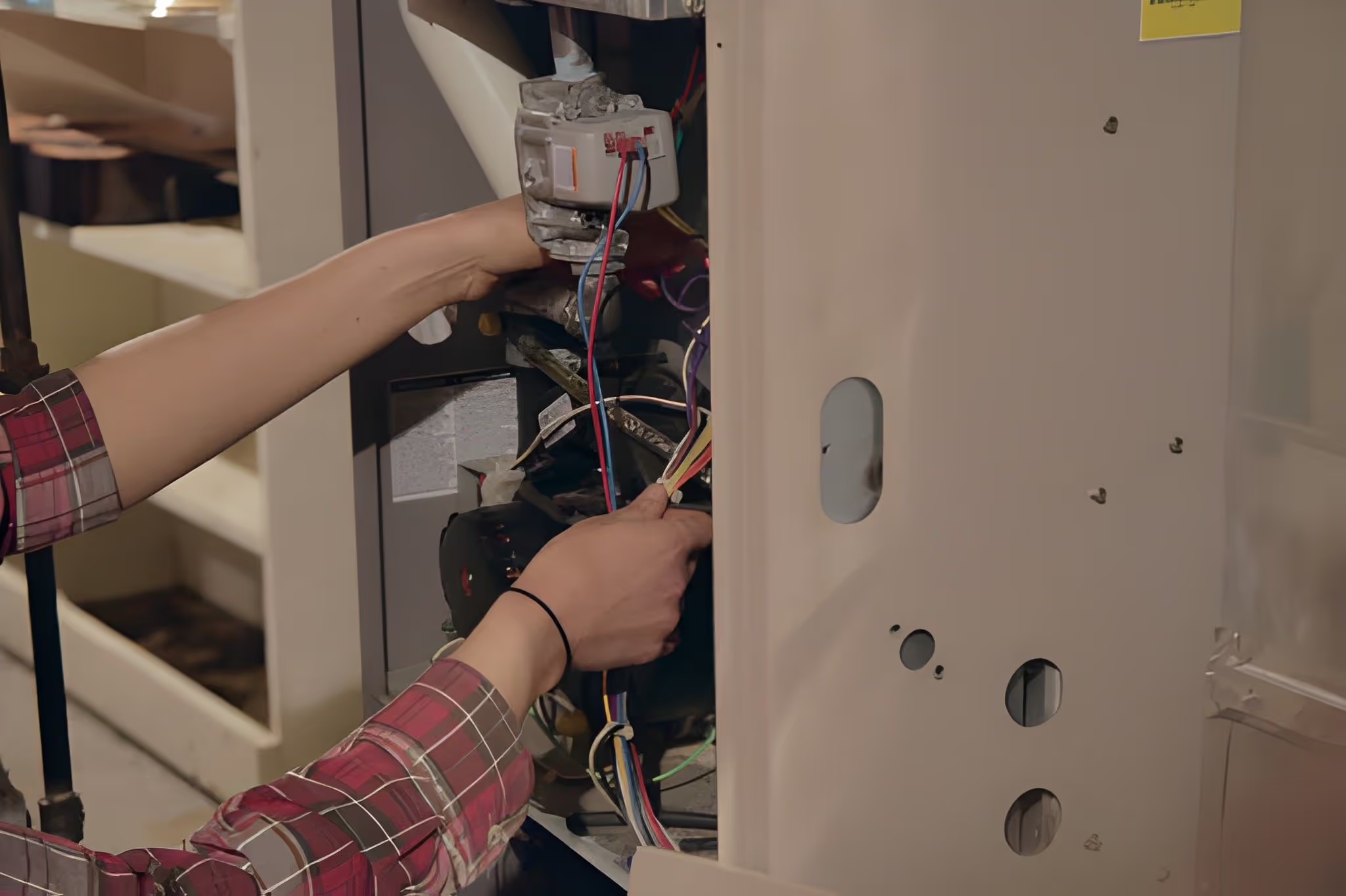
A methodical diagnostic process shortens repair time and leads to durable fixes. Everest Air Heating and Cooling follows a consistent approach on every service call in Walland, TN.
- Visual inspection first
- We assess the outdoor unit, electrical panels, thermostat, and visible ductwork for obvious damage, rodent holes, rust, or disconnected lines.
- System start-up and operational testing
- We run the system through a full cycle while monitoring voltages, currents, temperatures, refrigerant pressures, and airflow.
- Targeted component testing
- Capacitors, contactors, fan motors, compressors, ignitors, and thermostats are tested with specialized meters.
- Leak detection and refrigerant verification
- If pressures are low, we use electronic leak detectors, UV dye inspection (if previously applied), and pressure decay testing to locate leaks.
- Safety and secondary checks
- We confirm condensate drain integrity, confirm proper venting for combustion appliances, and verify safety switch function.
- Clear findings and repair options
- After diagnosis, technicians outline the root cause, explain repair options, and describe what to expect during the fix and after service.
Common repairs explained in plain language
Below are the most frequent repairs Walland homeowners need, explained in accessible terms so you understand both the problem and the expected outcome.
- Condenser fan motor replacement
- Why it fails: fan motors run outdoors in heat and humidity and eventually wear out. Debris or bent blades can accelerate failure.
- Repair: replace the motor and capacitor if needed, balance blades, clean the fan shroud and coil area, test amp draw and rotation under load.
- Result: quiet, reliable outdoor airflow that restores proper refrigerant heat exchange.
- Refrigerant leak location and repair
- Why it matters: low refrigerant reduces cooling and can damage the compressor if run dry.
- Repair: locate leak with electronic detection and visual inspection; repair or replace damaged line set or coils; evacuate system, vacuum down, perform pressure and vacuum tests, then recharge to specification and monitor for stable pressures.
- Result: restored system capacity, improved efficiency, and reduced risk of future compressor damage.
- Compressor troubleshooting and replacement
- Why it fails: compressors endure high pressures and electrical stress. Short-cycling and low charge often lead to premature failure.
- Repair: if repairable, replace start/run components, clear refrigerant restrictions, verify proper charge. If the compressor is internally damaged, replace the compressor or recommend system replacement depending on age and cost-effectiveness.
- Result: stabilized cooling operation when repaired correctly; replacement restores full system reliability when necessary.
- Ignition and gas control fixes for furnaces
- Why they fail: ignitors are delicate and can crack; gas valves can stick after long service life.
- Repair: inspect venting and burners, clean burners and flame sensor, replace ignitor or control module, test flame rollout and safety limits.
- Result: reliable heat and safe furnace operation through the winter.
- Thermostat and control board repairs
- Why it matters: poor controls make a good system perform poorly.
- Repair: verify wiring and sensors, update or replace thermostats, reprogram control boards, and verify proper communication with air handlers, zone controls, and smart devices.
- Result: accurate temperature control, better comfort, and often energy savings.
- Capacitor and contactor replacement
- Why they fail: start components wear from cycling and voltage variations.
- Repair: replace weak capacitors and burned contactors, retest start-up currents, and monitor for smooth startups.
- Result: eliminates hard starts and reduces stress on motors and compressors.
Emergency response and turnaround expectations in Walland
Emergencies happen. In Walland, geographic and weather factors can influence response times. Narrow roads, seasonal tourist traffic near the Smokies, and rural addresses require realistic scheduling.
- Typical on-site response
- For urgent heating or cooling failures, Everest Air dispatches prioritized technicians from our coverage area. Typical on-site windows vary by day and weather but are designed to balance immediate safety concerns and efficient routing.
- Emergency triage
- Our technicians triage systems to restore temporary safe operation when full repair is not immediately possible. That may include temporary heat sources during winter or temporary cooling measures in the summer while waiting for replacement parts.
- Turnaround expectations for repairs
- Simple fixes like capacitors, contactors, or thermostat swaps are often completed the same day. Repairs requiring parts (compressor, motor, major coil work) depend on parts availability; we provide an estimated timeline based on stock and supplier lead times.
- Priority scheduling for preventive customers
- Members of the Y.E.T.I Comfort Plan receive priority scheduling and expedited service, which reduces wait times during peak weather events.
Flat-rate service call information and what it includes
Everest Air uses a transparent, flat-rate service call model for diagnostics in Walland, TN so homeowners know what the visit includes without surprise add-ons.
- What the flat-rate covers
- A thorough system inspection, full operational testing, safety checks, refrigerant pressure checks when applicable, electrical testing, and a written repair recommendation outlining parts and labor needed for fixes beyond the diagnostic visit.
- How repair work is handled after diagnosis
- If the repair is minor and parts are available on the truck, our technician can often complete the work during the same visit. For larger repairs requiring special parts, the diagnostic visit documents the issue and provides clear options for proceeding.
- Transparency and no-hidden-costs approach
- We describe each recommended repair clearly, including why the work is needed and the expected benefit. Everest Air follows the Everest Air Promise: no hassles, no high-pressure sales, no shortcuts in quality, and no hidden costs.
Workmanship guarantees and parts warranties
Repairs should last. Everest Air Heating and Cooling stands behind repair work in Walland with dependable workmanship standards.
- Workmanship assurance
- Everest Air provides a workmanship guarantee on repairs to confirm the repair was performed correctly. When a workmanship issue arises due to the repair, the company will perform warranty work in accordance with the agreed repair scope.
- Parts and manufacturer warranties
- Replacement parts are covered by manufacturer warranties when applicable. Everest Air will document manufacturer warranty details with every repair where parts are installed.
- Long-term reliability focus
- Our technicians prioritize diagnosing root causes, not just treating symptoms, so repairs last longer and reduce repeat calls.
Examples of past HVAC repairs in Walland-area homes
These real-world repair examples demonstrate the type of work we routinely complete and why a thorough diagnostic process matters.
- Replaced a failed condenser fan motor on an older AC near Townsend
- Situation: Outdoor unit would hum but not spin; cooling stopped after a hot afternoon.
- Action: Diagnosed a seized fan motor and a weak capacitor. Replaced the motor and capacitor, cleaned the condenser coil, balanced blades, and tested run amps.
- Outcome: System returned to normal operation with restored airflow and lower run times.
- Repaired a refrigerant leak in a split system serving a multi-level home
- Situation: System ran constantly but barely cooled upstairs.
- Action: Located a pinhole leak on the evaporator coil connection, replaced the damaged section of copper, vacuumed and pressure-tested the system, and recharged to manufacturer specifications.
- Outcome: Cooling capacity returned, and the homeowner avoided early compressor failure.
- Fixed intermittent furnace ignition during a cold spell
- Situation: Furnace would fail to ignite intermittently, leaving the house cold during overnight hours.
- Action: Inspected venting, cleaned burners and flame sensor, replaced a brittle hot surface ignitor, and verified safe operation and proper flame characteristics.
- Outcome: Reliable ignition and reduced emergency calls during the following winter weeks.
- Replaced a failed capacitor and contactor to stop frequent short cycling
- Situation: AC short cycled on warm days, tripping the breaker.
- Action: Replaced start capacitor and contactor, tested motor start amps, and cleaned air handler coil.
- Outcome: Smooth starts, eliminated breaker trips, and improved run efficiency.
- Diagnosed and corrected a blocked condensate drain causing evaporator coil freeze
- Situation: Air conditioner shut down on float switch after water leak was detected in the attic.
- Action: Cleared the clog, sanitized the drain line, replaced a damaged trap, and verified condensate flow and safety switch operation.
- Outcome: Leak resolved, no further attic water intrusion, and system ran continuously without freeze-ups.
When to repair versus replace in Walland, TN
Deciding whether to repair or replace a system depends on multiple factors. Everest Air helps homeowners weigh these considerations to choose the best, cost-effective option.
- System age
- Typical lifespan: split systems often last 12 to 15 years; heat pumps 10 to 15 years; furnaces 15 to 20 years depending on maintenance.
- Guidance: If your system is older than its expected life and requires major component replacements (compressor, heat exchanger), replacement should be strongly considered.
- Frequency of repairs
- Guidance: Multiple repairs within a short period indicate declining reliability. Ongoing breakdowns often justify replacement to reduce lifecycle costs and improve comfort.
- Repair cost versus remaining value
- Guidance: Compare the repair cost with the expected remaining life and potential energy savings from a new, higher-efficiency unit. If repairs approach a significant fraction of replacement cost, replacement is often the better long-term choice.
- Guidance: Compare the repair cost with the expected remaining life and potential energy savings from a new, higher-efficiency unit. If repairs approach a significant fraction of replacement cost, replacement is often the better long-term choice.
- Efficiency and refrigerant considerations
- Guidance: Older systems using R22 refrigerant are increasingly expensive to service due to refrigerant availability. Replacing R22 equipment with modern systems using current refrigerants improves efficiency and reduces future service costs.
- Safety and indoor air quality
- Guidance: If the furnace has a cracked heat exchanger, or an AC evaporator coil is severely corroded with repeated leaks, replacement is the safer option to avoid carbon monoxide risk or persistent indoor air quality problems.
- Home comfort goals and HVAC technology
- Guidance: If you want better zoning, improved humidity control, or ductless solutions for room-specific comfort, replacement allows you to modernize with technology that repairs cannot provide.
Preventive maintenance and avoiding emergency repairs
Regular maintenance reduces emergency repairs and improves comfort year-round. Everest Air’s Y.E.T.I Comfort Plan offers structured preventive care that is especially valuable in Walland’s variable climate.
- Seasonal checkups
- Fall and spring inspections prepare heating and cooling equipment for heavy use, uncovering issues before they become emergencies.
- Filter and coil maintenance
- Regular filter changes and coil cleanings improve airflow and efficiency and reduce component stress during high-demand periods.
- Safety checks and calibrations
- Verifying combustion safety, thermostat calibration, and electrical integrity prevents unsafe failures and improves reliability.
- Priority scheduling and discounts for plan members
- Preventive plans typically include priority scheduling during peak times and benefits that reduce the likelihood and impact of emergency breakdowns.
Preparing your home for a service visit in Walland
A few simple steps help technicians diagnose and repair systems faster and more effectively.
- Ensure clear access to outdoor units and attic or crawlspace equipment.
- Clear away debris or brush around the condenser so technicians can inspect coils and motors.
- Note and describe any unusual sounds, smells, or patterns of failure to the technician.
- If you have pets, secure them so the tech can safely access equipment.
Frequently asked questions
Q: How long will a typical HVAC repair visit take?
A: Diagnostic visits that follow our flat-rate structure typically take 30 to 90 minutes depending on system complexity; simple repairs performed during the same visit may extend that time. Larger component replacements can take multiple hours and may require parts ordering.
Q: Do you repair all HVAC brands and models?
A: Everest Air technicians are trained to service most major residential HVAC brands and models. We evaluate the specific components and provide repair options that fit the system and your needs.
Q: Will you provide an estimate before starting any repairs?
A: Yes. After diagnosis, our technicians explain findings and provide a clear, written repair recommendation including parts and labor for any work beyond the diagnostic visit.
Q: Is there a warranty on the repair work?
A: Everest Air provides a workmanship guarantee on repairs and documents manufacturer parts warranties when applicable. Warranty coverage details are provided with the repair documentation.
Q: What should I do if my AC freezes up in the summer?
A: Turn the system off to let the ice melt, check and replace the air filter, and schedule a diagnostic visit. Freezing often indicates airflow issues or refrigerant problems that need professional attention.
Q: How can I reduce HVAC emergencies at my Walland home?
A: Enroll in seasonal maintenance, change filters regularly, keep outdoor units clear of debris, and address small problems early to avoid larger failures during extreme weather.
Q: Is it better to repair or replace an older system that uses R22 refrigerant?
A: Many R22 systems are expensive to service due to refrigerant costs and decreasing availability. If the system is older and facing significant repairs, replacement with a modern, efficient system is often the more economical and reliable choice.
Q: Do you offer emergency temporary measures if a full repair cannot be completed immediately?
A: Yes. Our technicians prioritize safety and can implement temporary solutions—such as temporary heating sources or restoring limited cooling—until a complete repair or part replacement can be scheduled.
hear what our satisfied clients have to say

David P.
Service areas