

Heating Installation in Rockford, TN
Selecting the ideal heating system for your Rockford, TN home is a significant long-term decision, impacting your comfort, safety, and energy bills for years to come. That's where Everest Air Heating and Cooling comes in. We provide full-service heating installation specifically tailored for Rockford's local conditions, whether you're replacing an old system or setting up heating for a new or remodeled space. With Everest Air Heating and Cooling, you'll experience what a truly professional, well-planned heating installation looks like here in Rockford, TN. We'll clearly explain the benefits and tradeoffs of furnaces, heat pumps, and ductless systems, and personally guide you through every diagnostic, selection, and installation step, ensuring you make a confident, informed choice for your home.
-min.jpeg)
Why heating installation matters in Rockford, TN
Rockford sits in East Tennessee where winters are typically cool to cold, with occasional freezing nights and sporadic snow. While extremes are rarer than in northern climates, temperature swings, humidity, and the region’s mix of older and newer homes create specific demands:
- Many Rockford-area homes have crawlspaces, basements, or older ductwork that influence heat distribution.
- Some neighborhoods have natural gas service, while rural properties often use propane or rely on all-electric solutions.
- Cold snaps require reliable system performance; inefficient or improperly sized equipment leads to short-cycling, uneven comfort, and higher bills.
A reputable installation is more than dropping in new equipment. Proper equipment selection, accurate load calculations, ductwork assessment, and a meticulous installation and commissioning process are essential for the system to perform efficiently and reliably year after year.
Which heating systems we install and when they make sense
Everest Air Heating and Cooling helps Rockford homeowners choose between furnaces, heat pumps, and ductless Mini Splits based on home layout, fuel availability, efficiency goals, and budget.
Furnaces (gas or electric)
- Best for: Homes with existing duct systems and access to natural gas or propane; homeowners focused on fast, robust heat during cold weather.
- Benefits: High output heating, long service life when maintained, wide model availability across efficiency tiers (AFUE ratings).
- Considerations: Requires properly sized and sealed ducts; combustion safety and venting must meet code; electric furnaces are simpler but may cost more to operate depending on fuel prices.
Heat pumps (air-source, including cold-climate models)
- Best for: Rockford homes seeking year-round heating and cooling with a single system, especially where electricity is preferred or gas is not available.
- Benefits: High efficiency (HSPF and SEER metrics), reversible operation for cooling, modern cold-climate units perform well even when temperatures dip below freezing.
- Considerations: Performance declines at extreme low temps, though cold-climate models and supplementary heat can address this. Proper sizing and refrigerant charge are critical.
Ductless Mini Splits
- Best for: Additions, garages, older homes without ductwork, or rooms with persistent comfort problems where targeted heating and cooling are desired.
- Benefits: Zoning and individual room control, high efficiency, minimal disruption during install.
- Considerations: Multiple indoor heads can increase cost; indoors aesthetics and placement should be planned.
Hybrid (dual-fuel) systems
- Best for: Homes that want the efficiency of a heat pump with the backup power of a gas furnace during the coldest periods. These systems switch between electric heat pump and gas furnace to optimize cost and comfort.
Common heating installation issues we solve in Rockford homes
- Undersized or oversized equipment causing short-cycling, poor comfort, and higher energy use.
- Leaky, undersized, or poorly insulated ducts that reduce system efficiency and create uneven zones.
- Improper system matching (e.g., mismatched air handler and outdoor unit, incorrect refrigerant charge).
- Inadequate return air, creating pressure imbalances and restricted airflow.
- Old systems near end of life causing frequent repairs and declining efficiency.
- Homes without ductwork needing a non-duct solution with minimal invasive work.
Our diagnostic and selection process
Everest Air Heating and Cooling follows an evidence-based approach to ensure your new system is the right fit for your Rockford home.
- On-site consultation
- We start with a site visit to learn how you use each space, review existing equipment and fuel sources, inspect ductwork and building envelope, and discuss comfort priorities, indoor air quality needs, and budget.
- Load calculation (Manual J)
- We perform Manual J sizing to calculate the exact heating load for your home. This considers insulation, windows, orientation, infiltration, and local climate factors so your system is sized correctly.
- Ductwork assessment (Manual D) and airflow analysis
- If you have ducts, we inspect for leaks, poor insulation, inadequate returns, and restrictive design. We use airflow testing and static pressure measurements to determine if modifications are needed to deliver balanced comfort.
- Equipment selection
- Based on the load and duct assessment, we recommend furnaces, heat pumps, or ductless solutions sized and controlled for optimal performance. Options include varying efficiency tiers, variable-speed blower technology, and compatible thermostats.
- Proposal of options and long-term considerations
- We outline how different options compare for efficiency, operating cost, comfort, and lifespan, including tradeoffs for Rockford’s climate and fuel availability. Financing and maintenance plans like our Y.E.T.I Comfort Plan are explained as part of lifecycle planning.
Step-by-step installation process
A professional installation follows a clear sequence to minimize disruption and maximize reliability.
- Preparation and permits
- We prepare the site, arrange any required permits and inspections, and mark necessary electrical, gas, and structural work to meet local codes.
- Removal of old equipment
- Old equipment is removed and responsibly disposed of. We protect floors and living areas during the process.
- Ductwork modifications and sealing
- Necessary duct modifications, returns, or dampers are installed. We seal and insulate ducts where required to reduce heat loss and improve system efficiency.
- Equipment installation
- Furnace or indoor air handler is mounted, gas lines or electrical circuits are connected to code, and the outdoor unit or heat pump is set on a proper pad with vibration isolation and refrigerant line routing. For ductless systems, indoor heads are mounted and mounted neatly for aesthetics and performance.
- Electrical and fuel connections
- We install or verify properly sized disconnects, breakers, wiring, and gas connections. Safety components such as pressure switches, condensate drains, and emergency shutoffs are checked.
- Refrigerant and system charge
- For heat pumps and ductless systems, we evacuate and charge refrigerant using precise measurements. Proper refrigerant charge ensures efficient performance and longevity.
- Insulation, venting and combustion safety (for gas furnaces)
- Venting is verified for correct draft, clearances, and termination. Combustion air pathways and flue integrity are checked. Combustion efficiency testing and carbon monoxide checks are performed.
- Controls and thermostat setup
- Thermostat placement and wiring are finalized. We configure control logic, zoning dampers, and Wi-Fi or smart thermostat options if selected. Proper control calibration helps avoid short-cycling and maximizes comfort.
- Commissioning and performance testing
- We run the system through start-up sequences and measure temperature split, airflow, static pressure, refrigerant pressures, and electrical draws. We record performance data to ensure the system meets manufacturers specifications.
- Homeowner orientation and documentation
- We walk through how to use the system, clean and replace filters, and review warranty and maintenance requirements. Documentation and operational information are left for your files.
Energy-efficiency considerations for Rockford homeowners
Efficiency matters in both energy cost and comfort. We discuss these metrics and how they apply locally:
- Furnaces: Look for AFUE (Annual Fuel Utilization Efficiency) ratings. Higher AFUE furnaces use fuel more effectively and save energy especially during Rockford’s heating months.
- Heat pumps: Compare HSPF (Heating Seasonal Performance Factor) and SEER ratings. Modern cold-climate heat pumps provide excellent year-round efficiency and can significantly reduce energy bills in homes without gas.
- Variable-speed blowers and modulating compressors: These improve comfort by matching output to demand and reducing short-cycling, which is especially helpful in older Rockford homes with inconsistent insulation.
- Duct sealing and insulation: Properly sealed and insulated ducts can reduce heating losses by up to 20 percent in some homes, a major factor in older houses and unconditioned crawlspaces common in our service area.
- Zoning: Multiple thermostats and dampers let you heat only occupied spaces, which is practical for homes with seasonal room use or additions.
- Long-term operating costs: We evaluate lifecycle costs—not just upfront price—so you understand annual energy costs, expected maintenance, and equipment lifespan (typical ranges: gas furnaces 15 to 20 years, heat pumps 10 to 15 years, ductless systems up to 15+ years depending on usage and care).
Available brands and models
Everest Air Heating and Cooling installs a range of reliable equipment that balances performance, warranty, and local serviceability. We work with major manufacturers including York, American Standard, Goodman, Lennox, Ruud, and Rheem. We help match a model to your home’s load profile and budget while explaining the benefits of variable-speed blowers, two-stage heating, multi-zone ductless heads, and the latest cold-climate heat pump technology.
Permits, code compliance, and safety testing
Installation that follows local codes protects your family and your investment. Our service includes handling local permitting and inspections as required in Blount County and surrounding jurisdictions. For gas furnaces, we perform combustion analysis, carbon monoxide testing, and vent inspections. For electric and refrigerant-based systems, we verify proper electrical protection, line sizing, and pressure testing to ensure safe long-term operation.
Post-install commissioning and ongoing care
A thorough commissioning reveals if additional fine-tuning or adjustments are needed. We provide:
- Measured performance data such as temperature rise, supply and return airflow, static pressure, refrigerant charge validation, and electrical amp draws.
- Combustion and CO safety checks for gas systems.
- Thermostat programming and connectivity setup, including guidance on energy-saving schedules.
- Recommendations for filter types, MERV ratings, and IAQ upgrades where appropriate.
- Suggestions for routine maintenance frequency and inclusion in our Y.E.T.I Comfort Plan to preserve efficiency, extend system life, and keep warranties intact.
Common installation pitfalls and how we avoid them
- Oversizing equipment: Big systems are noisy and inefficient. We use Manual J to size correctly and avoid short-cycling.
- Ignoring duct health: Sealing and correct duct sizing are often overlooked yet critical. We include duct assessment in every installation.
- Improper refrigerant charge: Poor charge reduces efficiency and increases wear. We charge and test to manufacturer specs.
- Poor airflow design: Restricted airflow stresses components. We measure and balance airflow for optimal performance.
Why ductwork matters in Rockford homes
Many houses in Rockford have ductwork running through crawlspaces or attics that may lack insulation or have gaps. These conditions create heat loss and uneven distribution. Our ductwork services include:
- Leak testing and sealing
- Adding or resizing return pathways
- Insulating ducts in unconditioned spaces
- Installing balance dampers and zoning controls
- Re-routing or reconfiguring ducts for room additions or remodels
Ductless solutions for hard-to-heat rooms and older homes
Ductless Mini Splits are ideal for rooms without ductwork, historic homes where cutting ducts is not desirable, or as efficient supplemental heating in tough-to-heat spaces like sunrooms, garages, or new additions. They offer precise zone control, quiet operation, and high seasonal efficiency. Placement, line-set routing, and head types are planned to preserve interior aesthetics and maximize effectiveness.
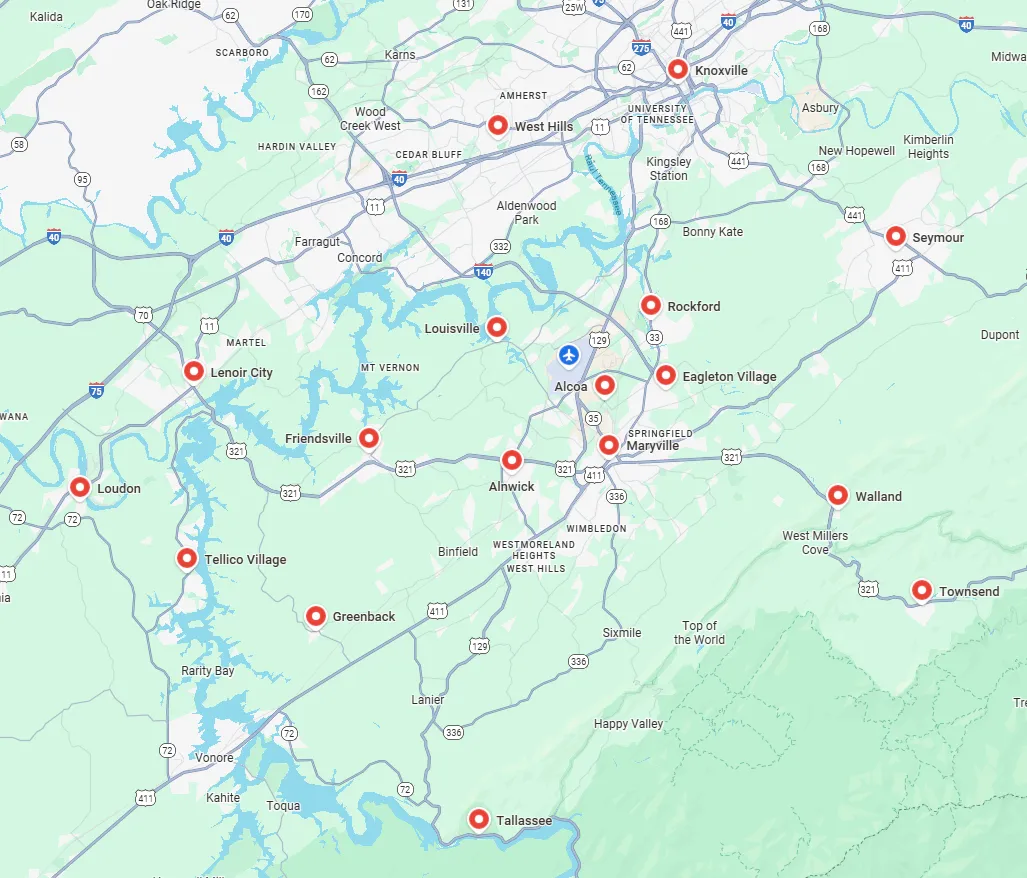
Fuel source considerations in Rockford, TN
- Natural gas: If available, gas furnaces offer high heat output and lower operating costs in many cases. Proper venting and combustion safety checks are essential.
- Propane: Common for rural properties; modern propane furnaces are efficient but require propane supply planning and safety practices.
- Electricity: Heat pumps and electric furnaces provide clean indoor operation and are an excellent choice where gas or propane is not present.
- Dual fuel: Combines heat pump efficiency with the reliability of gas when temperatures fall, giving the best of both systems for homes that have both services.
Maintenance and what to expect after installation
Regular maintenance preserves comfort and reduces the chance of breakdowns. Essential tasks include seasonal inspections, filter changes, condensate drain checks, combustion testing (for gas), refrigerant checks (for heat pumps), and blower and coil cleaning. Our Y.E.T.I Comfort Plan addresses scheduled maintenance to protect efficiency, prioritize service, and extend equipment life.
Decision guidance for Rockford homeowners
When choosing a system think about these priorities:
- Fuel availability and cost stability
- Home layout and existing ductwork
- Long-term energy savings vs. upfront investment
- Comfort needs (zoning, variable speed, air cleaning)
- Local weather patterns and occasional cold snaps
- Future home changes such as additions or remodels
Everest Air Heating and Cooling combines local knowledge of Rockford housing and climate with industry-standard sizing and installation practices so the system you select performs for years. Our family-owned approach focuses on clear explanations, no high-pressure sales tactics, and workmanship that protects your home and comfort.
Frequently asked questions
Q: How do I know whether I need a furnace, a heat pump, or a ductless system?
A: The best choice depends on your home layout, fuel availability, existing ductwork, and comfort priorities. We use Manual J load calculations and a site assessment to recommend the most efficient, reliable option for your Rockford home.
Q: What is Manual J and why does it matter?
A: Manual J is the industry standard for calculating a home’s heating and cooling load. It accounts for square footage, insulation, windows, orientation, and local climate. Proper Manual J sizing prevents undersizing or oversizing equipment, which improves comfort and efficiency.
Q: Will a heat pump work during Rockford winters?
A: Modern cold-climate heat pumps maintain good performance in East Tennessee winters and often outperform electric resistance systems in efficiency. In very cold snaps a heat pump may use supplemental heat or switch to a hybrid system paired with a furnace.
Q: How long does a typical heating installation take?
A: Installation time varies by system type and scope of ductwork modifications. A straightforward furnace or heat pump swap often takes a day, while additional ductwork, zoning, or remodel work can add time. Final commissioning and testing are part of the process before we consider the job complete.
Q: Are there special considerations for older homes in Rockford?
A: Yes. Older homes often have uninsulated ducts, air leaks, or nonstandard layouts. We inspect crawlspaces, attics, and ductwork and recommend sealing, insulation, or zoned solutions to achieve even comfort and efficiency.
Q: What maintenance does a new system require?
A: Annual or biannual maintenance keeps systems operating efficiently. Tasks include filter changes, coil and burner cleaning, safety and CO testing for gas systems, refrigerant checks for heat pumps, and airflow balancing. A maintenance plan like the Y.E.T.I Comfort Plan helps preserve efficiency and warranty coverage.
Q: Which brands do you install and service?
A: Everest Air Heating and Cooling installs and services major brands such as York, American Standard, Goodman, Lennox, Ruud, and Rheem. We select models based on performance, warranty, and local serviceability.
Q: How can ductwork problems affect my new system?
A: Leaky or undersized ducts create comfort problems, increase runtime, and reduce efficiency. Sealing, fixing insulation, and balancing airflow are often required to ensure the new system performs as intended.
Q: What safety checks are included with a gas furnace installation?
A: Gas furnace commissioning includes combustion analysis, venting and draft verification, carbon monoxide testing, and inspection of gas line connections and safety controls to ensure safe operation and code compliance.
Q: How do I plan for long-term costs and savings?
A: Consider upfront equipment cost, estimated annual energy use based on efficiency ratings (AFUE, HSPF, SEER), expected maintenance, and typical fuel prices in Rockford. We provide comparisons so you can evaluate lifecycle costs and payback times.
hear what our satisfied clients have to say

David P.
Service areas