

Tankless Water Heater in Townsend, TN
When it comes to your Townsend, TN home, selecting the right water heating solution is one of the most practical choices you can make for both year-round comfort and significant long-term energy savings. Everest Air Heating and Cooling is here to offer professional guidance and seamless installations for tankless (on-demand) water heaters. We'll help you truly understand how these systems operate, determine if a tankless unit is the perfect match for your household's needs, and clearly outline what to expect throughout the installation and maintenance process. We aim to break down all the important details into plain language, giving you exactly the information you need to confidently make your decision.
Why Townsend homeowners consider tankless water heaters
Townsend sits at the gateway to the Great Smoky Mountains, with seasonal temperature swings and a community that values efficient, reliable systems. Tankless water heaters are attractive here because they:
- Deliver endless hot water for busy households, especially useful for multiple showers after outdoor activities in cooler months.
- Reduce energy wasted by standby heat loss that occurs with tank systems.
- Free up space in basements, utility rooms, or crawlspaces typical of older Townsend homes.
- Offer longer expected lifespans than conventional tanks when properly maintained.
Local factors that affect tankless performance include inlet water temperature (colder in winter, which increases the required heating capacity), and local water hardness. Many homes in Blount County experience moderate to hard water, which makes descaling and water treatment important for tankless longevity.
How a tankless water heater works
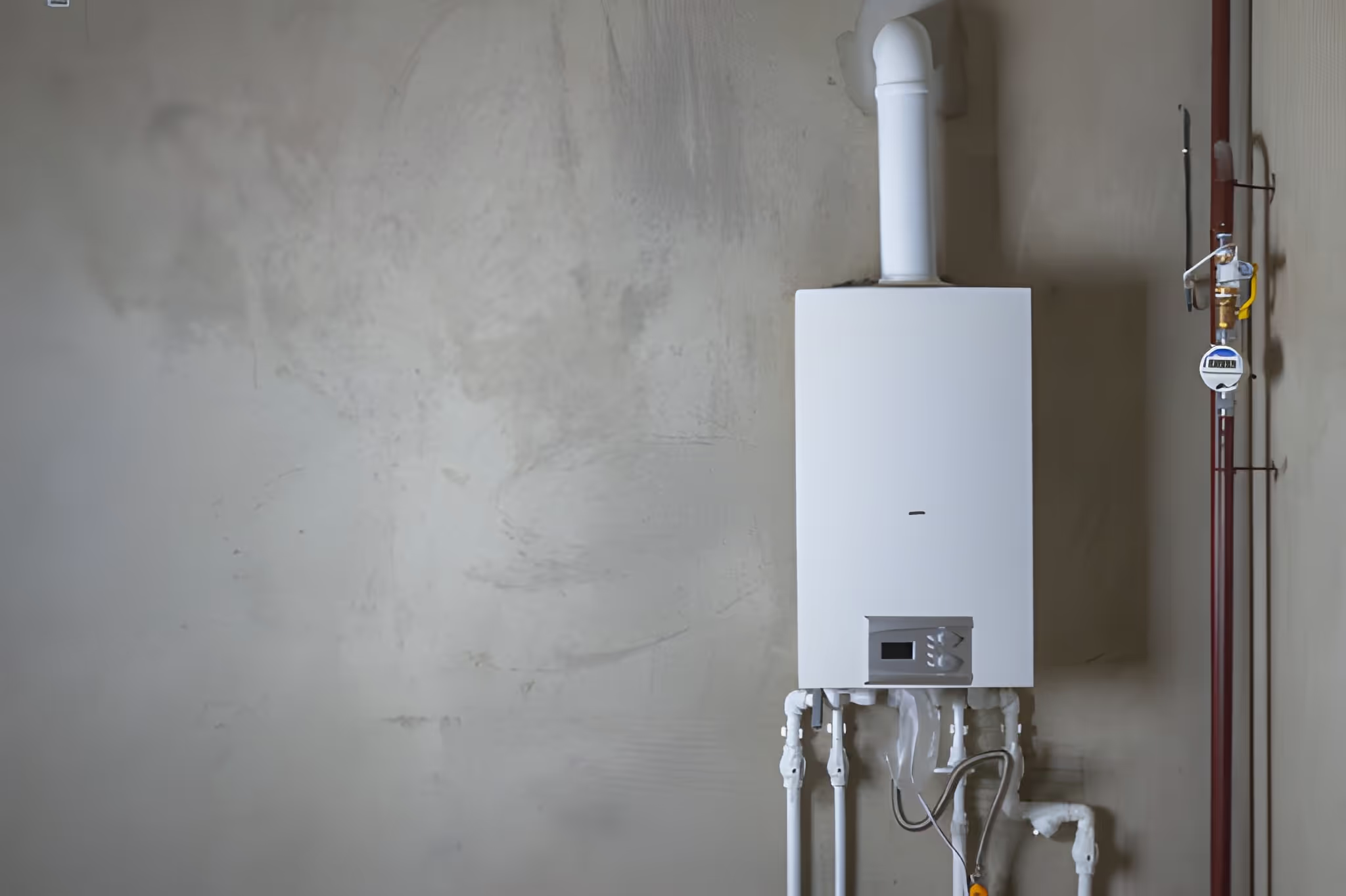
A tankless water heater heats water on demand rather than storing it. Key points:
- When a hot water tap opens, the unit senses flow and activates either a gas burner or an electric heating element.
- Water passes through a heat exchanger, and the unit raises the temperature to the set point as it flows out to taps or appliances.
- Flow rate and temperature rise determine capacity: higher flow or greater temperature increases require more heating power.
This on-demand approach eliminates standby losses and provides continuous hot water as long as the unit’s flow and temperature limits are not exceeded.
Common tankless water heater types and configurations
- Gas-fired whole-house tankless: Most common for Townsend homes because of higher flow capacities. Requires proper venting and adequate gas supply.
- Electric whole-house tankless: Easier to install in homes without gas but often limited by electrical service capacity and higher power draw.
- Point-of-use tankless: Small units installed near a single fixture for instant output and reduced wait time.
- Condensing tankless: More efficient gas models that extract additional heat from exhaust and recover it, suitable for high-efficiency installations.
Typical hot water needs and sizing basics
Sizing a tankless unit is different than sizing a tank. Two key numbers matter:
- Flow rate (GPM): gallons per minute required when multiple fixtures may be used simultaneously. Typical fixture flow rates:
- Kitchen sink: 1.5 to 2.2 GPM
- Bathroom sink: 0.5 to 1.5 GPM
- Shower: 1.8 to 2.5 GPM (low-flow 1.5 GPM)
- Dishwasher: 1.0 to 2.0 GPM
Temperature rise: difference between incoming groundwater temperature and desired output. In Townsend, incoming groundwater can be 45 to 55 F in winter and higher in summer. If you want 120 F at the tap and incoming is 50 F, temperature rise is 70 F.
Example: A household running one shower (2.2 GPM) and a dishwasher (1.2 GPM) simultaneously needs about 3.4 GPM. If winter inlet temp is 50 F and target is 120 F, the tankless must provide a 70 F rise at 3.4 GPM. Sizing charts convert that to required BTU or kW capacity.
Everest Air Heating and Cooling uses household usage patterns, local inlet temperatures, and appliance demand to calculate the correct unit capacity rather than guessing.
Retrofit versus new-install considerations
Retrofitting a tankless unit into an existing Townsend home requires assessment of several points:
- Fuel source: Homes with natural gas or propane can often accommodate a gas tankless with a suitable gas line. Electric tankless installations often require significant electrical service upgrades to handle the load.
- Venting and clearances: Gas tankless water heaters require proper venting that may differ from tank systems. Condensing units need PVC venting; non-condensing models need stainless steel. Vent pathways must meet code and manufacturer specs.
- Gas line sizing: Many older houses have undersized gas lines for a high-capacity tankless. Upgrading the gas supply may be required to achieve full output.
- Water lines and pressure: Upgrades to piping or pressure regulation may be necessary for optimal performance.
- Location and freeze protection: Tankless units installed in unconditioned spaces or exterior walls must have freeze protection measures in Townsend winters.
A new-build installation provides more flexibility in siting, venting, and service access, often lowering complexity compared to challenging retrofits.
Typical installation procedure
A professional tankless installation is methodical and code-driven. Typical steps include:
- Initial site assessment: Evaluate fuel availability, venting routes, water line access, electrical service, and intended unit location.
- Load calculation: Determine peak hot water demand, calculate required flow rates and temperature rise, and select appropriate unit size.
- Preparatory upgrades: If needed, upgrade gas lines, electrical service, or water piping. Install any required permit signage or inspection readiness.
- Mounting and connections: Secure the unit to the wall, connect water inlet and outlet piping, and install isolation valves and bypass for maintenance.
- Venting and combustion: Install proper vent piping, seals, and combustion air intake where applicable. Confirm vent terminations meet local code for Townsend and county jurisdictions.
- Gas and electrical hookups: Connect gas lines and test for leaks. For electric units, wire according to load requirements and safety codes.
- Commissioning: Flush the system of air, verify flow activation, set temperature, test for hot water at multiple fixtures, and confirm error-free operation.
- Customer orientation: Explain basic operation, maintenance steps, and how to read error codes. Leave documentation and warranty information.
Proper installation ensures efficient operation, code compliance, and minimizes the risk of future issues.
Maintenance expectations and lifespan
Tankless water heaters typically last longer than tank-style units with proper maintenance. Expectations:
- Lifespan: 15 to 25 years is common for tankless units, compared with 8 to 12 years for conventional tanks.
- Annual maintenance: Recommended annual service includes descaling/flushing the heat exchanger, cleaning inlet filters, inspecting venting and combustion components, and testing gas pressure or electrical connections.
- Water quality impact: In moderate to hard water areas around Townsend, descaling frequency may be more often than annual, especially with high mineral content. Installing a whole-house water softener or point-of-use filter greatly reduces scale buildup and extends heat exchanger life.
- Common service items: Replacing sacrificial anodes is not applicable for tankless, but replacing filters, checking pressure relief valves, and addressing inlet screen debris are routine.
Regular maintenance reduces efficiency loss, prevents avoidable breakdowns, and preserves manufacturer warranties.
Typical problems and troubleshooting
Even with proper installation, these issues can occur:
- Fluctuating water temperature: Often caused by undersized unit, simultaneous high demand, or setting-related limits. Also possible with insufficient gas pressure or electrical input.
- Low flow or frequent shutoff: Mineral scale in the heat exchanger, clogged filters, or water pressure issues can reduce flow.
- Error codes: Modern units display codes for ignition failure, flow sensor issues, pressure problems, or overheating. Professional diagnosis is recommended if error codes persist.
- Combustion/venting smells: Can indicate improper venting or combustion issues that require immediate professional attention.
- No hot water: Could be fuel supply issue, tripped breaker, failed ignition system or internal fault.
Everest Air Heating and Cooling provides diagnostic services to isolate root causes and recommend repair or replacement options based on age, condition, and cost effectiveness.
Cost and return-on-investment comparison with tank systems
When evaluating tankless versus tank systems, consider these factors:
- Upfront cost: Tankless units typically cost more to purchase and install, especially if venting or gas/electrical upgrades are needed.
- Operating costs: Tankless units are generally more energy efficient because they avoid standby heat loss. Efficiency gains are higher for households with lower to moderate hot water use patterns and those that avoid long periods of idle hot water.
- Lifespan and replacement frequency: Longer lifespan reduces lifecycle cost disadvantage. A unit that lasts 20 years has fewer replacement cycles than a tank system.
- Maintenance costs: Annual descaling and inspection are recommended; factoring water quality and service costs is important.
- Payback period: Payback depends on energy prices, household hot water usage, and initial installation complexity. Towns with cold winters may need higher-capacity units, increasing initial cost. Homes with high hot water demand that run multiple fixtures simultaneously might realize faster savings compared to households with consistent heavy demand where a high-capacity tank could be cost-effective.
A careful calculation that includes local energy rates, water usage patterns, required upgrades, and expected maintenance will determine whether a tankless investment makes financial sense for a Townsend home.
Is a tankless unit right for your Townsend home?
Consider these decision factors:
- Household size and usage pattern: Tankless excels for families that use intermittent hot water throughout the day and want endless hot water for consecutive showers. Homes with consistent simultaneous high demands need appropriately sized, often more expensive, units or multiple units.
- Fuel availability and line capacity: If your home already has ample natural gas or propane service and proper venting pathways, a gas tankless is often the most practical solution. Electric tankless can be ideal in smaller homes or point-of-use scenarios when electrical service can support the load.
- Water hardness: Moderate to hard water in Townsend can increase maintenance. Homes with untreated hard water should either consider water softening or expect more frequent descaling.
- Installation constraints: Limited venting options, small mechanical spaces, or restrictive access can complicate retrofit installations and increase cost.
- Climate: In Townsend winters, the lower inlet water temperature increases the required heating capacity; sizing must reflect worst-case inlet temperatures.
- Budget and long-term goals: If you prioritize long-term efficiency and reduced footprint and are prepared for the initial investment and maintenance, tankless is a strong choice. If upfront cost constraints or extreme simultaneous demand are primary concerns, a high-efficiency tank or hybrid system might be a better fit.
Everest Air Heating and Cooling evaluates these variables to recommend the most practical, cost-effective option for each home.
When a tanked system might be preferable
There are scenarios where a traditional tank water heater remains a sound choice:
- Very high simultaneous demand that would require multiple or very large tankless units.
- Homes with limited budget for initial upgrades like gas line work or electrical service increases.
- Installation spaces that make venting or access for tankless units impractical.
- Owners uncomfortable with the regular descaling and maintenance required in hard water areas.
A modern high-efficiency tank or a hybrid (heat-pump water heater) can still improve efficiency over older tank models while reducing upfront complexity.
Choosing features and options
Key features to consider when selecting a tankless unit:
- Flow rate capacity and modularity: Choose a unit that meets peak demand; consider multiple units or cascade installations for large homes.
- Recirculation capability: Some tankless systems support built-in recirculation pumps or external pumps for near-instant hot water and reduced waste.
- Condensing versus non-condensing: Condensing units are more efficient but require different venting and may be costlier.
- Freeze protection: Important for units placed in garages, crawlspaces, or exterior walls in Townsend.
- Control options: Models with smart controls or outdoor temperature compensation can increase convenience and efficiency.
Everest Air Heating and Cooling helps match features to real household needs and local conditions.
ROI and ownership tips for Townsend residents
- Install a water treatment solution if your home has moderate to hard water to reduce scale and extend heat exchanger life.
- Schedule annual service and descaling to maintain efficiency and prevent premature failure.
- Match setpoint temperature to actual needs; lowering thermostat settings a few degrees reduces required energy and increases effective capacity.
- Consider point-of-use units for distant bathrooms to reduce wait time and conserve water.
- If your property is used seasonally, ensure the tankless has proper winterization or freeze protection.
These practical measures protect your investment and maximize energy savings over time.
Maintenance checklist and what to expect during service
Annual tankless service typically includes:
- Flushing and descaling the heat exchanger using approved cleaning procedures.
- Cleaning or replacing inlet water and sediment filters.
- Inspecting and testing venting, combustion chambers, and condensate drains.
- Checking gas pressure and connections for gas models, or electrical connections for electric models.
- Verifying flow sensors and safety devices operate correctly.
- Reviewing error logs and clearing any stored fault codes.
- Recommending water treatment if scaling is present.
Documented maintenance helps maintain warranty coverage and preserves resale value for your home.
FAQs
Q: How long does a tankless water heater typically last compared to a tank system?
A: Tankless water heaters typically last 15 to 25 years with proper maintenance, while conventional tank water heaters generally last 8 to 12 years.
Q: Will a tankless water heater save me money in Townsend?
A: Tankless units can save energy by eliminating standby losses, but actual savings depend on household hot water usage, energy costs, and the initial installation expenses for gas or electrical upgrades. Proper sizing and regular maintenance are crucial to realizing savings.
Q: Can a tankless unit provide enough hot water for multiple showers at once?
A: Yes, if sized correctly. Units are rated by flow rate and temperature rise. For simultaneous showers, you may need a higher-capacity unit or multiple units in cascade to meet peak demand.
Q: Do tankless units require special venting?
A: Many gas tankless units require specific venting materials and configurations. Condensing units typically use PVC for low-temperature exhaust, while non-condensing units use stainless steel. Correct venting is essential for safety and efficiency.
Q: How often do tankless water heaters need to be descaled?
A: Descaling frequency depends on water hardness. In moderate to hard water areas like parts of Blount County, descaling may be needed annually or more often. Installing a water softener reduces frequency and extends life.
Q: Is an electric tankless water heater a good option for Townsend homes?
A: Electric tankless can be effective for smaller homes or point-of-use applications, but whole-house electric units require substantial electrical service upgrades in many cases. Gas tankless units often offer higher capacity at lower operating cost for whole-house needs.
Q: What maintenance should I expect after installation?
A: Annual inspection, flushing/descaling, filter cleaning, and vent checks are standard. Technicians will also verify combustion or electrical connections and review system performance.
Q: How does cold Townsend winter water affect tankless performance?
A: Colder inlet water increases the required temperature rise, which reduces the achievable flow rate at a given unit size. Sizing calculations must use worst-case winter inlet temperatures to ensure reliable performance year-round.
Everest Air Heating and Cooling combines local knowledge of Townsend climate and water conditions with industry best practices to recommend the right tankless solution for your home. Detailed load calculations, proper venting and fuel assessments, and a commitment to regular maintenance protect performance and extend the life of your investment.
hear what our satisfied clients have to say

David P.
Service areas