

Tankless Water Heater in Seymour, TN
Here in Seymour, TN, Everest Air Heating and Cooling is proud to bring the convenience of on-demand hot water solutions to your home, blending modern tankless technology with our deep local expertise. If you're thinking about making the switch from a conventional tank to a tankless (on-demand) water heater, we're here to explain everything: how these units work, why they're often a smart choice for East Tennessee homes, what goes into sizing and installation, what kind of operating and maintenance you can expect, and how tankless systems truly stack up against traditional tanks in the long run. Our aim is to provide you with clear, practical information so you can confidently choose the hot water solution that's absolutely perfect for your Seymour home.
How tankless water heaters work and why it matters in Seymour
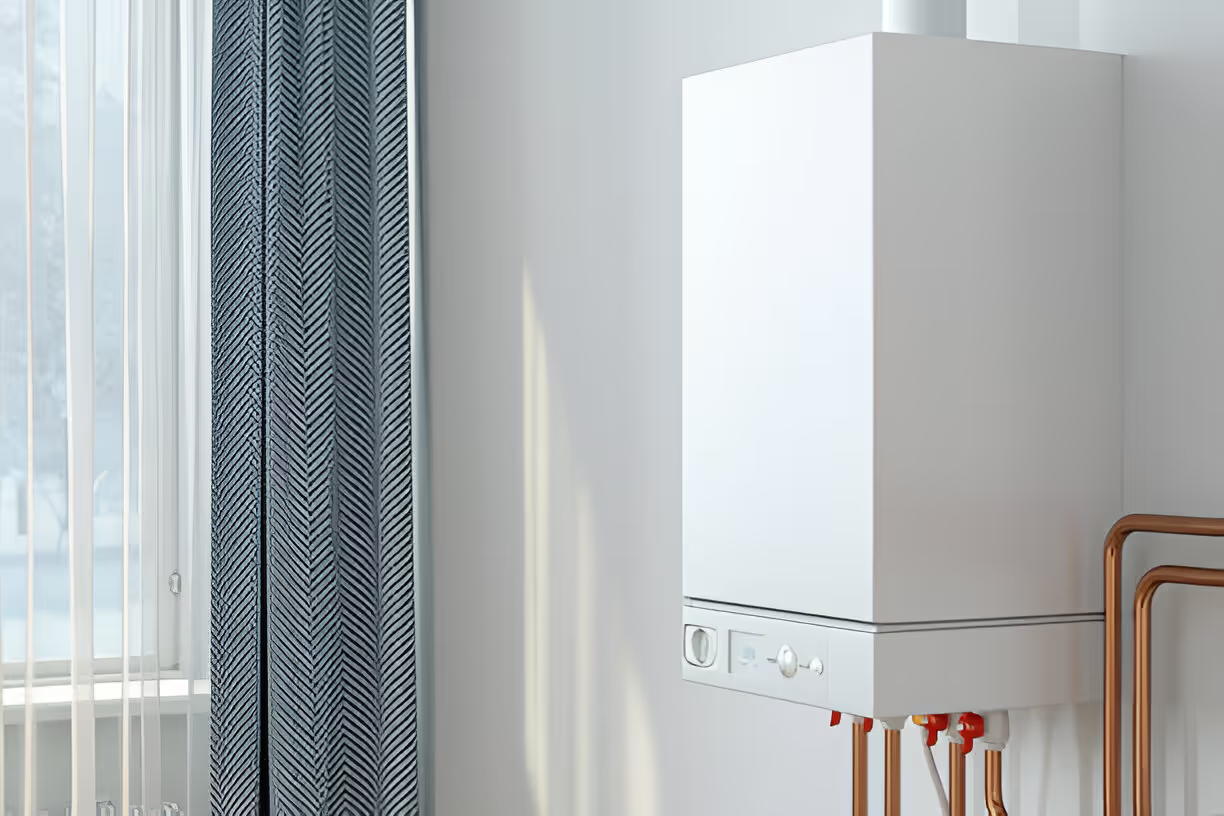
A tankless water heater heats water only when you open a tap. Cold water runs through a heat exchanger and is heated by a gas burner or electric element as it flows. That means no standby heat loss from a storage tank, and effectively unlimited hot water as long as the unit can meet the flow and temperature rise demands.
For Seymour homes, that on-demand design has practical benefits. Many local houses were built before modern hot water usage patterns evolved, and some are used as second properties for visits to the Smoky Mountain area. A tankless system avoids running out of hot water during peak use — for example, when multiple showers, a dishwasher, and a washing machine might run in a short timeframe. In cooler months, when incoming groundwater temperatures drop, a correctly sized tankless unit still delivers consistent hot water across the home.
Common tankless water heater types and typical uses
- Gas-fired tankless units: High flow capacity and lower operating cost in many cases; preferred for whole-house installations in Seymour where natural gas or propane is available.
- Electric tankless units: Easier to install in some situations, compact, and good for point-of-use applications or smaller homes; may require electrical panel upgrades for whole-house use.
- Condensing gas tankless units: Higher efficiency than standard gas units because they capture additional heat from exhaust gases; these can maximize savings but require condensate drainage.
- Point-of-use (POU) tankless: Small units installed near a fixture to get instant hot water to a sink or shower and reduce wait times and water waste.
- Hybrid approaches: Combination of a whole-house tankless unit plus small POU units at remote bathrooms for best performance in larger or multi-level Seymour homes.
Benefits of tankless water heaters for Seymour, TN homes
- Improved energy efficiency: Because tankless units eliminate standby losses, they commonly reduce water heating energy consumption by 20 to 40 percent compared with older conventional tanks, especially in homes that do not need large simultaneous loads.
- Continuous hot water: No risk of a depleted tank in long showers or back-to-back loads, which is helpful for families or rental properties.
- Space savings: Tankless units are wall mounted and free up closet or garage space in homes where storage is limited.
- Longer service life: Properly maintained tankless units often last 15 to 25 years, compared with 8 to 12 years for traditional tanks.
- Reduced risk of catastrophic tank leaks: Without a large reservoir of stored water, there is less chance of a major leak that can quickly damage a basement or utility room.
- Local rebate and efficiency potential: High-efficiency condensing models may qualify for federal tax incentives or local utility rebates through programs in Tennessee. Homeowners should confirm eligibility with their utility provider and installer.
Sizing and flow-rate calculations — getting it right for your home
Sizing a tankless water heater is different from sizing a tank. The two main calculations are required flow rate and required temperature rise.
- Flow rate (GPM): Estimate peak simultaneous demand. Common fixture flow rates to use as a guideline:
- Shower: 1.5 to 2.5 GPM
- Kitchen faucet: 1.5 to 2.2 GPM
- Dishwasher: 1.0 to 1.5 GPM
- Washing machine: 1.0 to 2.0 GPM
Add the maximum number of fixtures likely to run at the same time to determine the peak GPM. For example, a household using two showers and a dishwasher simultaneously might need roughly 5.0 to 6.0 GPM.
- Temperature rise: Subtract your incoming cold water temperature from your desired hot water temperature. In Seymour, groundwater temps vary seasonally. In winter, incoming water may be as low as the upper 40s Fahrenheit; in summer it may be the mid 60s. If you want shower water at 105 F and your incoming water is 50 F, you need a temperature rise of 55 F.
Manufacturers rate tankless units by the GPM they can deliver at various temperature rises. A unit that produces 6.0 GPM at a 35 F rise will produce significantly less at a 55 F rise. Accurate load calculations are critical to ensure you do not experience reduced flow or intermittent temperature drops.
Example sizing scenarios for Seymour:
- Small household (1-2 people): Point-of-use or a small whole-house tankless 4 to 6 GPM may suffice.
- Typical family (3-4 people): A unit rated 6 to 8 GPM at the expected winter temperature rise is commonly required.
- Large household or high simultaneous demand: Two tankless units in parallel or a high-capacity condensing unit rated 8 to 11+ GPM may be necessary.
Everest Air Heating and Cooling performs on-site flow and usage assessments that factor in fixture types, household habits, and seasonal temperature changes to recommend the correct capacity.
Installation requirements and potential home upgrades
Installing a tankless water heater is more involved than swapping a tank in many homes. Common installation considerations include:
- Fuel supply:
- Gas units need adequate gas volume and pressure. Older homes may require a larger diameter gas line or upgraded regulator.
- Electric units demand substantial amperage and may need a panel upgrade or dedicated circuits.
- Venting and combustion air:
- Gas-fired non-condensing units typically require stainless steel venting to the outside.
- Condensing units use PVC venting and need a drain for condensate.
- Proper vent termination location is important to avoid exhaust re-entry into the home or neighboring windows.
- Water quality:
- East Tennessee can have moderate to hard water in many areas. Hard water accelerates scale buildup in heat exchangers.
- A water softener or scale-reduction device is often recommended to protect the unit and maintain efficiency and lifespan.
- Space and mounting:
- Wall-mounted units free up floor space but require secure mounting and access for service.
- Indoor vs outdoor models: Outdoor models eliminate venting but must be rated for local freeze conditions or installed with freeze protection.
- Permits and codes:
- Local building codes in Blount and Knox counties require permits and specific venting and installation standards. Proper permitting ensures safe operation and compliance.
- Additional components:
- Buffer tanks, recirculation pumps, or priority control modules may be used to improve delivery, reduce lag time at distant fixtures, or boost simultaneous capacity without oversizing.
Because each home is different, Everest Air evaluates gas piping, electrical service, venting pathways, and water conditions before recommending the right unit and any required upgrades.
Maintenance needs and lifespan expectations
Tankless water heaters require periodic maintenance to stay efficient and reliable. Typical maintenance includes:
- Descaling and flushing: In areas with hard water, an annual or semi-annual descaling flush with vinegar or a manufacturer-approved descaling solution removes mineral buildup from the heat exchanger and restores performance.
- Filter cleaning: Many units have inlet strainers or filters that should be checked and cleaned regularly to prevent flow restrictions.
- Combustion inspection: Gas units benefit from periodic combustion checks, burner cleaning, and vent inspections to ensure safe operation.
- Condensate drain check: Condensing units need their condensate traps and drains monitored to avoid clogging.
- System diagnostics: A technician can run a performance check to verify temperature rise, flow rates, and combustion efficiency.
With proper maintenance, a tankless water heater from a quality brand can be expected to last 15 to 25 years. This is roughly double the life of many conventional storage tanks. Everest Air’s Y.E.T.I Comfort Plan can be adapted to include regular water heater maintenance to protect efficiency and longevity.
Cost comparison: tankless vs. traditional storage tanks
Upfront costs:
- Tankless units typically cost more to purchase and install than conventional tanks. Installation complexity — especially gas line upgrades, electrical service upgrades, or venting work — can increase initial expenses.
- Whole-house electric tankless installations often require panel and wiring upgrades, which can be a significant part of the cost.
Operating costs:
- Tankless units often provide lower annual energy expenses due to reduced standby losses. Savings vary by household hot water usage and fuel prices.
- Condensing gas tankless units show the highest efficiency gains and can produce the greatest operating savings.
Payback period:
- The break-even point depends on initial cost differential, household hot water usage, fuel cost, and any available incentives or rebates. In many households with moderate to high hot water demand, payback can occur within 5 to 12 years when factoring lower energy bills and longer equipment life.
Other cost factors:
- Reduced space and reduced risk of water-damage claims are indirect financial benefits.
- Maintenance costs for descaling may be higher than for conventional tanks; however, the longer lifespan typically offsets those expenses.
Everest Air provides customized lifecycle cost comparisons that factor in your home’s usage patterns, local fuel prices, and potential rebates to present a clear financial picture.
Available models and rebate opportunities in Tennessee
Common reputable manufacturers offer a range of gas and electric tankless models. Popular lines that homeowners in Seymour frequently consider include:
- Rinnai: Known for reliable gas and condensing models with good parts availability.
- Navien: Strong in condensing high-efficiency tankless units.
- Rheem: Offers both gas and electric tankless options and hybrid solutions.
- Noritz and Bosch: Established brands with a range of capacities and configurations.
- Stiebel Eltron: Well-regarded for electric tankless units and point-of-use models.
Rebates and incentives:
- Federal tax credits and incentives for high-efficiency appliances may apply to qualifying condensing units; eligibility changes over time.
- Local utilities and municipal programs sometimes offer rebates for energy-efficient water heaters. Many Tennessee utilities tied to TVA or other providers run incentive programs for high-efficiency equipment.
- Energy-efficient upgrades such as insulation of hot water lines and installation of recirculation timers can sometimes be bundled with rebates.
Homeowners should confirm current incentive availability and qualification criteria. Everest Air can assist by identifying potential rebates during the project assessment and helping document efficiency ratings needed for incentive applications.
Typical installation process you can expect
- Initial consultation and load calculation: A technician reviews household hot water needs, inspects gas/electrical capacity, water quality, and venting options.
- Recommendation and scope: Based on the inspection, the installer recommends specific models, necessary upgrades, and any secondary equipment like water softeners or recirculation components.
- Permitting: The installer secures required permits and schedules the work in compliance with local codes.
- Installation: Install includes mounting the unit, running venting, gas or electrical connections, installing condensate drains if needed, and setting up any controls such as thermostats or recirculation timers.
- Commissioning: The system is started, combustion and pressure checks are performed, and flow and temperature are verified at fixtures.
- Owner orientation: The technician explains basic operation, maintenance steps, and warranty coverage.
Everest Air’s technicians follow manufacturer installation guidelines and local code requirements to ensure safety, performance, and reliable long-term operation for Seymour homes.
Diagnosing common tankless problems and solutions
- Reduced hot water flow or temperature swings: Often caused by undersized unit relative to demand, clogged inlet filters, or scale buildup. Solution: perform flow testing, clean strainers, and descale the heat exchanger; if undersized, consider adding a point-of-use unit or installing an additional unit in parallel.
- No hot water or unit not firing: Could be a fuel supply issue (gas pressure, pilot/ignition problems), electrical fault in electric units, or a blocked vent. Solution: check gas supply and pressure, electrical connections, error codes, and venting path.
- Leaks at fittings: Typically related to installation issues or age-related seal degradation. Solution: tighten or replace fittings, inspect for corrosion, and verify proper mounting.
- Error codes and safety lockouts: Modern units display codes that point to specific conditions such as overheating, vent issues, or sensor failures. Solution: read manufacturer codebook, perform specified diagnostics, and replace defective sensors or components as needed.
Proper annual maintenance and using water treatment where needed significantly reduce the frequency of these issues.
Why choose tankless for Seymour homeowners — practical local benefits
- Consistent hot water regardless of family size or guest usage during peak seasons.
- Longer equipment life and fewer disruptive replacements over time in a region where reliable service matters.
- Space savings in homes where basements or mechanical rooms are limited.
- Improved energy efficiency that can reduce operating costs in households with moderate to high hot water usage.
- Reduced water waste in homes with point-of-use installations or recirculation solutions combined with a tankless system.
Everest Air Heating and Cooling blends local experience with technical knowledge to match tankless solutions to Seymour home needs, recommending practical systems that accommodate seasonal water temperature swings and household usage.
Long-term care and warranty considerations
- Manufacturer warranties vary by model and often cover the heat exchanger and parts for different periods. Confirm warranty terms and register the product to retain coverage.
- Keep records of annual maintenance and descaling to support warranty claims and maintain warranty compliance.
- Consider Everest Air’s maintenance offerings such as the Y.E.T.I Comfort Plan, which can include scheduled checks tailored to tankless water heaters to prevent scale and ensure peak efficiency.
Regular service is the best way to protect investment and extend the useful life of the system.
FAQs
Q: How do I know if a tankless water heater will meet my household needs?
A: A proper assessment includes calculating your peak simultaneous flow rate in gallons per minute and determining the temperature rise required during Seymour winters. Everest Air Heating and Cooling performs these calculations on-site to recommend a unit that delivers the needed GPM at your local incoming water temperature.
Q: Are gas tankless units better than electric ones for Seymour homes?
A: Gas tankless units typically offer higher flow rates and lower operating costs where natural gas or propane is available, making them well suited for whole-house use. Electric tankless units can be a good fit for point-of-use or smaller homes but may require significant electrical upgrades for whole-house service.
Q: How often do tankless units need descaling?
A: In moderate to hard water areas common around Seymour, an annual descaling flush is often recommended. Homes with very hard water may need descaling every six months unless a water treatment solution is in place.
Q: Will my home need electrical or gas line upgrades for installation?
A: Possibly. Gas units may need larger diameter gas piping or regulator upgrades. Electric units frequently require new dedicated circuits or a panel upgrade. Everest Air inspects your existing infrastructure during the site visit and outlines any necessary upgrades.
Q: Can tankless water heaters be installed outdoors in Seymour?
A: Some tankless models are designed for outdoor installation and eliminate venting needs, but they must be rated for local freeze conditions or provided with freeze protection. Outdoor installations also need proper location planning to avoid exhaust re-entry and exposure to the elements.
Q: Do tankless water heaters save money over time?
A: Many households see reduced annual water heating costs due to lower standby losses and higher efficiencies, and longer equipment life helps lower replacement frequency. A customized lifecycle cost estimate that includes local fuel prices and usage patterns will show the likely payback period.
Q: Are there rebates or tax credits available for high-efficiency tankless units?
A: Incentives vary over time. High-efficiency condensing units may qualify for federal tax credits or local utility rebates. Everest Air can identify potential local rebates and help document the unit specifications needed for applications.
Q: How long do tankless heaters usually last compared with tanks?
A: With proper maintenance, tankless units commonly last 15 to 25 years, while traditional storage tanks typically last 8 to 12 years. Regular descaling and maintenance extend tankless lifespan and efficiency.
hear what our satisfied clients have to say

David P.
Service areas