

Tankless Water Heater in Maryville, TN
Thinking about reliable, on-demand hot water in Maryville, TN? Upgrading to a tankless water heater is hands-down one of the best ways to achieve that, all while cutting down on energy waste and freeing up valuable space in your home. Everest Air Heating and Cooling is your local go-to for expert assessments, precise sizing, professional installation, and ongoing maintenance specifically designed for East Tennessee homes. We're here to explain the real-world benefits of tankless systems, help you pinpoint the perfect unit for your household, detail the ins and outs of gas versus electric models, clarify common installation needs for Maryville properties, share our routine maintenance tips, offer clear lifecycle and cost comparisons against traditional tank systems, and even help you explore available homeowner incentives. Trust Everest Air Heating and Cooling for your tankless water heater needs.
Why consider a tankless water heater in Maryville homes
- Continuous hot water: Tankless units heat water on demand, eliminating the chance of running out of hot water during showers, laundry, or multiple simultaneous uses.
- Energy efficiency: Because there is no standby heat loss from a storage tank, tankless systems often use less energy over time, especially for households with lower to moderate hot water usage patterns.
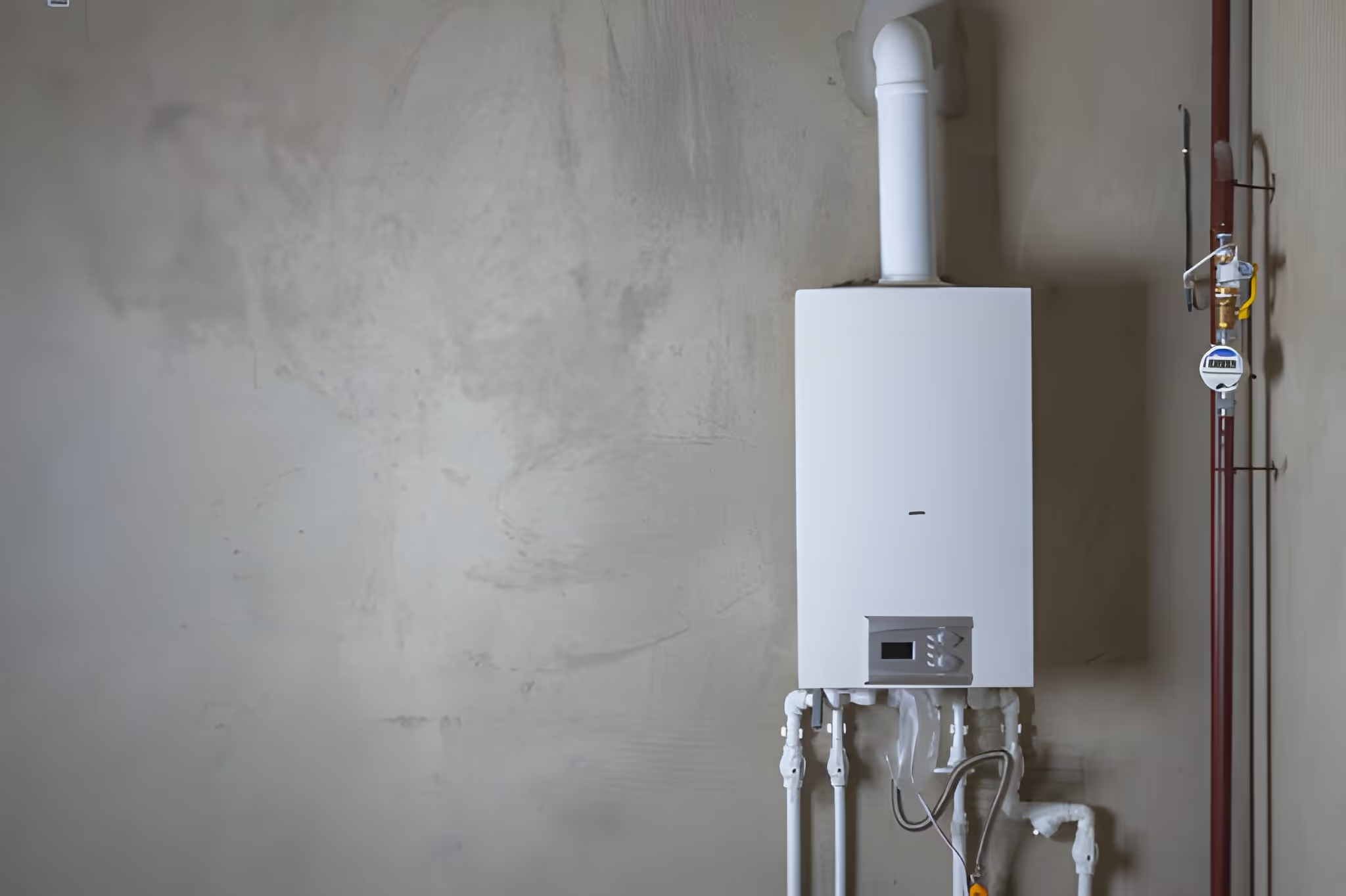
- Space savings: Tankless units are compact and wall mounted, freeing up utility closet or basement floor space.
- Longer useful life: Properly maintained tankless systems typically last significantly longer than conventional tanks, and many offer durable components with extended warranties.
- Reduced corrosion risk: Without a storage tank, there is less risk of rust and tank failure that lead to leaks and water damage.
In Maryville, winters can be cool and humid while summers are warm and humid, which affects incoming ground or well water temperatures and therefore the required temperature rise for a water heater. Many local homes also contend with mineral content in the water that can influence maintenance intervals. Understanding those local factors is essential to selecting and installing the right tankless water heater.
Common tankless water heater issues in Maryville, TN and how they present
- Insufficient flow or weak hot water: Often caused by an undersized unit, clogged inlet filter, or reduced gas pressure in gas units. Symptoms include low hot water output when multiple fixtures run.
- Cold water sandwich: A brief burst of cold water between periods of hot water flow. This happens when the unit cycles off and then restarts for small intermittent draws.
- Mineral buildup and reduced efficiency: Hard or mineral-rich water leads to scale on heat exchangers and flow sensors, reducing performance and causing error codes.
- Ignition or burner failure on gas units: Commonly due to dirty burners, venting obstruction, or inadequate gas supply.
- Venting and combustion air problems: Improper venting, vent condensation, or backdrafting can trigger safety shutdowns.
- Electrical faults on electric units: Tripped breakers, insufficient ampacity, or poor connections can prevent electric tankless units from heating.
- Error codes and system faults: Modern units report trouble codes that point to sensors, pressure switches, or flow meter issues.
Each issue has diagnostic steps and repair options. For homeowners in Maryville, addressing mineral buildup proactively and verifying gas or electrical capacity during installation prevents many common failures.
Types of tankless systems and which suit Maryville homes
- Condensing gas tankless water heaters: Higher efficiency models that extract extra heat from combustion flue gases and often use PVC venting. Good for homes with high hot water demand and access to natural gas or propane.
- Non-condensing gas tankless water heaters: Require stainless steel venting and are still more compact and efficient than tanks. They have lower upfront cost than condensing units.
- Electric tankless water heaters: Simpler venting needs and smaller install footprint. Best for homes with lower simultaneous hot water demand or where gas is not available. They usually require substantial electrical upgrade for whole-house applications.
- Point-of-use electric or small gas units: Installed near a single fixture to eliminate long wait times and reduce water waste. Appropriate for additions, garages, or remote bathrooms.
Choosing among these depends on fuel availability, household usage patterns, and the physical installation constraints of a Maryville property.
Flow-rate sizing and household demand calculations
Sizing a tankless water heater correctly is critical. The two primary factors are maximum simultaneous flow rate (in gallons per minute, GPM) and required temperature rise (the increase from incoming water temperature to desired outlet temperature).
- Estimate flow rates for common fixtures:
- Shower: 1.5 to 2.5 GPM (low-flow to standard)
- Lavatory faucet: 0.5 to 1.0 GPM
- Kitchen faucet: 1.5 to 2.2 GPM
- Dishwasher: 1.0 to 1.5 GPM
- Washing machine: 1.5 to 2.0 GPM
- Choose your target hot water temperature:
- Typical setpoint is 120 F for simultaneous household use and safety. Tankless units can be set higher, but 120 F balances comfort and scald risk.
- Determine incoming water temperature:
- Incoming cold water temperatures in Maryville will vary by season and source. Groundwater or well water in East Tennessee commonly ranges from the mid 40s to mid 50s Fahrenheit in winter and can be higher in summer. Use a conservative winter value for sizing to ensure adequate performance year-round.
- Calculate temperature rise:
- Temperature rise = Desired outlet temperature minus incoming water temperature.
- Example: 120 F desired minus 50 F incoming equals a 70 F rise.
- Calculate required GPM capacity:
- Add up the GPM of fixtures most likely to operate at the same time. For example, two showers (2 GPM each) plus a dishwasher (1.5 GPM) equals 5.5 GPM. Multiply that required GPM at the calculated temperature rise against manufacturer performance charts to select a unit capable of delivering the necessary BTU or kW output.
- Convert to energy output when needed:
- Gas units are rated in BTU per hour; electric units are rated in kilowatts. Manufacturers provide performance curves that show available GPM at various temperature rises.
Accurate measurement and conservative assumptions prevent undersizing and ensure consistent hot water during peak usage.
Differences between gas and electric tankless units
- Fuel source and operating cost:
- Gas tankless units (natural gas or propane) typically deliver higher peak flow rates and can be more cost-effective where gas prices and availability favor their use.
- Electric tankless units are simpler to install in terms of venting but may have higher operating costs depending on local electric rates and household usage patterns.
- Installation complexity:
- Gas units often require venting, combustion air access, and possibly a gas line upsizing to deliver sufficient BTUs for peak demand.
- Electric units can require major electrical work: dedicated 240 volt circuits, multiple high-amp breakers, and sufficient service panel capacity. Heavy electrical upgrades can be a significant part of the installation cost.
- Venting and placement:
- Condensing gas units use PVC venting and can often be vented through exterior walls.
- Non-condensing gas units require stainless steel venting and specific clearances.
- Electric units need no combustion venting, giving more flexible placement options.
- Performance and recovery:
- Gas units typically provide higher continuous flow and better performance for whole-house applications in larger homes.
- Electric units can be ideal for point-of-use or smaller homes where simultaneous hot water use is limited.
- Environmental angle:
- Electric units paired with renewable energy sources or cleaner grid power can offer low carbon operation. Gas units may produce combustion emissions but can still be more energy efficient than older tank systems.
Everest Air Heating and Cooling evaluates both the fuel availability in your Maryville home and your long-term operating cost expectations when recommending gas or electric options.
Installation considerations for Maryville properties
- Venting and combustion safety: Proper venting ensures safe removal of combustion gases and prevents condensation-related corrosion. Condensing units have different venting needs than non-condensing models. Vent routing, exterior clearances, and roof penetrations are part of the plan.
- Gas line capacity: Many older homes may have undersized gas piping for a high-output tankless unit. Upgrading gas lines or adding a dedicated line can be required to maintain appliance performance.
- Electrical requirements: Whole-house electric tankless units often need multiple high-amperage circuits and a service panel that can support the load. Panel upgrades or subpanels may be necessary.
- Water pipes and clearances: In-situ piping, shutoff valves, and access for service are important. Location choices must consider freeze risk; Maryville winters can drop low enough to require freeze protection or interior installations.
- Permits and inspections: Local jurisdiction rules in Blount County and Maryville require permits and inspections for fuel conversion, venting, and electrical changes. Proper permitting ensures code compliance and safe operation.
- Space and mounting: Wall-mounted units free up floor space but require structurally secure mounting locations and access for venting and condensate drains.
Proper assessment of these points prior to purchase prevents costly change orders during installation and ensures the system functions reliably through Maryville seasons.
Maintenance and descaling recommendations
Tankless systems are low maintenance compared to tanks, but they do require specific care:
- Descaling and flushing: Mineral buildup is the most common issue. For homeowners with moderate to hard water, descaling at least once a year is standard. In harder water areas or applications with heavy usage, descaling every 6 months may be necessary.
- Pre-filter and inline sediment filters: Installing a sediment filter upstream reduces particulate buildup and protects valves and flow sensors.
- Water softening: Where water hardness is high, a whole-house water softener significantly reduces scale formation and extends the time between descaling.
- Inlet screen cleaning: Many tankless units include inlet screens to protect internal components. These should be checked and cleaned during routine service.
- Combustion and vent inspection: Gas units should have annual checks for safe combustion, burner condition, and vent integrity.
- Electrical checks: For electric units, a technician should verify connections, breakers, and element integrity annually.
- Software updates and error code checks: Modern units with diagnostic displays benefit from periodic inspections to interpret and clear error codes and ensure setpoints are optimized for safety and efficiency.
Regular maintenance maximizes lifespan, sustains efficiency, and prevents unexpected shutdowns.
Lifecycle and cost comparisons versus tank systems
- Lifespan:
- Tankless water heaters often last 15 to 25 years with proper maintenance.
- Conventional tank water heaters generally last 8 to 12 years depending on water quality and maintenance.
- Operating cost:
- Tankless systems avoid standby heat losses, which can translate into measurable energy savings. The actual percentage saved depends on household hot water usage patterns and fuel prices. Households that use hot water intermittently or in small amounts typically see the largest proportional gains.
- For households with very high, simultaneous hot water demand, a properly sized gas tankless unit often outperforms a tank in long-term operating cost.
- Upfront cost and payback:
- Tankless units generally cost more to buy and install than standard tanks, particularly if significant venting, gas, or electrical upgrades are required.
- Payback periods vary widely: they depend on initial install costs, local energy prices in Maryville, and household usage. When longer life and energy savings are factored in, many homeowners find tankless systems deliver value over the full lifecycle.
- Reliability and failure modes:
- Tanks are susceptible to corrosion and catastrophic leaks at end of life.
- Tankless systems have multiple replaceable components and rarely experience sudden full-system failure when maintained.
Evaluating lifecycle costs requires comparing projected energy bills, expected maintenance, and the potential need for upgrades in the existing home infrastructure.
Incentives and programs to explore in Maryville, TN
Homeowners should investigate several incentives that can offset part of the cost of high-efficiency water heating equipment. Typical options include:
- Federal incentives: Periodically available federal tax credits exist for qualifying high-efficiency or heat pump water heaters. Eligibility and program details change, so verify current federal energy credits that apply to your chosen equipment.
- Local utility rebates: In the Tennessee Valley region, TVA and some municipal or cooperative utilities sometimes offer rebates or programs encouraging efficient water heating. Maryville residents should check with their local utility about current rebate programs or efficiency incentives.
- Manufacturer promotions: Manufacturers occasionally offer rebates or extended warranty promotions for new installations of qualifying units.
- State and county programs: Occasionally there are state or county-level incentives for energy-efficient upgrades. These programs can vary over time and may have specific installation or contractor requirements.
Because program availability and eligibility change, homeowners should verify terms and timing before finalizing equipment choices.
Troubleshooting, repairs, and when replacement is recommended
- When to repair:
- Minor malfunctions such as clogged screens, ignition anomalies, or minor sensor faults can often be repaired quickly and cost-effectively.
- If the unit continues to operate with intermittent issues or shows specific error codes related to replaceable parts, repair is usually the right choice.
- When to replace:
- Units older than 15 to 20 years with repeated failures, poor efficiency, or limited capacity often justify replacement.
- Significant heat exchanger damage or repeated scale-related failures that cannot be resolved by descaling and preventive measures suggest replacement may be the best long-term solution.
- Typical repair items:
- Flushing and descaling
- Replacing flow sensors, pressure sensors, or inlet screens
- Cleaning or replacing burners on gas units
- Repairing or replacing ignition modules or control boards
- Fixing mounting or venting issues that cause error codes
Keeping routine maintenance up to date reduces repair frequency and preserves warranty coverage where applicable.
Why local expertise matters in Maryville
Maryville and the surrounding Blount County communities present a mix of municipal water supplies, private wells, older homes with limited access for venting or mechanical upgrades, and newer construction with different service panels and piping. Everest Air Heating and Cooling technicians understand local building code requirements, typical incoming water temperatures, and the practical installation constraints frequently encountered in Maryville homes. That local knowledge translates into more accurate sizing, fewer surprises during installation, and maintenance plans that account for local water conditions and seasonal climate influences.
Practical tips for homeowners deciding on a tankless system
- Start with an accurate hot water profile: Note how many fixtures run simultaneously during peak times and the temperatures you prefer. This is the foundation of correct sizing.
- Factor in water quality: If you have well water or suspect hardness, plan for regular descaling or a water softening solution.
- Consider fuel availability and appliance placement: If your panel cannot support a whole-house electric tankless unit, a gas option or point-of-use electric units may be better.
- Plan for venting early: Venting and condensate routing can be the most disruptive parts of a gas tankless installation if not planned.
- Analyze lifecycle costs, not just upfront price: Consider estimated energy savings, maintenance frequency, and warranty coverage to understand total cost of ownership.
- Think about future needs: If you plan to add bathrooms, a larger family, or appliances, size with future demand in mind.
Long-term benefits for Maryville homeowners
A properly selected and maintained tankless water heater delivers dependable hot water, energy savings, and a longer service life compared to many conventional tanks. For Maryville homes, the right system accounts for seasonal incoming water temperatures, local mineral conditions, and the practical constraints of home layouts. With attention to sizing, venting, and maintenance, tankless systems can be a resilient, efficient backbone of modern home comfort.
Everest Air Heating and Cooling brings local experience, code knowledge, and practical maintenance guidance to ensure tankless installations perform as expected. Whether you are comparing gas and electric models, calculating flow and temperature rise, or planning long-term maintenance to prevent mineral buildup, professional evaluation rooted in local conditions is the best way to make an informed decision.
FAQs
Q: How do I know if a tankless water heater is right for my Maryville home?
A: Start by measuring your peak simultaneous hot water needs in GPM and determine the temperature rise needed based on your incoming water temperature. If your home has moderate simultaneous demand and either natural gas service or the electrical capacity for an electric unit, a tankless system can offer continuous hot water and efficiency benefits. Homes with very high simultaneous demands may require a larger gas unit or multiple units.
Q: How do you calculate the right size tankless unit?
A: Add the GPM of fixtures likely to run at the same time to get required flow rate. Subtract the likely incoming water temperature from your desired outlet temperature to get temperature rise. Use the manufacturer performance charts to select a unit that delivers the needed GPM at that temperature rise.
Q: Are gas tankless units better than electric ones in Maryville?
A: Gas units generally provide higher peak flow rates and broader whole-house performance, but they require proper venting and adequate gas supply. Electric units avoid venting but often require significant electrical upgrades for whole-house applications. Fuel availability, local energy prices, and household demand determine the best fit.
Q: How often should a tankless water heater be descaled?
A: Descaling frequency depends on water hardness and usage. For many homes, annual descaling is sufficient. In areas with harder water or heavy usage, descaling every 6 months is recommended. Installing a sediment filter or water softener can extend intervals.
Q: What are common installation upgrades I might need?
A: Common upgrades include gas line upsizing, venting or condensate drainage for condensing units, electrical service or panel upgrades for electric units, and permit and inspection fees. Location, fuel type, and existing infrastructure determine specific needs.
Q: How long do tankless water heaters last compared to tanks?
A: Tankless systems commonly last 15 to 25 years with proper maintenance, while conventional tanks typically last 8 to 12 years. Component replacements and routine descaling extend tankless lifespans.
Q: Are there rebates or incentives available for tankless water heaters in Maryville?
A: Incentives vary over time. Homeowners should check current federal energy credits, local utility rebates, and manufacturer promotions. TVA region or local utilities sometimes offer programs that support high-efficiency water heating.
Q: Can a tankless system handle two showers running at once?
A: Many tankless units can handle two showers if sized appropriately. Two low-flow showers at 1.8 to 2.0 GPM each combined with a dishwasher or washing machine may require a unit rated for 5 GPM or more at the required temperature rise. Accurate sizing is essential.
Q: What maintenance tasks can I do myself?
A: Homeowners can check inlet filters and screens, confirm there are no visible leaks, and note performance changes. Descaling and servicing burners, electrical components, and venting should be performed by qualified technicians.
Q: Will a tankless water heater reduce my energy bills?
A: Tankless systems eliminate standby losses, and many homeowners see reduced energy usage for water heating. Actual savings depend on your hot water consumption patterns, fuel prices, and equipment efficiency.
Q: Is a point-of-use tankless unit a good option?
A: Point-of-use units can be an efficient solution for isolated fixtures, preventing long waits for hot water and reducing water waste. For whole-house solutions, centrally sized units are generally better.
Q: What are signs the unit needs repair or servicing?
A: Reduced hot water flow, frequent error codes, visible leaks, unusual noises, or repeated ignition failures indicate the need for service. Mineral buildup often reduces heat output and can trigger faults.
hear what our satisfied clients have to say

David P.
Service areas