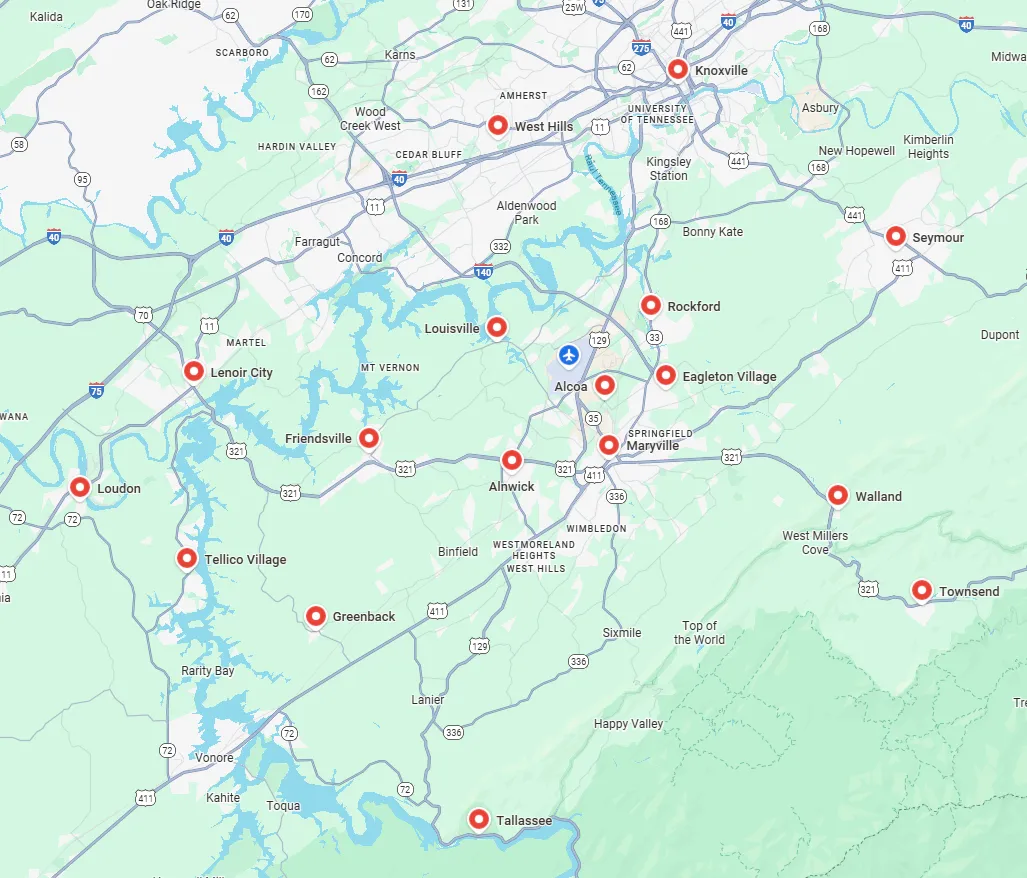


Mini Split Installation in Seymour, TN
For Seymour, TN homes, choosing a ductless Mini Split is a smart solution for adding zoned comfort, significantly improving energy efficiency, and tackling those tricky heating and cooling problems. Everest Air Heating and Cooling brings experienced, code-aware Mini Split installation services to the entire East Tennessee area, carefully tailored to our local weather patterns, diverse home construction types, and, of course, the specific comfort needs of Seymour residents. We'll explain the full installation process to you – everything from what to expect on install day, important sizing and placement considerations, the necessary refrigerant and electrical work, permitting and inspection details, thorough post-install testing and orientation, right down to the ongoing warranty and maintenance handoff. Our aim at Everest Air Heating and Cooling is to provide you with all the information you need to make a confident decision about installing a ductless Mini Split in your Seymour home.

Why a Mini Split Makes Sense in Seymour, TN
Seymour sits on the edge of the Great Smoky Mountains and experiences hot, humid summers and cool winters. That climate profile makes efficient, flexible cooling essential in summer and reliable supplemental heat valuable in shoulder seasons and milder winters. Many homes in the area are older or have additions, bonus rooms, finished basements, or sunrooms where extending or installing ductwork is impractical or costly. Ductless Mini Split systems provide:
- Zoned temperature control so you can condition only the rooms in use
- High seasonal efficiency that reduces running costs during hot, humid months
- Quiet indoor operation that suits bedrooms and home offices
- A compact outdoor unit that fits in constrained yards or on wall brackets
- Heating capability in models with heat pump technology for milder winter days
Everest Air Heating and Cooling tailors installations for Seymour homes by accounting for local humidity, typical window orientations, attic and basement construction, and common retrofit challenges.
Common Mini Split Types and Use Cases
Understanding the system types helps you choose the right configuration for your home:
- Single-zone wall-mounted units: Ideal for a single bedroom, office, garage conversion, or sunroom.
- Multi-zone systems: Multiple indoor heads served by one outdoor condenser; good for whole-home retrofit where adding ducts would be costly.
- Floor-mounted units: Better for spaces where wall mounting is impractical or for homes with low walls and high ceilings.
- Ceiling cassette units: Discreet solution for open floor plans and high-end finishes.
- Ducted Mini Splits (short-run): Combine Mini Split efficiency with limited duct distribution for small, connected spaces.
Everest Air evaluates the best unit type for your home in Seymour during the on-site assessment to balance performance, aesthetics, and cost.
On-Site Evaluation and Load/Sizing Considerations
Professional sizing avoids the common mistakes of oversizing (short cycling, humidity problems) and undersizing (insufficient comfort). Everest Air follows industry best practices when evaluating a Seymour home:
- Perform a Manual J load calculation: This considers square footage, ceiling height, insulation levels, window types and orientation, shade, number of occupants, lighting and appliances that add internal heat, and local climate data for Seymour.
- Verify insulation and air sealing: An older Seymour home with minimal insulation or air leaks may need a different sized unit than a well-insulated new build.
- Consider solar gain and shading: South and west-facing rooms in Seymour can add cooling load in summer afternoons.
- Identify use patterns: Bedrooms, media rooms, or home offices require different runtime and noise considerations.
- Plan for future needs: If you plan to finish an attic or add a sunroom, zoning choices can include capacity for future expansion.
Accurate load calculations let Everest Air recommend a system that performs efficiently year round and keeps humidity under control during East Tennessee summers.
Indoor and Outdoor Unit Placement
Proper placement affects comfort, energy use, noise, maintenance access, and aesthetics. Key considerations for Seymour homes include:
Indoor unit placement
- Mount indoor heads on interior walls with unobstructed airflow to the occupied zone.
- Place units high on the wall for optimal air distribution, unless a floor-mounted unit is specified for accessibility.
- Avoid placing heads directly above TVs or speakers to minimize vibration transfer and noise concerns.
- For bedrooms, select quieter models and position them to minimize direct airflow while still delivering even temperature control.
- Ensure indoor unit placement allows for condensate drain routing to a safe discharge point or condensate pump.
Outdoor unit placement
- Mount outdoor condensers on a level pad or wall brackets with proper vibration isolation.
- Maintain required clearances per manufacturer and local code for airflow and service access.
- Choose a location that limits noise toward bedrooms or neighboring properties in Seymour.
- Elevate units above expected snow or debris line where applicable and allow for seasonal leaf drop and yard maintenance.
- Consider proximity to indoor units to minimize refrigerant line length and reduce installation complexity.
Everest Air will provide placement diagrams during the planning phase so you understand exactly where each component will go.
Refrigerant Line, Drain, and Electrical Work
Mini Split installation requires precise refrigeration practices and safe electrical work. Everest Air follows manufacturer specifications and code requirements for Seymour homes:
Refrigerant lines and piping
- Route insulated copper linesets within conduit or through protective sleeves, minimizing exposed runs for longevity and appearance.
- Adhere to manufacturer maximum line lengths and elevation differences to maintain warranty compliance and system performance.
- Evacuate the lines to manufacturer-recommended vacuum levels before charging to remove moisture and non-condensables.
- Charge the system according to the manufacturer’s prescribed method, including measured refrigerant additions where required.
Condensate drainage
- Provide gravity drain or condensate pump installation depending on indoor unit location.
- Insulate and trap lines where necessary to prevent siphoning.
- Install overflow protection when required by local code.
Electrical and controls
- Install a dedicated circuit and breaker sized to the outdoor unit’s requirements and follow NEC rules for disconnects.
- Verify compatibility with existing electrical service; upgrade service when necessary for multi-zone systems.
- Provide surge protection and proper grounding to prolong equipment life.
- Install communication wiring between indoor and outdoor units per manufacturer instructions and configure thermostats or remote controls.
All refrigerant handling is completed by EPA-certified technicians, and electrical work conforms to NEC standards and local jurisdictional requirements.
Permit and Code Considerations in Seymour, TN
Seymour properties fall within Blount County and Sevier County jurisdictions, with proximity influences from Knox County for some areas. Everest Air navigates local permitting and code obligations to ensure installations are inspected and approved:
- Building permits: Most Mini Split installations require a mechanical or building permit. Everest Air prepares permit-ready documentation, including equipment specifications and load calculations.
- Electrical permits: Required for new dedicated circuits or service upgrades.
- Refrigerant and HVAC work: Performed by licensed technicians holding required EPA certifications for refrigerant handling.
- Local inspection: Everest Air coordinates inspections with the appropriate county building department to clear the installation.
- HOA and historic district considerations: For neighborhoods in Seymour with covenants or historic guidelines, mounting hardware, condenser locations, and exterior penetrations are planned to meet aesthetic and regulatory requirements.
Everest Air is experienced in filing permits and working with county inspectors in Blount, Sevier, and nearby Knox County, reducing administrative burden for homeowners.
Timeline and What to Expect on Install Day
Everest Air schedules installations to minimize disruption and provide predictable timelines. A typical single-zone or small multi-zone install in Seymour follows these steps over one to two days depending on complexity:
Pre-installation
- Confirm access, parking, and required preparations with the homeowner.
- Protect floors, furnishings, and landscaping with drop cloths and shoe covers.
Day 1: Installation and rough-in
- Exterior: Place and secure the outdoor condenser on a pad or bracket and install electrical disconnect.
- Interior: Mount indoor head bracket and create a small wall core for lineset passage, ensuring a neat finish.
- Run lineset, condensate drain, and low-voltage/control wiring between indoor and outdoor units with proper support and protection.
Day 2: Start-up, testing, and homeowner orientation
- Evacuate and charge refrigerant system to manufacturer specs.
- Perform electrical connections and power on equipment for initial testing.
- Calibrate controls and demonstrate remote functions, Wi-Fi or smart features if available.
- Clean the work area and inspect for aesthetic sealing at wall penetrations.
Larger multi-zone or retrofit installations that require branch lines or structural work may take additional days. Everest Air provides a clear timeline during the planning phase based on your Seymour home layout.
Post-Install Testing and Customer Orientation
A proper start-up includes a series of performance checks and a customer walkthrough so you understand operation and maintenance:
Performance and safety tests
- Measure refrigerant pressures and temperatures to verify superheat and subcooling within manufacturer tolerances.
- Check airflow and temperature delta across indoor units to confirm capacity and distribution.
- Confirm condensate drain function and test safety float or overflow switches.
- Verify electrical load and breaker operation, and check for any nuisance trips.
- Perform sound checks indoors and outdoors to ensure noise levels are within expected ranges.
Customer orientation
- Demonstrate how to use the remote, wall control, or app-based thermostat.
- Explain mode selection: heat, cool, fan, dehumidify, and auto functions, and when to use each in Seymour’s climate.
- Show filter removal and cleaning procedures and frequency recommendations for local humidity conditions.
- Review warranty registration and the maintenance schedule.
Everest Air leaves homeowners with clear documentation on operating tips, maintenance tasks, and what to monitor seasonally in Seymour homes to keep systems efficient.
Warranty, Maintenance Handoff, and the Y.E.T.I Comfort Plan
Manufacturer warranties cover parts and, often, limited compressor coverage, while Everest Air provides labor and installation workmanship assurances:
- Manufacturer warranty: Typically covers parts and compressors for specified periods; exact terms vary by brand and model.
- Installation labor warranty: Everest Air provides labor warranty documentation covering workmanship for a defined period.
- Warranty registration: Everest Air assists with registration to activate manufacturer warranties.
- Recommended maintenance: Regular filter cleaning, annual professional inspections, and condensate drain checks improve longevity and efficiency.
- Y.E.T.I Comfort Plan: Everest Air’s maintenance plan offers seasonal checkups, priority scheduling, and discounts on service. Enrolling in a maintenance plan is especially valuable in Seymour’s humid summers to maintain peak dehumidification performance and in shoulder seasons to ensure reliable heating.
During handoff, Everest Air supplies a maintenance checklist, warranty paperwork, and a recommended service interval based on system usage and Seymour’s climate.
Common Installation Challenges and How Everest Air Solves Them
Mini Split retrofits present recurring challenges that professional installers address before they become issues:
- Tight line lengths and concealment: We route lines through closets, attics, or crawlspaces and use decorative cover options where necessary.
- Historic or HOA exterior appearance rules: We recommend low-visibility condenser locations, paintable covers, or mounting options that comply with local guidelines.
- Electrical service limits: If your Seymour home needs a service upgrade for a multi-zone system, Everest Air coordinates with licensed electricians and the utility.
- Condensate management in finished basements: We install reliable condensate pumps and include overflow protections for lower-level indoor units.
- Noise and vibration concerns near bedrooms: We specify low-noise models and install anti-vibration mounts and sound-reducing placement.
Our technicians use a combination of experience, manufacturer best practices, and local knowledge of Seymour area construction to deliver clean, reliable installations.
Energy Savings, Comfort, and Indoor Air Quality Benefits
A correctly sized and installed Mini Split delivers tangible comfort and performance benefits for Seymour homeowners:
- Zoned energy savings: Condition only the rooms you use, reducing energy waste in unoccupied spaces.
- Improved humidity control: Proper humidity management during hot summers improves comfort and helps protect wood floors and furniture.
- Better indoor air quality: Many Mini Split models include advanced filters that remove dust, pollen, and some airborne particles, a useful feature during allergy seasons common in East Tennessee.
- Consistent temperature control: Variable-speed compressors and inverter technology provide steadier temperature control and reduced cycling.
- Reduced duct losses: Eliminating or minimizing duct runs avoids energy losses associated with leaky or uninsulated ducts in attics or crawlspaces.
Everest Air quantifies expected savings and comfort improvements based on your specific Seymour home and usage patterns.
Financing and Package Options
While this page does not include pricing, it is important to know that there are financing options and package choices to make Mini Split installations more accessible. Everest Air outlines equipment packages, maintenance plan bundles, and financing terms during the planning phase so you can select an approach that meets your budget and comfort goals without surprises. Documentation for warranty coverage and maintenance handoff is provided at install completion.
Maintenance Tips Specific to Seymour Homes
East Tennessee weather and typical home construction create a few maintenance priorities for Mini Split owners:
- Clean or replace filters every 1 to 3 months in the cooling season to handle higher pollen and humidity loads in Seymour.
- Keep outdoor condenser area free of leaves, mulch, and tall grass, especially in fall when deciduous debris accumulates.
- Schedule a professional seasonal Tune-Up in spring for cooling and fall for heating to optimize performance across the year.
- Monitor condensate lines for slow drainage during heavy use periods and schedule a service call if you notice any dripping or overflow.
- Check seals around wall penetrations for drafts and reseal as needed to preserve efficiency.
Regular maintenance keeps systems efficient and reduces the likelihood of mid-summer or mid-winter failures.
Frequently Asked Questions
Q: How long does a typical Mini Split installation take in a Seymour home?
A: Most single-zone installations can be completed in one day, with multi-zone or complex retrofits taking one to three days depending on line lengths, mounting needs, and any electrical upgrades.
Q: Will I need a permit for a Mini Split installation in Seymour?
A: Yes. Permitting requirements depend on the property location within Blount, Sevier, or Knox County. Everest Air prepares permit documentation and coordinates inspections with the appropriate county authority.
Q: How do you size a Mini Split for my home?
A: We perform a Manual J load calculation that considers square footage, insulation, windows, occupancy, and local Seymour climate factors to select the right capacity and number of zones.
Q: Can a Mini Split provide adequate heat during Seymour winters?
A: Mini Splits with heat pump technology provide effective heating for most Seymour homes, especially when used as supplemental heat or in well-insulated spaces. For extremely cold spells, auxiliary heat or a hybrid system may be recommended.
Q: What maintenance does a Mini Split need in humid East Tennessee summers?
A: Regular filter cleaning, annual professional checks for refrigerant charge and condensate drainage, and keeping outdoor units clear of debris are key to peak dehumidification and cooling performance.
Q: Do Mini Splits require a lot of electrical work?
A: Single-zone systems typically need a dedicated circuit sized to the outdoor unit. Multi-zone systems or older homes with limited service capacity may require service panel upgrades, which Everest Air can evaluate and coordinate.
Q: Will my installation void the manufacturer warranty if not done by a dealer?
A: Manufacturer warranties usually require professional installation by qualified technicians. Everest Air installs per manufacturer requirements and assists with warranty registration to ensure coverage.
Q: How noisy are Mini Split systems?
A: Indoor units are designed to be very quiet; many models operate at near whisper levels. Outdoor condensers produce some operational noise, but proper placement and anti-vibration mounting minimize disturbance.
Q: Can I add zones later if I start with a single unit?
A: Some multi-zone outdoor units allow additional indoor heads later, provided the outdoor condenser has remaining capacity and refrigerant piping can be routed. Plan for potential expansion during the initial evaluation.
Q: Is an EPA certification required for the installer?
A: Yes. Technicians who handle refrigerant must hold EPA 608 certification. Everest Air employs certified technicians for refrigerant work.
Everest Air Heating and Cooling brings local knowledge, professional installation standards, and clear communication to every Mini Split installation in Seymour, TN. The process from evaluation and permitting through final testing and maintenance handoff is structured to deliver lasting comfort and peace of mind tailored to East Tennessee homes.
hear what our satisfied clients have to say

David P.
Service areas