

HVAC Replacement in Rockford, TN
Replacing your entire HVAC system is a big step for any homeowner. Here in Rockford, TN, with our humid summers and chilly winters, your heating and cooling equipment works hard. Choosing the right replacement can dramatically boost your home's comfort, cut down energy bills, and save you from future repair headaches. That's where Everest Air Heating and Cooling comes in. We offer comprehensive HVAC replacement services specifically for Rockford homes, handling everything from a careful evaluation and accurate sizing to the responsible removal of your old unit and thorough testing to guarantee long-lasting comfort and reliability.
.avif)
Why Rockford homes often need full HVAC replacement
Rockford sits in East Tennessee, a region with humid, high-temperature summers and seasonal cold snaps. These climate extremes accelerate wear on both air conditioning and heating systems. Common local factors that drive replacement needs include:
- High summer cooling loads and humidity, which stress compressors and coils.
- Seasonal pollen and outdoor allergens that increase indoor air contamination and strain filtration and ductwork.
- Older homes with longer duct runs, inadequate insulation, or undersized equipment that struggle to deliver even comfort.
- Systems that have reached the end of their expected service life after years of repairs.
Understanding these local influences helps explain why an aging system that once worked fine can start costing more to run, deliver uneven comfort, and fail more often. Everest Air Heating and Cooling evaluates these conditions specifically for Rockford houses when recommending replacement solutions.
Common signs you need an HVAC replacement
You do not have to wait for a complete failure to consider replacement. Typical signs that a full system replacement may be the most cost-effective option include:
- System age: Most central air conditioners and heat pumps show declining performance after 10 to 15 years. Furnaces often last 15 to 20 years depending on type and maintenance.
- Rising energy bills despite regular operation.
- Frequent breakdowns and recurring repairs, especially if different components are failing.
- Uneven temperatures between rooms or inability to reach set thermostat temperatures.
- Loud or unusual noises from the outdoor unit or furnace.
- Refrigerant leaks or compressor failure in the outdoor unit.
- Rusted or corroded components, especially in outdoor condensers exposed to the elements.
If several of these issues are present, a full replacement can provide a more reliable, efficient, and comfortable home environment than patchwork repairs.
How Everest Air evaluates aging equipment
A correct replacement starts with a professional evaluation. Our technicians inspect each component and consider how your home’s layout, insulation, ductwork, and daily usage affect system performance. A typical evaluation includes:
- Visual inspection of outdoor condenser, indoor coil, furnace or air handler, ducts, and thermostat.
- Measurement of operating parameters: refrigerant pressures, electrical loads, airflow, and temperature split.
- Assessment of system age, maintenance history, and prior repair records.
- Load calculation using industry-standard methods to determine accurate heating and cooling requirements based on Rockford’s climate, home orientation, insulation levels, and window areas.
- Ductwork inspection for leaks, undersizing, or poor insulation that would hamper a new system’s performance.
This assessment ensures any replacement recommendation is sized and specified to meet your home’s real needs, not a rough estimate. Proper sizing avoids short cycling, poor humidity control, and reduced equipment longevity.
Replacement options and what to consider
There is no one-size-fits-all replacement. Everest Air presents options with clear explanations so you can choose the best fit for efficiency, comfort, and budget. Common replacement types for Rockford homes include:
- Central split systems (air conditioner condensing unit paired with a furnace or air handler) for houses with existing ductwork.
- Heat pumps, available in air-source and Mini Split formats, which provide efficient cooling and heating in moderate climates and can qualify for energy incentives.
- Ductless Mini Split systems for additions, finished basements, or homes with limited or no ductwork, offering zone control and high efficiency.
- High-efficiency furnaces for homes with gas heating that need improved heating performance.
- Packaged systems for homes where indoor space is limited and an all-in-one unit is preferred.
Key factors we review when recommending options:
- Efficiency ratings such as SEER for cooling and AFUE for heating, and how those ratings translate to expected energy savings in Rockford’s weather.
- Dehumidification performance, which is critical for Tennessee summers.
- Compatibility with existing ductwork and thermostats.
- Future serviceability and parts availability.
- Warranty coverage and manufacturer reputation.
Everest Air Heating and Cooling explains the tradeoffs among price, comfort, efficiency, and longevity so you can make an informed decision.
Sizing and system design: why it matters
Proper sizing and design are the cornerstone of a successful replacement. Oversized equipment cycles on and off frequently, reducing comfort and increasing wear. Undersized equipment struggles to reach set temperatures and runs continuously.
Our process uses a Manual J load calculation tailored to Rockford climate patterns and your home’s construction. We also perform duct sizing and static pressure calculations to ensure the new system will deliver the right airflow. If ducts are undersized, leaking, or poorly insulated, we recommend targeted ductwork improvements to protect the investment in the new equipment.
Removal and disposal of old units
Safe, compliant disposal is part of responsible replacement. Everest Air follows environmental and regulatory practices during removal:
- Recovery of refrigerant using EPA-compliant equipment and documented recovery procedures.
- Dismantling and removal of outdoor condensers, indoor coils, furnace sections, and any associated pads or supports.
- Recycling of metal and components where possible, and proper disposal of non-recyclable materials.
- Cleaning and sealing of the area to prevent pest entry and ensure the new unit sits on a stable, level surface.
We handle the logistics so homeowners in Rockford do not need to worry about hazardous handling of refrigerants or bulky equipment disposal.
Permits, codes, and warranties
Replacing HVAC equipment often requires permits and must meet local building codes. Everest Air ensures installations comply with applicable electrical, mechanical, and safety codes in Blount County and surrounding jurisdictions. Important steps include:
- Securing necessary permits and scheduling inspections as required by local authorities.
- Performing electrical upgrades if the new equipment requires different power requirements.
- Registering manufacturer warranties and providing documentation detailing model numbers, serial numbers, and installation dates.
Compliant installations protect homeowner rights under manufacturer warranties and local regulations.
Replacement timeline: what homeowners can expect
A clear timeline helps homeowners plan around the replacement. Typical phases and timeframes include:
- Initial evaluation and proposal: 1 to 3 days, including load calculations and equipment recommendations.
- Ordering equipment: 1 to 3 weeks depending on manufacturer lead times and model availability.
- Permit acquisition: varies by jurisdiction, often a few days to a week.
- Installation day(s): most residential replacements are completed within one to two days for standard split systems. More complex projects, ductwork upgrades, or custom installs may take longer.
- Start-up and testing: completed the same day as installation, including refrigerant charge adjustments, airflow balancing, and system calibration.
- Final inspection and documentation: scheduled as required by local code, often within a few days after installation.
Everest Air provides realistic timelines based on local supply conditions and installation complexity for Rockford homes.
Testing and commissioning for reliable performance
A thorough start-up and testing process verifies the new system is functioning optimally. Key commissioning steps include:
- Verifying correct refrigerant charge and pressure readings for cooling efficiency.
- Measuring airflow and static pressure across the system to confirm proper distribution.
- Testing safety controls, electrical connections, and thermostat calibration.
- Running the system through cooling and heating cycles and measuring temperature differentials.
- Assessing humidity control and making adjustments to fan speeds or control settings.
- Demonstrating system operation and maintenance basics to the homeowner.
These tests reduce callbacks and ensure your new equipment performs as advertised in Rockford’s climate conditions.
Financing and rebate considerations
Replacing an HVAC system often comes with financing and incentive opportunities that can make higher-efficiency equipment more affordable. Important points to consider:
- Manufacturer rebates: Certain high-efficiency units may qualify for manufacturer rebates when installed by licensed contractors.
- Utility incentives: Local or regional utility programs sometimes offer rebates or credits for energy-efficient equipment or heat pumps that reduce peak demand in summer.
- Federal and state incentives: Energy-focused federal tax credits or state programs may apply to specific technologies, such as qualifying heat pumps or ENERGY STAR equipment. Availability and eligibility can change, so it is important to confirm current programs.
- Financing options: Many homeowners choose financing to spread replacement costs over time. Typical financing choices include loan programs and payment plans tailored for home energy improvements.
Everest Air Heating and Cooling includes a thorough explanation of potential incentives and financing considerations during the proposal stage so you understand long-term value and available savings options.
Common replacement scenarios and recommended solutions
To make the decision more practical, here are common scenarios seen in Rockford and the solutions typically recommended:
- Old central A/C with repeated compressor failures: Replace with a modern high-efficiency split system or a heat pump with variable-speed technology to improve dehumidification and reduce cycling.
- Gas furnace near end of life but ductwork in good condition: Install a high-efficiency furnace matched with a modern condensing outdoor unit for balanced heating and cooling efficiency.
- Home with no ductwork or additions: Consider ductless Mini Split systems to provide zoned comfort without invasive ductwork.
- Homes with poor humidity control: Select systems with enhanced dehumidification features or variable-speed blowers to maintain comfort in Tennessee summers.
- Undersized system causing comfort complaints: Perform a full load calculation and install correctly sized equipment with possible duct upgrades.
Each recommendation factors in energy efficiency, lifecycle costs, and how the equipment will perform in Rockford’s seasonal climate.
Post-installation care and maintenance
Proper maintenance preserves performance and protects the replacement investment. Key post-install practices include:
- Regular filter replacement and inspection of outdoor coils for debris and vegetation.
- Seasonal Tune-Ups to check refrigerant, electrical connections, and airflow.
- Duct sealing and insulation checks to maintain efficiency and indoor air quality.
- Prompt attention to unusual sounds, rapid cycling, or thermostat inconsistencies.
Everest Air Heating and Cooling can provide ongoing maintenance plans like the Y.E.T.I Comfort Plan to help Rockford homeowners keep systems running at peak efficiency and extend equipment life.
Benefits of timely replacement
Choosing a full system replacement when appropriate offers several clear benefits for Rockford homeowners:
- Improved comfort consistency and more reliable temperature control across the home.
- Better humidity control during hot Tennessee summers.
- Lower energy usage and more predictable monthly bills when replacing with a higher-efficiency system.
- Reduced risk of emergency failures during extreme weather.
- Opportunity to upgrade to smart thermostats and zoning solutions for personalized comfort and energy savings.
- Enhanced indoor air quality through modern filtration and ventilation features.
Timely replacement can be viewed as an investment in home value, comfort, and long-term energy savings.
Why professional installation matters
A new HVAC system’s performance depends as much on installation quality as on the equipment itself. Poor installation can void warranties, reduce system efficiency, and shorten equipment life. Everest Air Heating and Cooling emphasizes professional installation with attention to:
- Correct refrigerant charge and airflow setup.
- Precise electrical and safety connections.
- Proper handling and disposal of old refrigerant-containing equipment.
- Accurate documentation and warranty registration.
Professional installation ensures your new system provides the efficiency and reliability you expect in Rockford’s climate.
Making the replacement decision
Deciding to replace an HVAC system involves weighing current system condition, repair history, comfort needs, and long-term energy goals. An objective evaluation that compares repair costs, expected efficiency gains, and the impact of modern equipment on comfort and humidity control helps homeowners make an informed choice. Everest Air Heating and Cooling offers clear, detailed proposals that include system options, expected performance changes in Rockford weather, and explanations of the technical decisions so you can choose with confidence.
FAQs
Q: How long does a typical HVAC replacement take from evaluation to completion?
A: The initial evaluation and recommendation typically take a few days. Ordering and permitting can add one to three weeks depending on equipment availability and local permit timelines. Most standard residential installations are completed in one to two days once equipment is on site, with start-up and testing done the same day.
Q: Will you remove and dispose of my old system?
A: Yes. Everest Air Heating and Cooling recovers refrigerant per EPA guidelines, recycles materials where possible, and disposes of non-recyclable components responsibly. We ensure the work area is cleaned and the installation conforms to environmental and code requirements.
Q: How do you determine the right size and type of system for my Rockford home?
A: We perform a Manual J load calculation that accounts for Rockford’s climate, your home’s size, insulation levels, window areas, and occupancy patterns. We also inspect ductwork and airflow requirements to select a system that provides balanced comfort and efficient operation.
Q: Can I get rebates or incentives for installing high-efficiency equipment?
A: Many homeowners may qualify for manufacturer rebates, utility incentives, or federal and state programs for energy-efficient heat pumps or ENERGY STAR equipment. Availability and eligibility vary, so incentive opportunities are reviewed during the proposal to identify potential savings.
Q: What testing is done after installation to ensure proper operation?
A: After installation we verify refrigerant charge, measure airflow and temperature differentials, test safety controls and electrical connections, calibrate thermostats, and run the system through heating and cooling cycles. We document results and explain system operation to the homeowner.
Q: How important is ductwork when replacing an HVAC system?
A: Ductwork is critical. Leaky, undersized, or poorly insulated ducts can undermine a new system’s performance and efficiency. We inspect ducts as part of the evaluation and recommend repairs or upgrades when necessary to match the new equipment.
Q: Does replacing my HVAC system help with humidity control in Tennessee summers?
A: Yes. Modern systems with proper sizing, variable-speed compressors, and appropriate airflow control can significantly improve dehumidification and indoor comfort during hot, humid summers common in Rockford.
Q: What warranties are included with a new system?
A: Equipment warranties vary by manufacturer and model, and proper installation is usually required to maintain warranty coverage. Everest Air Heating and Cooling provides documentation of installed equipment, helps with warranty registration, and ensures installations meet manufacturer requirements.
Q: Should I consider a heat pump or a traditional split system in Rockford, TN?
A: Heat pumps are highly efficient for regions with moderate heating needs and offer strong cooling and heating performance. The best choice depends on your home’s existing system, fuel source preferences, and comfort needs. We present both options with performance and incentive considerations tailored to Rockford conditions.
Q: What ongoing maintenance is needed after replacement?
A: Regular filter changes, annual or biannual professional Tune-Ups, duct inspections, and prompt attention to unusual noises or performance changes help maintain efficiency and extend equipment life. Maintenance programs like the Y.E.T.I Comfort Plan help schedule these services and preserve warranty benefits.
hear what our satisfied clients have to say

David P.
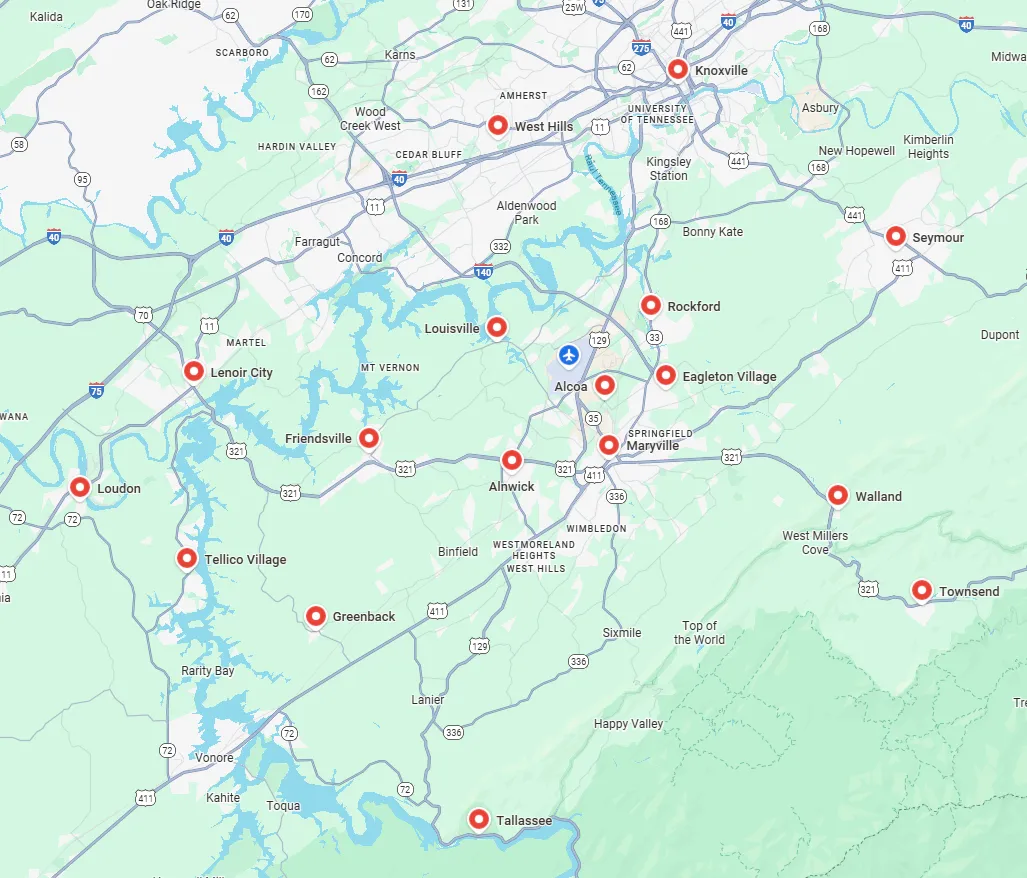
Service areas