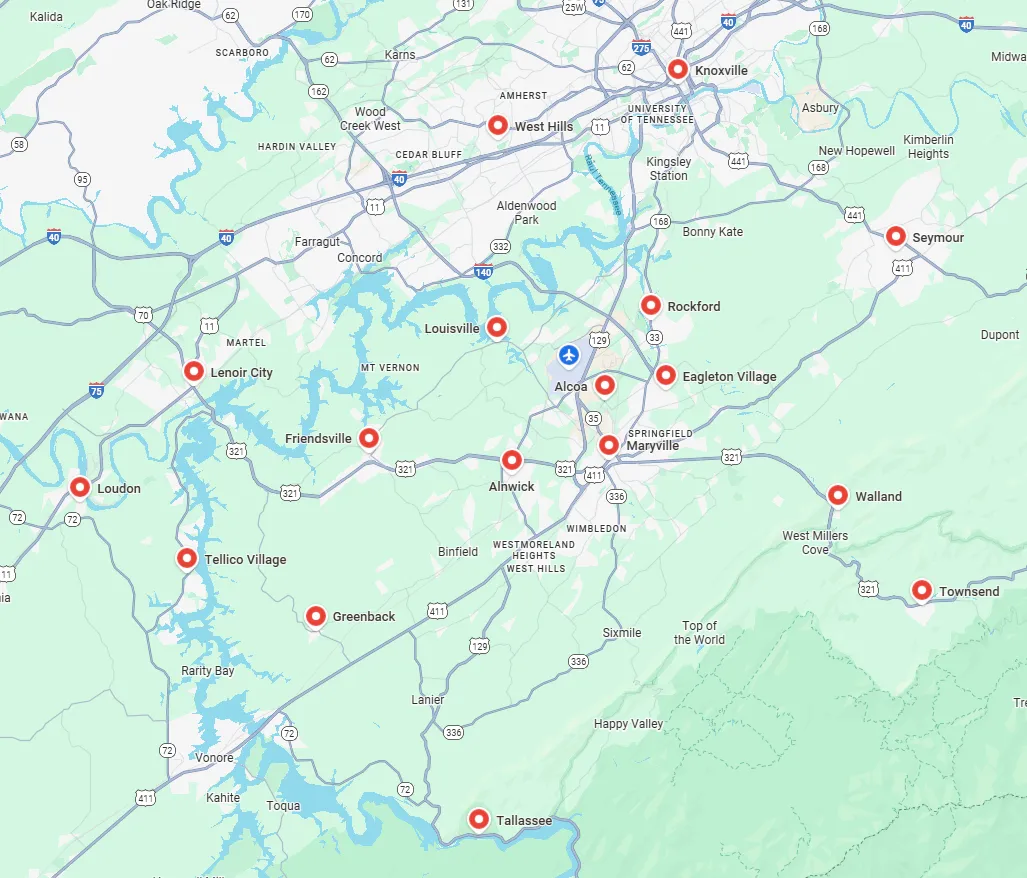


HVAC Repair in Eagleton Village, TN
Keeping your home comfortable year-round in Eagleton Village, TN, means relying on HVAC equipment that performs reliably through hot, humid summers and chilly, changeable winters. That's why Everest Air Heating and Cooling is here to help. We provide professional HVAC repair services tailored to the specific climate and building conditions found in Eagleton Village homes. Our goal is to explain common failure modes, practical troubleshooting steps you can take before a service visit, how our diagnostic and flat-rate visit process works, parts and labor practices, emergency and same-day repair options, typical repair workflows, and how preventive care with Everest Air Heating and Cooling can reduce future repair costs.
Why correct, timely HVAC repair matters in Eagleton Village
- East Tennessee summers bring high humidity and sustained cooling demand that stresses compressors, coils, and fans. Delaying repairs during peak heat risks complete system failure and higher energy bills.
- Winters can include cold snaps and freeze risk for outdoor components, making reliable heating system repair essential for safety and comfort.
- Older houses in the area sometimes have ductwork challenges or mixed-system configurations that require careful diagnostics to avoid inefficient repairs.
- Local pollen, airborne debris, and seasonal storms contribute to dirty coils, clogged filters, and water-logged condensate lines that create secondary damage if ignored.
Everest Air Heating and Cooling approaches each repair with attention to these local realities, providing diagnostics and fixes designed to restore comfort efficiently and prevent repeat visits.
Common HVAC failure modes in Eagleton Village homes
Understanding the most frequent breakdowns helps you identify problems early and communicate effectively with your technician. Common issues we see include:
- Refrigerant leaks and low charge
- Symptoms: reduced cooling capacity, longer run times, ice forming on evaporator coils, hissing sounds near the outdoor unit.
- Local triggers: aging copper lines, corrosion from high humidity, and damage from yard maintenance or storms.
- Compressor failures and motor burnout
- Symptoms: outdoor unit not running, loud grinding or clanking noises, short cycling, tripped breakers.
- Local triggers: high summertime run hours, inadequate airflow causing overheating, electrical component wear.
- Condenser and evaporator coil damage or blockage
- Symptoms: reduced airflow and efficiency, higher energy use, freezing evaporator coil.
- Local triggers: pollen and tree debris accumulation, restricted condensate drainage after heavy rainfall.
- Air handler and blower motor problems
- Symptoms: weak airflow from vents, unusual noises from the air handler, inconsistent room temperatures.
- Local triggers: dust buildup in older homes, degraded belts on older models, insect nests in crawl spaces.
- Thermostat malfunctions and control failures
- Symptoms: system cycling wrong, inaccurate temperatures, failure to initiate heating or cooling.
- Local triggers: outdated thermostats, wiring issues from renovations, incorrect programming after power outages.
- Ignition and heat transfer failures in gas furnaces
- Symptoms: no heat, unusual odors, pilot or ignition problems, cycling issues.
- Local triggers: seasonal inactivity, rodents or nests in venting, corroded ignition components.
- Drainage and condensate problems
- Symptoms: water leaks around equipment, humid indoor air, secondary water damage.
- Local triggers: clogged condensate lines from biological growth and local pollen, poor slope under houses or in crawl spaces.
- Duct leaks and insulation failures
- Symptoms: uneven heating or cooling, higher bills, hot or cold spots.
- Local triggers: older ductwork, shifting foundations, crawl space moisture damaging seams.
Safe troubleshooting steps you can do before calling for service
When your system acts up, a few safe checks can help determine whether you need a technician and what information to gather:
- Check the basics first
- Verify the thermostat is set to the correct mode and temperature.
- Confirm circuit breakers and disconnect switches at the outdoor unit are on.
- Replace or inspect the air filter; a clogged filter causes many airflow-related complaints.
- Inspect vents and basic airflow
- Make sure supply and return vents are open and unobstructed.
- Note if the blower runs but airflow is low, or if some rooms are affected more than others.
- Look for visible leaks and unusual noises
- If you see water pooling, check the condensate pan for overflow and the visible drain line.
- Document any new banging, grinding, or hissing sounds and when they occur.
- Listen and log system behavior
- Note run times, frequency of cycles, and any pattern (for example, only failing during hot afternoons).
- Capture precise symptoms and timing to help the technician diagnose more quickly.
Important safety note: Do not attempt to open sealed electrical panels, service the gas valve, handle refrigerant, or disassemble the blower or compressor. These tasks require licensed technicians. Everest Air Heating and Cooling emphasizes technician safety and homeowner protection on every visit.
Emergency and same-day repair options explained
Emergencies happen, especially in home climates like Eagleton Village where summer heat and winter chill can become dangerous. Here is how an emergency or same-day repair is typically handled professionally:
- Triage and priority scheduling
- When a system failure affects occupant safety or health, technicians prioritize triage to restore basic operation quickly. Examples include no heat in winter with vulnerable occupants, or no cooling during extreme heat events.
- Technicians evaluate whether a temporary measure can restore safe operation until a permanent repair is possible.
- On-site diagnostics under time-sensitive circumstances
- Emergency visits focus on isolating the root cause and determining whether a temporary repair is safe and effective.
- If the issue requires parts that are not on the truck, a technician will recommend an interim solution where possible, such as a temporary blower replacement or clearing the condensate line to prevent water damage.
- Equipment protection and homeowner safety
- For gas or combustion equipment failures, technicians check for safe venting and combustion operation before restoring service.
- For electrical failures, breakers, wiring, and motor protection are assessed to prevent repeat hazards.
- Same-day repair feasibility
- Many common repairs are completed the same day when parts are stocked or readily available. Typical same-day repairs include capacitor replacements, contactor and relay swaps, refrigerant top-off for small leaks (with follow-up recommended), thermostat replacement, and fan motor swaps.
- More complex component failures like compressor replacement or major control board work can often be started the same day but may require a follow-up visit for full system restoration.
Everest Air Heating and Cooling structures its scheduling to accommodate urgent needs while ensuring technicians have the time and resources to diagnose correctly.
What to expect during a diagnostic flat-rate visit
Everest Air Heating and Cooling provides a transparent flat-rate diagnostic visit to set clear expectations for homeowners in Eagleton Village. A typical flat-rate visit includes:
- Arrival and system intake
- Technician confirms the system type, age, and symptom history with the homeowner.
- A safety check is performed first to ensure no immediate hazards.
- Comprehensive inspection and testing
- Visual inspection of indoor and outdoor units, electrical connections, filters, ducts, and condensate lines.
- Measured system checks such as static pressure, temperature split, refrigerant pressures, and airflow where applicable.
- Thermostat and control system diagnostics.
- Findings and options
- The technician explains observed failures in clear, non-technical language and presents repair options with the benefits and tradeoffs of each approach.
- For systems beyond economical repair, the conversation includes indicators that support considering replacement rather than continual repairs.
- Written diagnostic summary
- A written summary of findings and recommended next steps is provided, describing parts likely required and expected labor implications.
- Any required follow-up visits or parts delivery timelines are documented.
Flat-rate diagnostic visits reduce uncertainty by providing a clear, consistent approach to discovering root causes. This helps Eagleton Village homeowners make informed, cost-effective decisions.
Parts and labor practices you can expect
Transparent parts and labor practices are central to responsible HVAC repair. Everest Air Heating and Cooling follows industry best practices, explained here in homeowner terms:
- Parts sourcing and quality
- Technicians prefer OEM or OEM-equivalent parts for critical components to help preserve equipment performance and warranty alignment.
- Where appropriate, high-quality aftermarket parts are used if they provide equal or better service life and value.
- Labor practices and workmanship
- Repairs are performed by licensed technicians using industry-standard procedures, safety checks, and documentation.
- Technicians complete operational tests after any repair to confirm proper function and evaluate for related issues.
- Warranties and guarantees
- Most replacement parts carry a manufacturer warranty; technicians document warranty coverage and recommended maintenance to uphold those warranties.
- Labor typically has a workmanship guarantee period covering installation-related failures; specifics vary by repair type and will be explained during the diagnostic review.
- Transparent billing and estimates
- Diagnostic reports outline parts, labor, and recommended repairs so you understand where costs are allocated.
- If additional issues are found during repair, technicians explain the new findings and get authorization before proceeding.
These practices aim to give Eagleton Village homeowners predictable outcomes and fewer surprises after service.
Typical repair processes and timelines for common problems
Knowing what happens during common repairs helps set expectations for time on site and possible disruptions.
- Refrigerant leak repair and recharging
- Process: locate leak with electronic leak detection, repair or replace affected line or component, evacuate and recharge system to manufacturer specifications, test under load.
- Timeline: often same-day if leak location is accessible and parts are on hand; larger leak repairs may take longer due to evacuation and pressure testing requirements.
- Compressor or major outdoor component replacement
- Process: isolate refrigerant safely, remove and replace the failed compressor or condenser unit, pressure test and evacuate system, recharge, and test.
- Timeline: may require parts ordering; temporary fixes possible to keep system operational short-term.
- Blower motor or air handler repairs
- Process: access the air handler, test motor and control, replace motor or capacitor as needed, verify airflow and control operation.
- Timeline: many blower repairs are same-day if replacement motors or capacitors are stocked.
- Thermostat and control board replacement
- Process: verify control signals and compatibility, replace thermostat or control board, reconfigure and test system sequencing.
- Timeline: usually same-day; smart thermostat setup may require homeowner configuration.
- Condensate line and drain clearing
- Process: access condensate trap, clear clogs, flush lines, and install secondary safeguards where needed.
- Timeline: often completed in under an hour; critical in humid seasons to avoid water damage.
- Furnace ignition and heat exchanger repairs
- Process: inspect ignition system, gas valve, and flame sensing components; test heat exchanger for cracks or corrosion when indicated.
- Timeline: simple ignition component replacements are often same-day; heat exchanger replacement or furnace replacement is more extensive.
Technicians will always explain how long a repair is expected to take and whether temporary measures are advisable until a permanent fix is completed.
Preventive care, the Y.E.T.I Comfort Plan, and long-term benefits
Frequent, targeted maintenance reduces repairs, lengthens equipment life, and preserves efficiency. Everest Air Heating and Cooling recommends proactive plans that reflect local conditions in Eagleton Village.
- Benefits of preventive maintenance
- Improved energy efficiency and lower operating costs.
- Fewer emergency repairs during peak seasons.
- Early detection of issues like small refrigerant leaks, worn electrical components, and duct problems.
- What a seasonal Tune-Up typically includes
- Filter inspection and replacement recommendations.
- Coil cleaning and condensate drain clearing.
- Electrical connection tightening and control checks.
- Refrigerant and pressure checks when applicable.
- Combustion and venting inspection for gas systems.
- Y.E.T.I Comfort Plan alignment
- Regular checkups in spring and fall prepare systems for the heavy-use seasons.
- Priority scheduling, maintenance reminders, and discount benefits on service visits make budgeting and planning easier.
- Preventive maintenance preserves manufacturer warranties and reduces the risk of mid-season failures.
For Eagleton Village homes, seasonal HVAC care is especially important because humidity and pollen load can accelerate coil and filter fouling while temperature swings can expose wear in controls.
How repairs improve indoor air quality and energy performance
Repairs are not just about fixing broken pieces. Restoring proper airflow, sealing duct leaks, and ensuring accurate refrigerant charge directly impact indoor air quality and energy use.
- Improved filtration and sealed systems reduce pollen and allergen circulation in spring and summer.
- Proper refrigerant charge and clean coils restore design cooling capacity, reducing run times and energy consumption.
- Sealing duct leaks directs conditioned air where it belongs, reducing moisture intrusion that can feed mold growth in crawl spaces.
These improvements are particularly relevant in East Tennessee where seasonal allergies are common and maintaining comfortable indoor humidity improves occupant comfort.
FAQs
Q: What should I have ready for a diagnostic visit?
A: Make a list of symptoms, note when problems started and any recent events such as storms or renovations, identify the system age and brand if possible, and ensure access to the indoor and outdoor units and thermostat. This information helps the technician diagnose faster.
Q: Can a technician fix my HVAC the same day?
A: Many common repairs are completed same-day when parts are available and the repair does not require extensive disassembly. Complex component replacements or parts on backorder may require a follow-up visit. Technicians will explain expected timelines during the diagnostic visit.
Q: How do you determine whether to repair or replace a system?
A: Technicians evaluate system age, repair history, the scope and cost of required repairs, energy performance, and safety factors like heat exchanger integrity. If ongoing repairs, inefficiency, or safety concerns outweigh the cost of replacement, replacement becomes the more economical choice.
Q: Will my warranty be affected by repairs?
A: Using OEM parts and licensed technicians helps protect manufacturer warranties. Technicians document parts and labor so warranty claims, if needed, are supported. Warranty terms vary by manufacturer and part.
Q: What are the signs of a refrigerant leak?
A: Common signs include reduced cooling, ice on evaporator coils, hissing sounds around refrigerant lines, and higher than normal run times. Refrigerant handling requires licensed technicians; do not attempt to add refrigerant yourself.
Q: What preventive maintenance should I do between professional visits?
A: Replace or check filters monthly during heavy-use seasons, keep outdoor units clear of debris and vegetation, ensure vents remain unblocked, and keep condensate lines clear if you have a visible access point. Regular visual checks help catch issues early.
Q: Are emergency visits available during storms or power outages?
A: Emergency response focuses on safety and restoring basic function. Power outages and storm damage often cause multiple simultaneous failures; technicians prioritize life-safety issues and network repairs efficiently.
Q: How does humidity in Eagleton Village affect my HVAC?
A: High humidity increases cooling load, leads to longer run times, and contributes to condensate issues and coil corrosion. Properly sized equipment, routine coil cleaning, and well-sealed ducts help systems manage humidity effectively.
Everest Air Heating and Cooling brings experience diagnosing and repairing HVAC systems in East Tennessee climates. Our approach emphasizes clear diagnostics, transparent parts and labor practices, and preventive strategies tailored to Eagleton Village homes. With thorough diagnostics and professional workmanship, repairs become investments in comfort, safety, and long-term system reliability.
hear what our satisfied clients have to say

David P.
Service areas