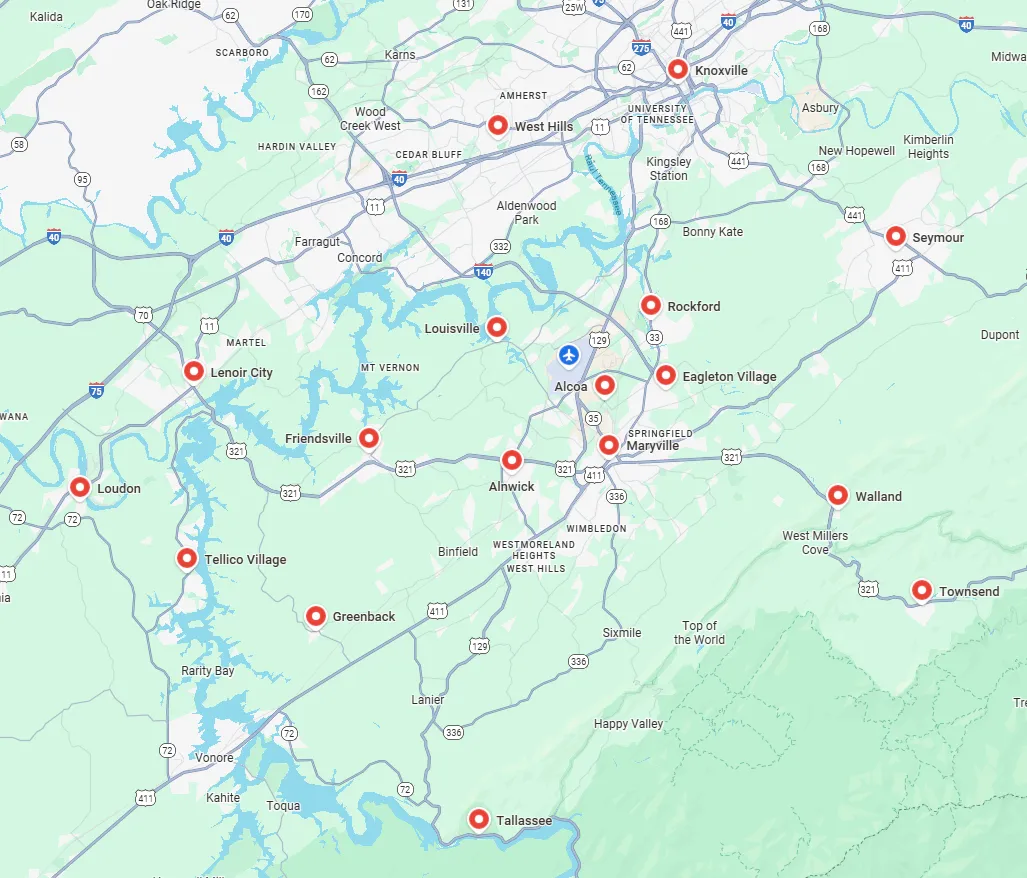


HVAC Installation in Greenback, TN
When that time comes to replace or put in a brand-new heating and cooling system for your Greenback, TN home, you know it's about more than just the price tag. Your home deals with humid summers, often chilly winter nights, and the unique challenges of rural and exurban building styles that can really impact airflow and comfort. That's why at Everest Air Heating and Cooling, we design and install systems with all those local factors front and center. Our focus is always on getting you the right-sized equipment, maximizing energy efficiency, and ensuring long-term reliability. We'll cover the entire new system installation process, common system choices that work well for Greenback homes, what you can expect during the installation, all the warranty and permitting details, and finally, thorough post-installation testing and handoff, including financing and brand options. We want you to feel completely confident in your decision.
.avif)
Why a professional HVAC installation matters in Greenback
Greenback properties vary from older farmhouses to modern builds with crawlspaces and attic duct runs. Humidity and seasonal temperature swings mean a poorly sized or improperly installed system will struggle to maintain comfort and will drive up energy costs. A professional installation:
- Ensures accurate load calculations so the system runs efficiently and lasts longer.
- Matches equipment and controls to your home layout, insulation, and ductwork condition.
- Addresses electrical and permit requirements found in Loudon County and nearby jurisdictions to avoid future compliance issues.
- Everest Air Heating and Cooling applies industry best practices and local knowledge to deliver installations suited to Greenback homes and climate.
Common HVAC installation types and what fits Greenback homes
Homes in Greenback typically benefit from one of these installation approaches. Each has tradeoffs in comfort, cost, and complexity.
- Central split systems
- Best for homes with existing ductwork in good condition.
- Commonly paired with a gas furnace or electric heat pump for heating.
- Ideal when whole-house consistent temperature control is needed.
- Heat pump systems (air-source and cold-climate models)
- Efficient for both heating and cooling, especially with modern cold-weather capability.
- Reduce reliance on fossil fuels if paired with electric or hybrid systems.
- Well suited to Greenback where winters are cold but not extreme for long periods.
- Ductless Mini Splits
- Ideal for additions, historic homes, or rooms without ducts.
- Offer zoned comfort and high efficiency for individual rooms or small homes.
- Minimally invasive installation and useful in retrofits common in Greenback properties.
- Hydronic heating options
- Use hot water distribution for baseboard or radiant floor heating.
- Provide even, comfortable heat in homes with open layouts or where ductwork is impractical.
- Well suited to spaces with hardwood or tile floors common in local home styles.
Everest Air Heating and Cooling will review your home layout, existing systems, and comfort priorities to recommend the best approach rather than pushing a single solution.
Initial assessment and load calculations: the foundation of a good install
A successful installation starts with a thorough assessment of your Greenback home. Everest Air technicians conduct a step-by-step evaluation including:
- Visual inspection of existing equipment, ductwork, insulation, and attic/crawlspace access.
- Measurement of square footage by conditioned space and identification of thermal boundaries.
- Assessment of window types, shading, number of occupants, and major internal heat sources like kitchens or workshops.
From that assessment, certified technicians perform load calculations using industry-standard methods (Manual J principles explained simply). These calculations estimate the heating and cooling capacity your home truly needs. Why that matters:
- Oversized equipment can short cycle, lowering comfort, increasing wear, and reducing humidity control during Greenback summers.
- Undersized equipment will not meet comfort needs on the hottest or coldest days and will run continuously, increasing energy use.
Everest Air Heating and Cooling documents load calculations and shares the findings so you understand the recommended capacity and the reasoning behind it.
Equipment selection: matching efficiency, size, and lifestyle
Equipment choice affects comfort, utility bills, and long-term satisfaction. We present options tailored to Greenback conditions and homeowner priorities.
Energy-efficient models
- High-efficiency central air conditioners and heat pumps reduce energy use during humid summers. Modern systems with higher SEER ratings deliver noticeable savings over older units.
- Heat pump models offer strong heating performance and can significantly lower winter energy costs when sized properly.
- Ductless Mini Splits provide high seasonal efficiency for individual rooms or zones and avoid duct losses common in older Greenback homes.
Ductless Mini Split systems
- A perfect choice for room additions, finished basements, or homes with poor ductwork.
- Provide flexible zoning and quiet operation.
- Wall-mounted or ceiling cassette indoor units connect to small outdoor condensing units with minimal structural modification.
Hydronic options
- Hydronic boilers and radiant systems give steady, comfortable heat and are popular where homeowners prioritize even warmth and low noise.
- Often used in spot-heat applications or whole-house retrofits where ducts are impractical.
Brand and component options
- Everest Air Heating and Cooling installs a range of reliable brands to balance performance and budget. Popular options include models from American Standard, Lennox, Goodman, Rheem, Ruud, and York depending on the application and availability.
- Components such as high-efficiency furnaces, variable-speed air handlers, programmable or smart thermostats, and upgraded air filtration systems are selected to optimize system performance for Greenback homes.
During equipment selection, we explain efficiency metrics in clear terms:
- SEER measures cooling efficiency; higher numbers mean lower cooling costs.
- HSPF indicates heat pump heating efficiency.
- AFUE applies to furnaces and describes the percentage of fuel converted to heat.
Preparing your home: ductwork, electrical, and structural considerations
A quality install sometimes requires preparatory work. Common pre-install tasks for Greenback homes include:
- Ductwork evaluation and repairs: sealing leaks, insulating ducts in unconditioned spaces, and rebalancing airflow to resolve hot and cold spots.
- Electrical upgrades: verifying your service panel capacity, ensuring proper breakers, and installing disconnects for outdoor units as required by code.
- Refrigerant line and condensate routing: planning routes that protect lines from weather and animals while maintaining proper slope for condensate drainage.
- Structural and mounting work: reinforcing pads, curbs, or brackets for outdoor condensers and rooftop units when needed.
Everest Air Heating and Cooling documents necessary upgrades and explains why each is important for performance and longevity. Proper duct sealing and insulation can pay back in better comfort and lower energy use, which is especially valuable given Greenback humidity and seasonal temperature swings.
Professional installation steps: what to expect on install day
Install day is executed in a methodical sequence to ensure safety, compliance, and performance. Typical installation steps include:
- Site preparation: protecting floors, landscaping, and access paths while staging tools and equipment.
- Old system removal: safe disconnection, refrigerant recovery as required, and disposal per environmental standards.
- Rough-in work: routing new refrigerant lines, electrical wiring, and condensate drains along planned paths.
- Setting equipment: placing condensing units on pads, mounting indoor units, securing duct transitions or hydronic components.
- Duct and ventilation work: sealing, insulating, and modifying ducts as needed to match new airflow requirements.
- Electrical and control wiring: making final connections to the thermostat, breakers, and safety devices.
- System charging and startup: evacuating the refrigerant lines, charging precisely by weight or superheat/subcooling methods, and initial operation checks.
Throughout installation, Everest Air technicians follow manufacturer specifications and local code requirements. Installer experience matters: precise refrigerant charge, correct airflow, and clean electrical connections are critical for long-term reliability and efficiency.
Permits, inspections, and warranty paperwork
Most new HVAC installations require permits and may need a final inspection by local authorities. For Greenback and nearby Loudon County jurisdictions, typical requirements include:
- Mechanical permits for new systems or replacements.
- Electrical permits for service changes or new circuits.
- Inspections to verify safe, code-compliant installation.
Everest Air Heating and Cooling manages permitting and coordinates required inspections so installations meet municipal standards. Proper permitting protects your property value and ensures eligibility for manufacturer warranties. Speaking of warranties:
- Manufacturer warranties cover defects in parts and compressors for specified periods.
- Workmanship warranties cover installation labor for a period set by the installer.
- Everest Air provides documentation of warranties and explains what is covered, recommended maintenance to preserve warranty validity, and how warranty claims are handled.
Post-installation testing and performance verification
A thorough commissioning process verifies the system meets expectations and the load calculations used during the design phase. Post-installation testing includes:
- Airflow measurements and static pressure checks to ensure ductwork and blower sizing deliver design CFM.
- Temperature split testing to confirm proper cooling performance.
- Electrical load measurements to verify motors and compressors run within safe amperage ranges.
- Refrigerant charge verification using weight, superheat, and subcooling methods depending on equipment type.
- Combustion and venting checks for gas furnaces and boilers, ensuring safe operation and carbon monoxide safety.
- Leak checks for refrigerant and condensate drainage to prevent future issues.
Documentation of test results is provided so you have a clear record of how the system performs at startup. Everest Air Heating and Cooling treats commissioning as a safety and performance verification step rather than a formality.
Customer walkthrough and system orientation
A quality install ends with a clear, practical handoff. The customer walkthrough covers:
- Thermostat programming and zoning: setting schedules and temperature setbacks that balance comfort and cost.
- Filter types and replacement schedules: explaining how air filters affect airflow and indoor air quality in Greenback homes where seasonal pollen and humidity can be a concern.
- Routine maintenance tasks to preserve efficiency and warranty coverage, such as cleaning condenser coils and clearing condensate lines.
- Troubleshooting basics and what abnormal operation sounds or indicators look like.
- Everest Air believes informed homeowners make better long-term decisions about comfort and system care, so the walkthrough is thorough and delivered in straightforward language.
Maintenance and the Y.E.T.I Comfort Plan
Long-term performance depends on regular maintenance. The Y.E.T.I Comfort Plan available through Everest Air Heating and Cooling offers structured seasonal service targeted at preserving system efficiency and preventing breakdowns. Routine maintenance typically includes:
- Spring and fall inspections to prepare your system for peak cooling and heating seasons.
- Cleaning or checking coils, condensate drains, and blower components.
- Verifying refrigerant levels and electrical connections.
- Priority scheduling and service discounts as part of the maintenance plan.
- Regular maintenance helps extend equipment life and ensures the high-efficiency features selected during installation deliver their promised benefits in Greenback's humid summers and cold snaps.
Financing options and saving strategies
A new HVAC system is an investment in comfort and property value. Everest Air Heating and Cooling presents financing options that spread cost over time and align monthly payments to budget needs. While specifics vary, typical financing features include:
- Fixed monthly payments for a set term to lower up-front barriers to high-efficiency equipment.
- Options that allow pairing financing with available manufacturer incentives or local utility rebates.
- Advice on the cost-benefit of higher-efficiency models: higher upfront cost but lower monthly energy bills and improved comfort in humid conditions.
- When evaluating financing, consider long-term operating costs, potential tax incentives, and local utility programs that may reduce net cost. Everest Air explains these options and helps you match the financing choice to your priorities without pressure.
Brand options and product tiers explained
Choosing a brand is about matching features, reliability, and serviceability to your expectations. Everest Air installs a range of reputable brands and explains how they differ:
- Entry-level to mid-tier models: provide reliable, cost-effective cooling and heating for straightforward applications and budget-conscious homeowners.
- High-efficiency premium models: include variable-speed compressors, superior humidity control, and advanced controls for tighter comfort and lower utility bills. These are beneficial in Greenback where humidity control matters.
- Heat pump and cold-climate variants: engineered to maintain heating performance in lower temperatures and reduce reliance on backup heating.
- Ductless Mini Split systems and multi-zone setups: offer flexible configurations, especially for partial-home solutions or additions.
Everest Air describes warranty terms, typical lifespans, and maintenance realities for each category so homeowners make choices aligned with their long-term goals.
Typical timelines and what affects installation length
Installation timelines vary based on system complexity and preparatory work. Typical scenarios:
- Simple like-for-like system replacement with existing ductwork: often completed in one to two days.
- New system with moderate duct modifications or electrical upgrades: two to four days.
- Complex retrofits, hydronic conversions, or multiple-zone Mini Split installations: several days to a week depending on customizations and permitting timelines.
Factors that influence time include permit processing, availability of specific equipment, the extent of duct or structural work, and weather considerations during outdoor work. Everest Air provides realistic installation timelines after the initial assessment and keeps documentation of scope and schedule.
Common installation issues and how they are prevented
Installations can run into predictable problems if not addressed proactively. Everest Air avoids common issues by:
- Performing accurate load calculations to prevent oversizing or undersizing.
- Inspecting and repairing ductwork before starting to avoid airflow bottlenecks.
- Verifying electrical service capacity and upgrading panels if necessary to prevent future code violations or service interruptions.
- Proper refrigerant charging and airflow balancing to avoid premature compressor failure or poor humidity control.
Preventive attention to these areas reduces callbacks and maximizes the life and performance of your new system.
Long-term benefits of a proper installation for Greenback homeowners
Investing in a professionally installed HVAC system yields multiple long-term advantages:
- Improved comfort year-round with better humidity control in summer and reliable heating in winter.
- Lower energy consumption through correctly sized, efficient equipment and sealed ductwork.
- Reduced risk of expensive emergency repairs due to proper commissioning and preventive maintenance.
- Increased property value and buyer appeal due to modern, documented HVAC systems and compliant installations.
Everest Air Heating and Cooling frames installations as long-term investments in home comfort, efficiency, and peace of mind.
FAQs
Q: How do I know whether a heat pump, furnace, or ductless system is best for my Greenback home?
A: Everest Air conducts a thorough assessment including load calculations and a review of your home layout, ductwork, and comfort goals. Heat pumps are efficient and work well in moderate colder climates; furnaces are reliable for sustained cold spells; ductless Mini Splits are ideal for rooms without ducts or for zoning. The right option depends on existing infrastructure, budget, and priorities such as energy savings or zoning flexibility.
Q: Will I need a permit and inspection for a new HVAC installation in Greenback?
A: Most installations require mechanical and electrical permits and a final inspection to comply with local codes. Everest Air Heating and Cooling handles permit applications and coordinates inspections so the installation meets Loudon County and municipal requirements and preserves warranty eligibility.
Q: What kind of warranty coverage comes with a new system?
A: New systems typically include manufacturer warranties on parts and compressors and installer workmanship warranties. Everest Air provides the specific warranty documentation for the equipment you choose and explains recommended maintenance to keep warranties valid.
Q: Can my existing ductwork be reused or should it be replaced?
A: Many duct systems can be reused after evaluation and repairs, such as sealing leaks and insulating in unconditioned spaces. If ducts are undersized, poorly routed, or severely damaged, replacement or significant modification may be recommended for proper airflow and efficiency.
Q: How long does a typical installation take?
A: A basic like-for-like replacement often takes one to two days. If the project requires ductwork changes, hydronic installation, electrical upgrades, or structural work, timelines can extend to several days. Everest Air provides a project timeline after the initial assessment.
Q: Are there energy rebates or incentives for high-efficiency equipment in my area?
A: There are often local utility rebates and manufacturer promotions that can reduce the net cost of high-efficiency systems. Everest Air can explain common incentive types and how financing can be combined with available rebates, but exact availability varies and should be confirmed during the planning phase.
hear what our satisfied clients have to say

David P.
Service areas