

Commercial HVAC in Knoxville, TN
When your business relies on dependable climate control in Knoxville, TN, it's about much more than just comfort. You're looking to protect your inventory, ensure the health of your occupants, meet essential code requirements, keep operating costs down, and maintain seamless operations. That's precisely why Everest Air Heating and Cooling delivers specialized commercial HVAC services, perfectly tailored for Knoxville-area businesses. From cozy retail storefronts and bustling restaurants to schools, medical offices, warehouses, and sprawling multi-zone facilities, we've got you covered. We can explain common commercial HVAC problems in Knoxville, outlining the full scope of services we deliver, how we approach installation and capacity planning, the elements of a preventative maintenance agreement, what to expect from rapid response repair, and why proactive duct and system cleaning matters for your commercial property. With Everest Air Heating and Cooling, you get complete peace of mind.
.avif)
Why commercial HVAC matters in Knoxville
Knoxville experiences hot, humid summers and seasonally variable winters. High humidity and heat in late spring through early fall create conditions that stress cooling equipment and increase energy use. Many Knoxville commercial buildings also have unique needs: humidity control for restaurants and food service, precise temperature and air changes for medical and laboratory environments, and robust ventilation in warehouses and light manufacturing. Properly sized, maintained, and commissioned commercial HVAC systems reduce downtime, lower utility expenses, support indoor air quality, and help businesses comply with local regulations and health guidelines.
Common commercial HVAC issues in Knoxville businesses
- System short cycling and frequent trips caused by improper sizing or failing controls.
- Reduced cooling capacity during heat waves from low refrigerant, dirty coils, or failing compressors.
- High humidity and condensation issues in restaurants, storage areas, or poorly ventilated zones.
- Uneven heating and cooling across large floor plates or multistory buildings due to poor zoning.
- Excessive energy bills driven by outdated equipment, lacking economizers, or poor control strategies.
- Indoor air quality concerns from dirty ducts, clogged filters, or insufficient ventilation systems.
- Emergency failures during peak hours leading to lost revenue or customer discomfort.
- Code compliance and permitting delays during replacements and major retrofits.
Everest Air Heating and Cooling brings commercial expertise to diagnose the root cause, not just the symptom, and to recommend systems and service plans that match operational priorities and budget realities.
Commercial HVAC services we provide in Knoxville
Everest Air Heating and Cooling offers a comprehensive suite of commercial HVAC services designed for business continuity, code compliance, and efficient performance:
- Commercial system installation and replacement
- Preventative maintenance agreements for commercial accounts
- Rapid response commercial repair services and emergency troubleshooting
- Duct and system cleaning including commercial-grade filtration assessments
- Capacity planning and load calculations for mid to large size systems
- Controls integration, building automation support, and zoning optimization
- Commissioning and retro commissioning for renovated or expanded facilities
- Priority scheduling for business customers during peak seasons and emergencies
Each service is delivered with documentation appropriate for commercial clients, including equipment specifications, maintenance logs, test and balance reports, and recommendations for lifecycle management.
Commercial system installation and replacement
Installing or replacing a commercial HVAC system requires more than swapping a unit. It begins with a site survey that includes building hours of operation, expected occupancy, internal loads such as lighting and equipment, ventilation needs, and any special environmental requirements. Our process includes:
- Comprehensive load calculations that follow industry standards to determine heating and cooling capacity.
- Capacity planning that accounts for future expansion, redundancy, and diversity of loads across multiple zones.
- Equipment selection including rooftop units, packaged systems, split systems, chillers, boilers, and make up air units based on efficiency, lifecycle cost, and maintainability.
- Controls and integration planning to ensure compatibility with existing building automation systems or to design a new controls strategy.
- Coordination with local permitting and code compliance for Knoxville and Knox County, including ventilation rates and energy code requirements.
- Commissioning and start up to verify performance, airflow, refrigerant charge, and control logic.
Well engineered installations reduce the chance of premature failures, avoid costly oversizing, and deliver measurable energy and comfort benefits.
Preventative maintenance agreements for commercial clients
A structured preventative maintenance agreement is the most effective way to extend equipment life and reduce emergency repairs. For Knoxville businesses, regular maintenance also helps manage humidity and keeps systems operating efficiently during the hottest months. Key components of our commercial maintenance agreements include:
- Scheduled inspections: seasonal checks timed for spring and fall plus follow ups where needed during high use periods.
- Filters and filtration reviews: commercial grade filtration replacement schedules and recommendations to meet IAQ and return air quality needs.
- Mechanical inspections: belts, motors, bearings, bearings, electrical connections, contactors, capacitors, and refrigeration circuits.
- Coil cleaning and fin straightening to restore heat transfer efficiency.
- Controls checks: verifying setpoints, sequences of operation, and sensor accuracy.
- Documentation: service reports, recommended corrective actions, and parts lists for budgeting.
- Priority scheduling and response windows for contracted customers to minimize downtime.
- Discount structures for service calls or parts for customers enrolled in a maintenance plan.
These agreements focus on preventing small issues from becoming operational emergencies and on optimizing energy performance which is critical for controlling operating expenses in Knoxville’s climate.
Rapid-response repair services
When equipment fails, rapid diagnosis and repair are essential to restore operations and mitigate losses. Everest Air Heating and Cooling provides a structured repair process for commercial clients:
- Priority dispatch for business accounts with defined response windows to match operational urgency.
- Onsite diagnostics using industry standard meters, refrigerant recovery tools, and control system analyzers.
- Real time troubleshooting and temporary solutions where appropriate to keep systems running while parts are sourced.
- Transparent repair reports that document cause, corrective action, and recommendations for preventing recurrence.
- Parts inventory strategies to minimize lead times for common commercial components.
- Coordination with third party contractors or manufacturer service when warranties or specialized components are involved.
Typical commercial repairs include compressor failures, refrigerant leaks, motor and fan replacements, sensor and thermostat replacements, control board faults, and airflow obstructions.
Duct and system cleaning for commercial properties
Duct and system cleaning for commercial buildings improves indoor air quality, reduces contaminant circulation, and can restore system efficiency. For businesses in Knoxville, managing pollen in spring, heavy summer humidity, and occasional mold concerns requires a targeted approach:
- Inspection and assessment to identify contamination levels, mold, or obstructions.
- Mechanical agitation and negative pressure collection for thorough removal of dust and debris.
- Coil and evaporator cleaning to improve heat transfer and reduce microbial growth.
- Verification of drainage and condensation control to address humidity related issues.
- Recommendations for filtration upgrades or UV light solutions where appropriate.
Regular ductwork service is especially important for spaces with sensitive occupants such as medical facilities, child care centers, and restaurants.
Capacity planning and scaling for larger systems
For larger buildings and campus-style installations, capacity planning ensures systems are neither undersized nor wastefully oversized. Everest Air Heating and Cooling approaches capacity planning with these considerations:
- Accurate load calculations using building geometry, envelope properties, occupancy schedule, lighting and equipment loads, and local design conditions for Knoxville.
- Diversity and simultaneity factors to size chillers, boilers, and rooftop units correctly for peak and off peak loads.
- Redundancy planning so critical areas remain conditioned during single equipment failures.
- Zoning and duct design optimization to balance airflow and minimize energy waste.
- Integration with energy recovery ventilators and economizers to leverage cooler outdoor conditions seasonally and control ventilation energy.
- Controls strategy that supports demand limiting, scheduled setback, and fault detection to improve system reliability and lower costs.
Capacity planning reduces lifecycle costs and supports predictable operation even during Knoxville heat events.
Examples of commercial projects and use cases
- Retail centers and restaurants: Upgraded rooftop units with improved ventilation and humidity control to stabilize indoor conditions for customers and protect kitchen equipment.
- Office buildings: Controls retrofits that implemented zoning, occupancy sensors, and optimized sequences of operation to reduce energy consumption and improve worker comfort.
- Medical and dental clinics: High efficiency filtration and dedicated exhaust systems to meet stricter infection control and indoor air quality needs.
- Warehouses and distribution facilities: Replacement of outdated packaged units with modular systems and staged controls to support large volume spaces without oversizing central equipment.
- School and institutional buildings: Commissioning and balancing projects that prioritized ventilation rates during occupied hours and energy efficiency during setbacks.
- Light manufacturing: Custom HVAC solutions addressing process loads, venting of fumes, and maintaining required temperature and humidity ranges for product stability.
These project types illustrate how specific business needs influence equipment selection, control strategies, and maintenance requirements.
Priority scheduling for business customers
Business continuity requires predictable service. Priority scheduling provides businesses with dedicated response windows, early morning appointments when necessary, and faster access to parts and technicians during peak demand. Priority scheduling for commercial clients typically includes:
- Defined priority response windows based on the severity of outage.
- Scheduled preventative maintenance during off peak hours to avoid operational disruption.
- Preapproved repair protocols for routine parts to expedite repairs.
- Seasonal planning to prepare systems for peak cooling demand in Knoxville and to perform preventive checks before heat seasons.
Priority scheduling is one component of a comprehensive commercial service plan designed to align HVAC service with the operational needs of your business.
Documentation and compliance
Commercial projects require documentation for audits, insurance, and HVAC compliance. Everest Air Heating and Cooling provides:
- System specifications and equipment serial number records.
- Start up and commissioning reports including refrigerant charge, airflow measurements, and control logic verification.
- Maintenance logs and service histories for asset tracking.
- Recommendations for preventive capital budgeting and lifecycle replacement.
Good documentation supports predictable budgeting and demonstrates due diligence for safety and health compliance.
Energy efficiency, rebates, and lifecycle cost considerations
Choosing the right equipment is as much about long term operational expense as initial cost. Commercial energy efficiency strategies include:
- Right sizing equipment to avoid oversizing penalties and short cycling.
- Selecting higher efficiency equipment where lifecycle savings justify the investment.
- Implementing controls that enable setback, staged operation, and real time fault detection.
- Scheduling preventative maintenance to preserve rated efficiency and avoid degraded performance.
- Assessing available utility incentives or manufacturer rebates when installing qualifying equipment.
Effective lifecycle planning balances capital expense with reduced energy and maintenance costs to lower total cost of ownership.
Indoor air quality and occupant health
Knoxville businesses operate in a climate where humidity and pollen can affect indoor environments. Commercial HVAC strategy for good indoor air quality includes:
- Proper ventilation rates sized to code for occupancy and space type.
- Filtration upgrades and maintenance to remove particulates.
- Dehumidification strategies in humid months to prevent mold and maintain occupant comfort.
- Regular duct cleaning and coil maintenance to limit microbial growth.
- Monitoring and controls to ensure IAQ setpoints are maintained.
Addressing IAQ proactively can protect employee health, reduce sick days, and support customer confidence in health sensitive settings.
What to expect during a typical commercial service visit
- Arrival with identification and documentation of training credentials for technicians.
- Safety protocols for occupied commercial spaces, including minimal disruption to operations.
- System diagnostics and inspection with immediate findings communicated in plain language.
- Repair or maintenance work performed with attention to cleaning and securing work areas.
- Post visit documentation including recommendations, parts used, and suggested next steps.
Commercial clients receive clear records to support building management and operational planning.
Why Everest Air Heating and Cooling for commercial HVAC in Knoxville
Everest Air Heating and Cooling brings a local focus to Knoxville commercial HVAC needs. Understanding the local climate, building stock, and business schedules informs our approach to system design, maintenance planning, and rapid response. Our team emphasizes straightforward communication, thorough diagnostics, and documented service to help businesses reduce risk and control operating costs. We balance industry best practices with practical solutions designed for Knoxville area facilities, whether retrofitting an older building or planning a new system installation.
Maintenance tips for Knoxville businesses
- Schedule preventative maintenance in spring and fall and consider a mid summer check for high use systems.
- Replace commercial grade filters on a usage based schedule, more frequently during pollen season and in high dust environments.
- Monitor humidity during summer months to prevent condensation and mold issues.
- Keep records of all service visits to track equipment trends and plan replacements before critical failures.
- Consider controls upgrades that allow remote monitoring and automated alerts for faster response.
Regular maintenance tailored to Knoxville climate patterns preserves system performance and occupant comfort.
FAQs
Q: How often should a commercial HVAC system in Knoxville be serviced?
A: Commercial HVAC systems should be inspected at least twice a year, in spring and fall. Facilities with high occupancy, critical environments, or severe usage patterns may require quarterly checks and more frequent filter changes during peak pollen and summer humidity.
Q: What is involved in a commercial preventative maintenance agreement?
A: A commercial preventative maintenance agreement typically includes scheduled inspections, filter and coil cleaning, mechanical and electrical checks, control verification, documented service reports, priority scheduling, and often discounts for contracted customers on service calls or parts.
Q: How do you determine the right size HVAC system for a commercial building?
A: Right sizing requires a comprehensive load calculation using building layout, envelope characteristics, occupancy, equipment heat loads, and local design temperatures. Capacity planning also considers diversity, redundancy, and future expansion to avoid short cycling or excessive energy use.
Q: What are common causes of sudden cooling loss in commercial systems?
A: Common causes include refrigerant leaks, compressor failure, clogged condensers or coils, faulty controls or sensors, and power supply issues. Rapid diagnostics help isolate mechanical issues versus control or electrical problems.
Q: Does duct cleaning really improve indoor air quality for businesses?
A: Properly performed duct and system cleaning removes accumulated dust, debris, and biological growth that can contribute to reduced air quality. It is most effective when combined with improved filtration and addressing sources of moisture or contamination.
Q: What should a business expect during a commercial HVAC replacement project?
A: Expect a site survey, load calculations, equipment selection, permitting, installation, controls integration, system startup and commissioning, and final documentation. Projects often require coordination to minimize operational disruption.
Q: How does Everest Air Heating and Cooling handle emergency commercial repairs?
A: Emergency repairs are handled through priority dispatch for business customers with defined response windows, onsite diagnostics, temporary measures to restore operation when needed, and clear repair documentation. Parts strategies reduce downtime for common components.
Q: Are there energy savings strategies specific to Knoxville?
A: Yes. Strategies include properly sized equipment, economizers to use cooler outdoor air, dehumidification to reduce latent load, controls for staged operation and demand limiting, and regular maintenance to preserve efficiency during Knoxville summers.
Q: What documentation is provided after commercial service or installation?
A: Documentation typically includes service reports, maintenance logs, equipment serial numbers, commissioning reports, recommended corrective actions, and parts lists to support asset management and compliance.
Q: How does humidity in Knoxville affect commercial HVAC choices?
A: High summer humidity increases latent load on cooling systems; for humidity sensitive spaces, select equipment and control strategies with dedicated dehumidification, proper drain design, and frequent coil maintenance to prevent microbial growth and ensure occupant comfort.
hear what our satisfied clients have to say

David P.
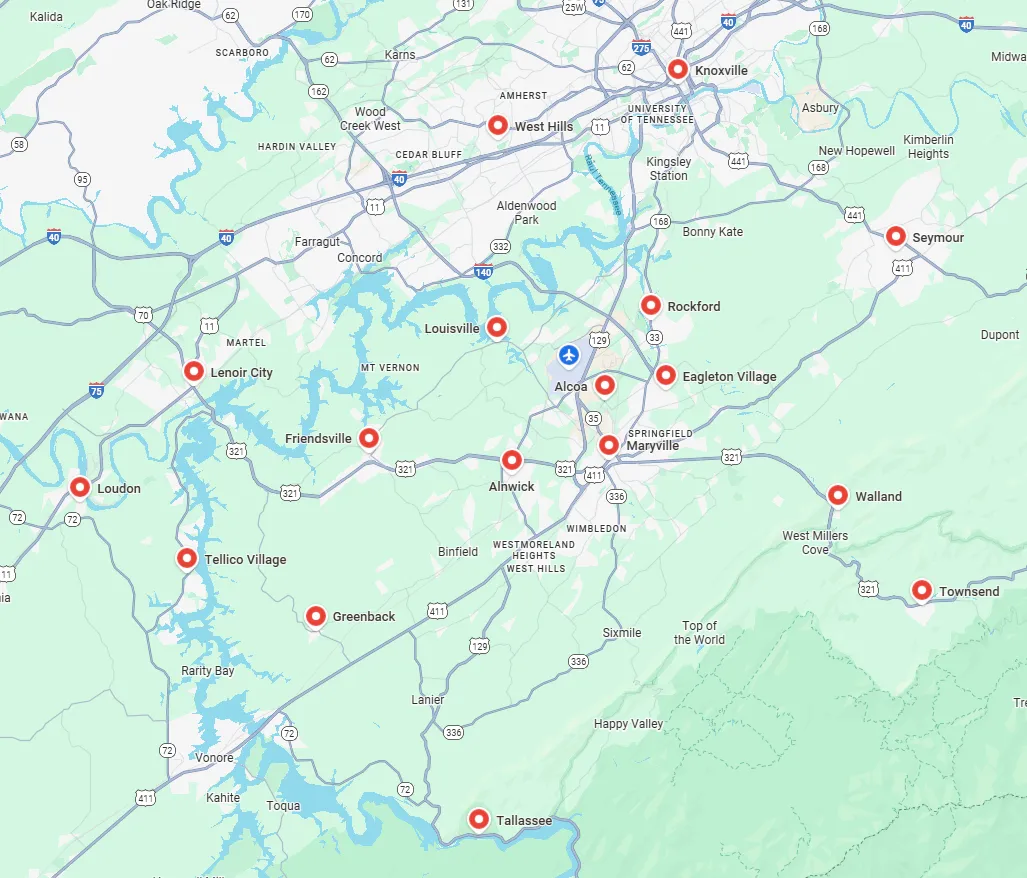
Service areas