

Tankless Water Heater in Loudon, TN
When it comes to your home, choosing the right water heating solution is a big decision – one that impacts your comfort, energy bills, and how reliable your system will be for years to come. For Loudon, TN homeowners dreaming of continuous hot water, better energy efficiency, and freeing up space, a tankless (on-demand) water heater is a truly compelling option. Everest Air Heating and Cooling is here with local expertise to help Loudon residents every step of the way – from evaluating different tankless systems to understanding installation requirements and ensuring they maintain peak performance, especially given our region’s specific conditions. Trust Everest Air Heating and Cooling for dependable service.
Why consider a tankless water heater in Loudon, TN
Tankless water heaters heat water only when you need it, eliminating standby heat loss associated with traditional storage tanks. In Loudon, where seasonal temperature swings and household patterns vary, on-demand systems can deliver better comfort control and adapt to both short, frequent draws and longer hot water demands. Many Loudon homes also face moderate to high mineral content in the water supply. That makes proper scale management a key part of long-term tankless performance — a consideration we take seriously when recommending and installing systems.
Everest Air Heating and Cooling evaluates your home, typical hot water use, available fuel sources, and plumbing layout to recommend systems that match real household needs. Our local experience with Loudon properties means we consider factors like older electrical panels, propane availability in rural areas, and common venting challenges in city and suburban homes.
How tankless water heaters work (in plain terms)
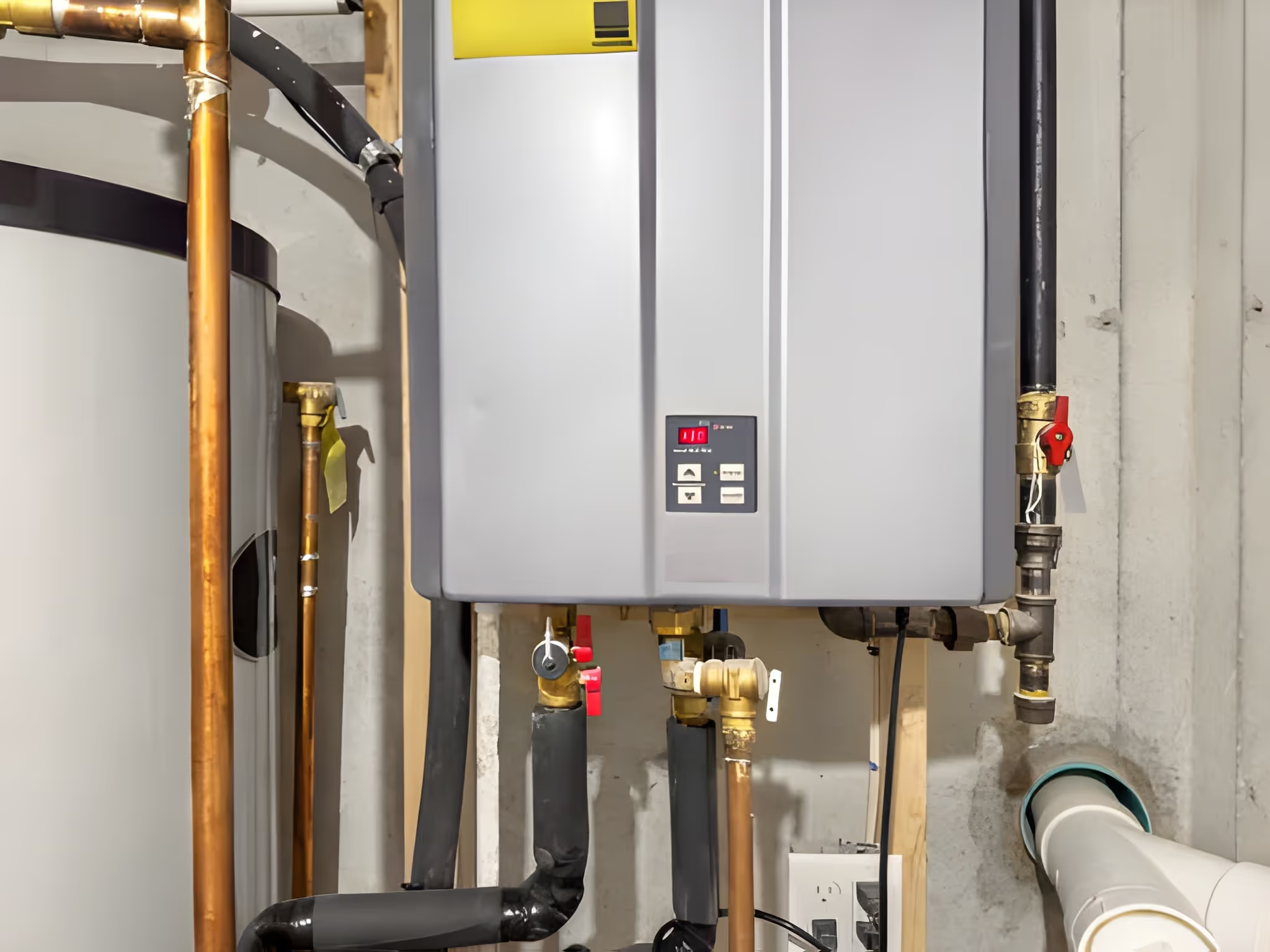
- A tankless unit contains a heat exchanger and sensors. When a hot water tap opens, water flows through the unit.
- The unit detects flow and instantly ignites gas or switches on heating elements to raise water temperature to your set point.
- Water is delivered continuously at the selected temperature until the tap is closed.
- There is no large storage tank; the heater is compact and typically wall-mounted indoors or placed in a utility area.
Because the system only heats water when you need it, energy is used more efficiently, and you avoid the periodic reheating associated with tanks.
Key benefits for Loudon homeowners
- Continuous hot water: Ideal for households that want simultaneous showers, dishwasher, and laundry without running out of hot water.
- Energy efficiency: Reduced standby loss often translates to lower water-heating energy consumption, especially for homes with variable or lower daily hot water demand.
- Space savings: Wall-mounted units free up floor space where a bulky storage tank would otherwise sit.
- Longer service life: With appropriate maintenance, tankless units often have a longer usable life than conventional tanks.
- Reduced risk of tank failure: Eliminating a large tank reduces the chance of catastrophic leaks and water damage associated with failed storage heaters.
- Tailored installations: Available in point-of-use or whole-house configurations to meet different usage profiles.
Common tankless water heater issues in Loudon, TN homes
- Scale buildup: Loudon’s water hardness can accelerate mineral accumulation inside the heat exchanger, reducing efficiency and flow. Homes with well water or high mineral content are most affected.
- Undersizing: Selecting a unit with insufficient flow capacity for peak demands leads to lukewarm water when multiple fixtures run simultaneously.
- Inadequate venting or combustion air: Gas-fired units require proper venting and combustion air to operate safely and efficiently. Older homes may need modifications.
- Electrical limitations: Electric tankless units require robust electrical service. Homes with older or lightly rated electrical panels may need upgrades to support whole-house electric units.
- Cold inlet water: In colder months, incoming water temperature can be lower, requiring higher heating capacity to reach desired output—this affects sizing decisions.
- Improper installation: Poor vent routing, undersized gas lines, and insufficient condensate management can all shorten equipment life or create safety issues.
Everest Air Heating and Cooling addresses these common issues during an on-site evaluation, recommending system features and preemptive upgrades where necessary.
Sizing tankless systems by flow rate and temperature rise
Correct sizing is essential for reliable performance. Tankless heaters are rated by flow rate (gallons per minute, GPM) at a specified temperature rise (the difference between incoming cold water and desired hot water temperature).
- Estimate peak simultaneous demand: Add up typical fixture flow rates when multiple showers, washing machine, and dishwasher might run together.
- Determine temperature rise: Measure or estimate the cold water temperature in Loudon during winter months and subtract from your desired hot water temperature (commonly 110 to 120 degrees Fahrenheit).
- Select a unit that provides the required GPM at the calculated temperature rise.
Typical flow reference:
- Single sink or low-flow shower: 1.0 to 2.0 GPM
- Standard shower: 2.5 GPM or more
- Multiple fixtures or whole-house needs: 4.0 to 10.0+ GPM depending on simultaneous use
Everest Air Heating and Cooling performs accurate flow and temperature calculations on-site to prevent undersizing and to recommend point-of-use boosters where needed.
Fuel options: natural gas, propane, or electric
- Natural gas: Common in many Loudon neighborhoods. Gas-fired tankless units deliver high flow rates and fast recovery with lower operating costs when natural gas pricing is favorable. They require proper venting and adequate gas line sizing.
- Propane: A suitable option for rural or off-grid Loudon homes without natural gas service. Propane performs similarly to natural gas but requires correctly sized supply and storage considerations.
- Electric: Electric tankless models are compact and easy to vent (no combustion gases), but whole-house electric units demand significant electrical capacity. They are often a good fit for point-of-use applications or homes with sufficient electrical service.
When recommending a fuel type, Everest Air Heating and Cooling considers availability, home infrastructure, and long-term operating expectations in the Loudon area.
Installation requirements and common upgrades
- Venting: Gas-fired units require venting compliant with manufacturer and code requirements. Options include coaxial direct vent, stainless steel or PVC for condensing units, and vertical or horizontal routing. Clearances and termination locations must meet local code.
- Gas line sizing: Whole-house gas tankless heaters often need larger gas supply lines. Homes with older, undersized lines may need a gas line upgrade to ensure proper operation.
- Electrical service: Electric models often require 240V circuits and multiple high-amperage breakers. Some whole-house electric installs can require electrical panel upgrades to meet demand.
- Condensate management: High-efficiency condensing tankless units produce condensate that needs a proper drain. Placement planning prevents backflow or freezing issues in winter.
- Combustion air: Proper intake air must be provided for safe combustion in confined spaces.
- Permitting and inspection: Permits are typically required for water heater replacements or conversions. Everest Air Heating and Cooling handles code compliance and inspection coordination.
- Space and location: Choices include indoor mounted in utility rooms or closets, or outdoor-rated units where applicable. Some homes benefit from point-of-use installations to reduce lag time and heat loss in long plumbing runs.
Every Loudon installation is planned to minimize disruption while ensuring code compliance and long-term performance.
Retrofit versus new-install considerations
- Retrofit replacements: Swapping a conventional tank for a tankless unit in the same location often requires rerouting venting, resizing gas lines, and adjusting plumbing connections. Space savings are usually realized, but installers must verify clearances and structural considerations.
- New-install (new construction or system relocation): Offers more flexibility in venting routes, placement for optimal service access, and easier integration with water softening or filtration solutions. New installations can avoid some retrofit constraints that drive complexity and cost.
- Hybrid solutions: Some homeowners choose a hybrid approach—install whole-house tankless for primary loads and a small point-of-use electric unit near remote bathrooms or kitchens to ensure instant hot water without long pipe runs.
- Backup and redundancy: In areas with intermittent power or gas interruptions, some Loudon homeowners elect to keep a small backup tank or install dual-source setups for extra reliability.
Everest Air Heating and Cooling evaluates the building structure, utility access, and homeowner priorities to recommend retrofit or new-install approaches that match both performance and budget constraints.
Typical costs and payback factors (what influences total investment and break-even)
While specific installation costs vary, several factors influence the overall investment and the timeframe when savings offset initial expenditures:
- System capacity and technology: Condensing high-efficiency models and larger flow-rate units generally cost more than basic models.
- Fuel type and existing infrastructure: Converting from electric to gas or upgrading gas supply lines or electrical panels affects total installation complexity.
- Venting and structural modifications: Long vent runs, roof penetrations, or masonry work increase labor and materials.
- Scale control and water treatment: Installing softeners or descaling systems adds upfront cost but protects long-term performance.
- Local permitting and inspection: Required permits, inspections, and any remedial work identified during inspection influence final costs.
- Household hot water demand: Homes with high simultaneous demand need larger units or multiple units, which changes total cost.
- Energy prices: Local natural gas, propane, and electricity rates in Loudon directly affect operational savings and payback.
Payback depends on how much you currently spend on water heating, your household’s hot water use patterns, and how long you plan to stay in the home. For many Loudon homeowners, the combination of reduced standby losses and higher energy efficiency can produce meaningful savings over the expected service life of the tankless system. Everest Air Heating and Cooling provides detailed comparisons reflecting your local energy costs and usage to help estimate realistic payback timelines.
Scale management and maintenance needs in Loudon
- Descaling/flush schedule: Because Loudon area water can carry notable mineral content, regular descaling is crucial for tankless longevity. Recommendations vary by water hardness and usage, but many Loudon homes benefit from annual or semi-annual flushes.
- Filters and inlet screens: Cleaning inlet filters and sediment traps keeps flow consistent and prevents damage to the heat exchanger.
- Water softening or conditioners: Installing a whole-house water softener or a scale inhibitor can dramatically reduce mineral buildup and extend intervals between service.
- Vent and condensate checks: Inspect vent terminations, condensate drains, and any vent seams for obstruction or corrosion.
- Gas and electrical inspections: Annual checks for gas leaks, proper gas pressure, and secure electrical connections prevent safety issues and performance drops.
- Professional maintenance plans: Routine maintenance by a certified technician maintains efficiency, preserves warranty coverage, and detects issues early.
Everest Air Heating and Cooling can tailor service intervals based on measured water hardness, household use, and the specific model installed. We also offer maintenance plans aligned with local needs to keep systems running efficiently year-round.
Warranty and support details
- Manufacturer warranties: Most reputable tankless manufacturers offer multi-year warranties on major components like the heat exchanger and shorter warranties on parts. Warranty lengths vary by brand and model.
- Installation and labor warranty: Everest Air Heating and Cooling stands behind our workmanship with an installation warranty that covers labor-related issues for a defined period. This support ensures your system is installed per code and manufacturer specifications.
- Service and parts support: We provide ongoing service for routine maintenance, troubleshooting, and warranty service coordination. For Loudon homeowners, local service availability shortens response times and ensures technicians familiar with regional issues handle your system.
- Documentation and registration: Proper registration with the manufacturer and keeping maintenance records help protect warranty claims. Everest Air Heating and Cooling assists with documentation and recommended maintenance schedules.
Why Everest Air Heating and Cooling for Loudon tankless installations
Everest Air Heating and Cooling combines local knowledge with a family-owned service approach. We evaluate Loudon homes with attention to practical factors that impact long-term performance: water hardness, winter inlet temperatures, fuel availability, and common structural constraints. Our technicians prioritize code-compliant installations, thorough sizing calculations, and transparent maintenance recommendations.
We align tankless recommendations with the broader comfort and efficiency goals of Loudon homeowners, considering the whole-home system rather than offering one-size-fits-all solutions. Whether advising on a compact point-of-use electric unit for a remodeled bathroom or designing a whole-house gas system with proper venting and scale mitigation, our focus is on durability, efficiency, and predictable long-term operation.
Maintenance checklist for Loudon homeowners
- Schedule professional descaling flushes based on measured water hardness.
- Clean inlet filters every 3 to 6 months.
- Inspect vent terminations seasonally and clear debris or nests.
- Monitor hot water temperature and flow for early signs of scaling or undersizing.
- Keep a record of maintenance visits and parts replaced to preserve warranty coverage.
- Consider a whole-house water treatment if well water or hard municipal water is present.
Adding a maintenance plan tailored to your tankless system can avoid unexpected repairs and help sustain efficiency over the system’s life.
FAQs
Q: How do I know if a tankless water heater will meet my household’s hot water needs?
A: A proper assessment includes measuring peak simultaneous flow demands and calculating the temperature rise needed in Loudon’s winter. Everest Air Heating and Cooling performs these measurements and recommends a unit sized to meet your real use patterns.
Q: Are tankless water heaters affected by Loudon’s water hardness?
A: Yes. Mineral buildup can reduce efficiency and flow. Homes with moderate to high hard water should plan for regular descaling and consider water treatment options to protect the heat exchanger.
Q: Can I replace my existing tank water heater with a tankless unit in the same location?
A: Often yes, but retrofit installs commonly require venting changes, gas line or electrical upgrades, and proper clearance. A site visit will identify constraints and necessary modifications.
Q: Which fuel option is best for Loudon homes?
A: Natural gas is often preferred where available for whole-house applications due to its efficiency and flow capacity. Propane is common in rural areas, while electric units work well for point-of-use or homes with sufficient electrical service. We evaluate availability and infrastructure before recommending a fuel type.
Q: How often should a tankless unit be serviced in Loudon?
A: Frequency depends on water hardness and usage. Many Loudon homes benefit from at least annual professional service, with more frequent descaling if hardness is high. Regular checks keep warranties valid and performance optimal.
Q: What warranties can I expect?
A: Manufacturer warranties vary by model and typically cover the heat exchanger longer than other components, while parts have shorter terms. Everest Air Heating and Cooling provides an installation warranty and supports warranty service coordination.
Q: Will I get instantaneous hot water at every fixture?
A: Tankless systems deliver continuous hot water, but it still travels through pipes before reaching a fixture. Point-of-use units or recirculation strategies can reduce wait time at distant fixtures.
Q: Do electric tankless heaters require an electrical service upgrade?
A: Whole-house electric tankless units can demand significant current and may require panel upgrades. Electric point-of-use units usually need less capacity. Everest Air Heating and Cooling evaluates your electrical service to determine requirements.
Everest Air Heating and Cooling brings local experience and technical expertise to every tankless water heater project in Loudon, TN. From accurate sizing and fuel selection to venting design, scale control, and ongoing maintenance, our approach is built around delivering reliable hot water performance tailored to Loudon homes and lifestyles.
hear what our satisfied clients have to say

David P.
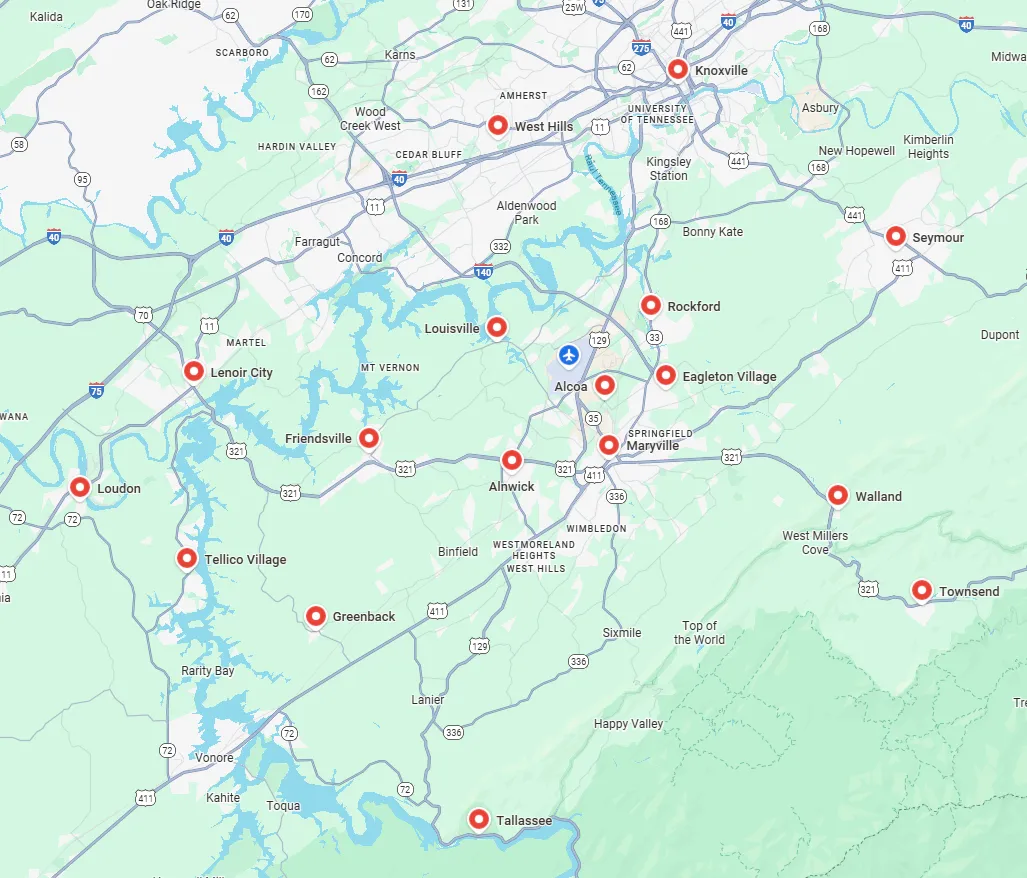
Service areas