

Tankless Water Heater in Lenoir City, TN
For homeowners in Lenoir City, TN, Everest Air Heating and Cooling is proud to offer a detailed guide to tankless water heater systems. Whether you're considering an on-demand unit to replace an old tank or for a new installation during a remodel, we'll explain exactly how these systems work, delve into the real benefits and tradeoffs for East Tennessee homes, cover installation and maintenance requirements, and help you determine if a tankless solution is truly the right fit for your household. Our goal at Everest Air Heating and Cooling is to provide clear, practical guidance for those ready to make an informed decision about their home's hot water needs.
Why Lenoir City homeowners consider tankless water heaters
Lenoir City experiences warm, humid summers and cool winters with occasional freezing nights. Many homes in the area are older with varying plumbing layouts, and a significant number are served by municipal water with mineral content that can affect water heater performance. Tankless water heaters are popular in this region because they:
- Save indoor space by replacing bulky tanks with compact wall-mounted units that fit in utility closets, garages, or basements.
- Deliver on-demand hot water that can reduce energy use in homes where long recovery times for tank heaters are common.
- Provide longer service life and consistent hot water for families preparing for heavy summer usage like multiple showers, irrigation system needs, and frequent laundry loads.
Everest Air Heating and Cooling understands local building codes, fuel availability, and common home plumbing configurations in Lenoir City, ensuring installations that meet performance expectations and municipal requirements.
How a tankless water heater works
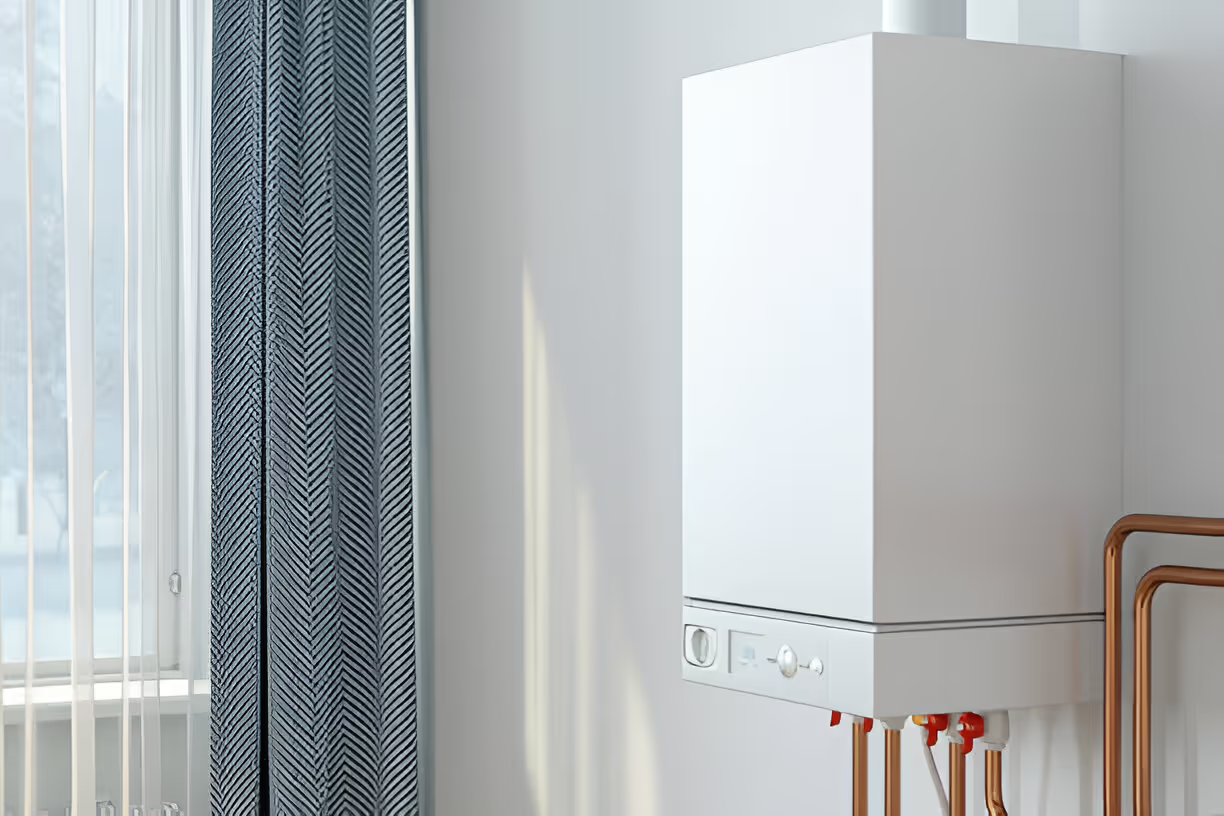
A tankless or on-demand water heater heats water only when a tap or fixture is opened. Key components and the process in simple terms:
- A flow sensor detects water movement when a faucet, shower, or appliance is turned on.
- The control system activates the heat source, either a gas burner or electric heating element, to raise water temperature to the set point.
- Water flows through a heat exchanger that transfers heat quickly and efficiently, supplying hot water continuously while the fixture is open.
- Once the fixture is closed, the system shuts off, avoiding standby heat losses associated with tank systems.
This immediate heating translates into different operational dynamics than storage tanks. Rather than reheating a reservoir, a properly sized on-demand unit must be capable of supplying the required flow rate at the desired temperature rise for concurrent uses.
Common tankless water heater models and service types
- Whole-house gas tankless: Typically natural gas or propane fueled, sized to handle multiple simultaneous demands in a family home.
- Electric whole-house tankless: Often used in homes without gas service or for smaller demand loads; requires significant electrical capacity upgrades in many older houses.
- Point-of-use tankless: Small units installed near a single fixture (bathroom or kitchen) to eliminate long waits for hot water and reduce waste.
- Hybrid solutions: A tankless unit paired with a small buffer tank to reduce temperature fluctuation during very low flow events or to support very high peak demands.
- Replacement/retrofit: Swapping a traditional tank for a tankless unit, which often involves venting, fuel supply adjustments, and electrical or gas line upgrades.
- New construction installations: Easier to plan for proper placement, venting, and fuel connections from the start.
Everest Air Heating and Cooling installs and services all common configurations, taking into account layout, fuel type, and hot water usage patterns specific to Lenoir City homes.
Advantages of tankless water heaters
- Energy efficiency: Because they heat water only on demand, tankless systems avoid the standby heat losses that come with storage tanks. In many households this translates to lower energy use for water heating.
- Endless hot water: Properly sized units can deliver continuous hot water for long showers, multi-bathroom use, or large household needs without running out as a tank might.
- Space savings: Compact units free up closet or garage space and offer flexibility in installation locations.
- Longer lifespan: Tankless units typically last longer than traditional tanks when maintained properly, often delivering more years before replacement is needed.
- Reduced risk of leaks: Without a large storage tank, there is less risk of catastrophic tank rupture in the event of corrosion or failure.
- Lower water waste: When combined with recirculation or point-of-use installations, tankless systems can reduce the amount of water that is run down the drain while waiting for hot water.
These benefits must be weighed against installation complexity and the match between system capacity and household demand.
Installation requirements and considerations for Lenoir City homes
Installing a tankless water heater requires attention to several technical and local factors.
- Fuel and electrical capacity
- Gas tankless units need adequate supply and proper pipe sizing. Homes on municipal gas lines need to confirm line capacity and pressure; homes using propane require appropriately sized tanks and regulators.
- Electric tankless units demand significant amperage and possibly panel upgrades. Older Lenoir City homes frequently need electrical service evaluation before considering electric on-demand units.
- Venting and combustion air
- Gas units must be vented correctly to the exterior using materials rated for the unit. Vent runs should be planned around rooflines and siding, considering Lenoir City code and weather exposure.
- Condensing tankless units have different venting and condensate handling requirements. Proper slope for condensate drainage and corrosion-resistant vent materials are important.
- Water quality and pretreatment
- East Tennessee water can be moderately hard. Mineral scale is a leading cause of reduced performance and heat exchanger damage in tankless systems.
- Scale prevention measures such as water softeners, pre-filters, or routine descaling protocols are often recommended to prolong unit life and maintain efficiency.
- Permits and inspections
- Local permits and inspections in Lenoir City and Loudon County are required for gas piping, venting alterations, and electrical upgrades. Installations must comply with local building codes and utility provider standards.
- Sizing and flow rate assessment
- Sizing a tankless system is based on the household peak flow rate (gallons per minute, GPM) and the temperature rise needed (difference between incoming groundwater temperature and desired output).
- Everest Air Heating and Cooling performs on-site flow and usage assessments to determine accurate sizing, helping avoid undersized systems that fail under peak demand.
- Location and mounting
- Units can be wall-mounted indoors or outdoors depending on model and venting arrangement. Indoor installations simplify freeze protection in winter but may require more complex venting.
Suitability by home size and typical Lenoir City scenarios
- Small homes and apartments: Point-of-use or smaller whole-house units often meet needs with minimal upgrades.
- Medium family homes (2-3 bathrooms): A single appropriately sized tankless gas unit can typically handle simultaneous showers and laundry, provided gas line and venting are adequate.
- Large homes or homes with heavy simultaneous use: May require multiple units or a combination of a whole-house tankless with point-of-use units at distant bathrooms to maintain performance.
- Older homes with limited utility capacity: May need electrical service upgrades or gas line improvements before a switch to tankless is feasible.
Everest Air Heating and Cooling evaluates common Lenoir City home layouts, including split bathrooms and older plumbing runs, to recommend configurations that deliver consistent hot water without oversizing equipment.
Maintenance needs and lifecycle
Tankless systems require specific maintenance practices to sustain performance and warranty compliance:
- Annual descaling or flush: Removing mineral build-up from the heat exchanger is a key maintenance task in areas with hard or moderate hardness water.
- Inline filter cleaning: Some units have inlet screens or filters that trap debris; these should be checked periodically.
- Combustion and vent inspection: For gas units, inspection of burners, vent connections, and combustion air pathways prevents safety and efficiency issues.
- Sensor and control checks: Ensuring accurate flow and temperature sensing maintains comfort and efficiency.
- Drain and condensate traps: Condensing units have condensate that must be drained properly and traps inspected.
With regular preventive maintenance, tankless units typically provide many years of reliable service. Everest Air Heating and Cooling offers maintenance plans designed to align with manufacturer requirements and local water conditions in Lenoir City.
Comparison to traditional tank water heaters
Performance and cost tradeoffs between tankless and storage tank systems include:
- Energy use: Tankless units can be more efficient overall, especially in homes with lower or intermittent hot water usage. Tank systems may be more efficient in very high continuous-use scenarios, but standby losses reduce their overall efficiency.
- Lifespan: Tankless units commonly have longer service life when maintained; tank systems are more prone to corrosion and early failure due to sediment.
- Upfront complexity: Tankless installations can be more complex and may require venting, gas piping upgrades, or electrical panel work. Tank water heaters are simpler to replace in most retrofit situations.
- Recovery and capacity: Tanks provide a finite reservoir of hot water that can be advantageous for some heavy-use windows. Tankless systems provide continuous flow but must be sized to meet peak simultaneous demand.
- Space: Tankless units save physical space and reduce the risk of water damage from a large storage tank failure.
- Water quality sensitivity: Tank systems are more tolerant of mineral content in the short term; tankless heat exchangers can be damaged by scale without treatment.
Choosing between the two depends on household size, usage patterns, existing utilities, and long-term priorities for energy savings and space.
Estimated costs and payback considerations
Rather than focusing on specific dollar amounts, consider these factors that influence overall investment and payback timeline in Lenoir City:
- System type: Gas vs electric, condensing vs non-condensing, whole-house vs point-of-use all influence initial investment.
- Installation complexity: New venting, gas line upsizing, electrical panel upgrades, or relocating the unit add to installation effort and time.
- Local water quality: If water softening or pretreatment is necessary to protect the heat exchanger, include that in the total project scope.
- Usage pattern: Households with moderate to high intermittent use typically see faster energy payback than those with low overall hot water demand.
- Utility rates and incentives: Local fuel costs and any available utility programs or manufacturer rebates affect payback. Lenoir City homeowners should review current local rates and potential incentives for energy-efficient equipment.
Typical payback analysis focuses on reduced energy consumption compared to a baseline tank system plus expected maintenance differences and longer equipment lifespan. In many households, the payback period measured in years reflects the balance of lower operating costs and higher initial installation complexity. Everest Air Heating and Cooling provides personalized assessments that factor in the property layout and household hot water behavior to estimate payback timeframes without relying on generic assumptions.
Common installation challenges in Lenoir City and practical solutions
- Inadequate gas line capacity: Many homes need gas pipe upsizing or regulator adjustments. Solutions include remote tankless placement to shorten vent runs or running new pipe sized for peak demand.
- Electrical limitations for electric models: Panel upgrades or dedicating new circuits may be required. Consider gas models where electrical upgrades are impractical.
- Vent routing in tight remodels: Creative venting paths and use of condensing units with PVC venting can minimize invasive construction.
- Mineral scale: Integrate water softening, descaling schedules, or sacrificial inline filters to protect equipment.
- Remote bathrooms far from the unit: Install point-of-use units to maintain quick hot water delivery and reduce water waste.
Everest Air Heating and Cooling approaches each challenge with a practical solution tailored to the home and owner priorities, including serviceability and long-term reliability.
Service and installation options offered by Everest Air Heating and Cooling in Lenoir City
Everest Air Heating and Cooling provides a full suite of services specific to tankless water heaters:
- On-site evaluations and accurate sizing based on measured flow rates and temperature rise needs.
- Assessment of fuel and electrical capacity with recommendations for necessary upgrades or alternatives.
- Venting design and code-compliant installation, including condensate management for condensing units.
- Water quality assessments and pretreatment options to reduce scale impact and extend equipment life.
- Retrofit solutions that integrate the tankless unit with existing plumbing and minimize structural modifications.
- Point-of-use installations for improved performance in distant bathrooms or kitchens.
- Preventive maintenance plans aligned with manufacturer requirements, including periodic descaling and inspections.
- Warranty coordination and documentation to ensure compliance with manufacturer service terms.
- Guidance on hybrid and buffer options for homes with particularly high or variable hot water demand.
All service recommendations consider local Lenoir City code, Loudon County permitting practices, and typical utility configurations found in the community.
What to expect during a professional tankless installation
A professional installation typically follows these steps:
- Site assessment: Technician inspects the existing water heater, plumbing, venting paths, fuel or electrical service, and overall layout.
- Sizing and selection: Based on measured flows and desired temperature rise, the appropriate unit or combination of units is selected.
- Permit and code checks: Required permits are identified and secured according to Lenoir City and Loudon County rules.
- Preparatory work: Gas piping, electrical panel upgrades, or vent routing is completed as needed.
- Mounting and connection: The unit is mounted, water and fuel/electrical connections are made, and venting is installed.
- Commissioning: The system is commissioned, calibrated to desired output temperatures, and tested under load.
- Owner orientation: Operators are shown basic controls, maintenance points, and any pretreatment systems.
- Maintenance scheduling: A maintenance plan and recommended service intervals are provided based on local water conditions.
Everest Air Heating and Cooling emphasizes clear documentation and quality workmanship throughout the process to ensure predictable performance.
Long-term considerations and lifecycle planning
- Plan for routine maintenance: Budget for annual or semi-annual descaling and inspections, depending on water hardness.
- Expect long-term savings to be influenced by household behavior: Low-flow fixtures, shorter showers, and efficient appliances complement tankless efficiency gains.
- Consider system redundancy for large homes: Multiple units or hybrid designs can maintain performance and reduce the risk of a single point of failure.
- Factor replacement timelines: Tankless units have different wear points; planning for eventual heat exchanger service or replacement should be part of long-term home maintenance planning.
Everest Air Heating and Cooling advises homeowners to incorporate tankless system needs into broader home mechanical planning to preserve comfort and system longevity.
FAQs
Q: How do I know if my home in Lenoir City needs a tankless water heater or a traditional tank?
A: Start by evaluating household hot water usage patterns, number of simultaneous fixtures in use, existing fuel and electrical capacity, and space constraints. Homes with intermittent use, limited space, and available gas service are often well suited for tankless systems. Everest Air Heating and Cooling performs on-site assessments to determine the best fit for each property.
Q: Will a tankless system require a lot of changes to my home?
A: It depends. Some installations are straightforward replacements with minimal work. Others require venting, gas line upsizing, or electrical upgrades. The most common additional work in Lenoir City is vent routing and water quality mitigation for scale protection.
Q: Are tankless water heaters affected by Lenoir City water quality?
A: Yes. Mineral content can cause scale buildup in the heat exchanger. Water softening, inline filters, and scheduled descaling are effective strategies to protect the unit and maintain efficiency.
Q: Is a gas tankless heater better than an electric one for my Lenoir City home?
A: Gas models typically deliver higher flow rates for whole-house applications without requiring major electrical upgrades. Electric units can work well for point-of-use installations or smaller homes with sufficient electrical capacity. The right choice depends on existing utilities and demand.
Q: How long do tankless water heaters last and how often do they need maintenance?
A: With proper maintenance, tankless units generally have a longer lifespan than storage tanks. Annual descaling and periodic inspections of vents, filters, and controls are recommended to maximize longevity.
Q: What is the payback period for a tankless water heater?
A: Payback depends on factors like your hot water usage, the complexity of installation, local fuel prices, and whether pretreatment is required. Homes with moderate to high intermittent usage and available gas service usually see more favorable payback timelines.
Q: Can a tankless water heater provide hot water to multiple bathrooms during peak usage?
A: Yes, if the unit is correctly sized or if multiple units are used. Everest Air Heating and Cooling measures peak flow needs and designs systems—single or multiple units—that maintain set temperatures under simultaneous load.
Q: Do tankless systems require replacement of my existing water heater piping?
A: Not always. Piping changes are sometimes needed for venting and to ensure proper flow and pressure. Each home is unique; a site assessment will reveal necessary plumbing adjustments.
Q: Will installing a tankless water heater affect my home warranty or appliance warranties?
A: Proper installation by a licensed professional with recommended maintenance typically preserves manufacturer warranties. Documentation and adherence to maintenance schedules are important for warranty coverage.
hear what our satisfied clients have to say

David P.
Service areas