

Tankless Water Heater in Alnwick, TN
Everest Air Heating and Cooling presents a clear, expert guide to tankless (on-demand) water heater systems for homeowners in Alnwick, TN. If your family consistently runs out of hot water during showers, you're looking for lower energy bills, or simply planning a system upgrade or replacement, our team at Everest Air Heating and Cooling is ready to help. Understanding how tankless systems work, their site and piping requirements, installation and maintenance realities, and how they compare to traditional tank water heaters will empower you to make a confident decision that truly fits life in Alnwick.
Why consider a tankless water heater in Alnwick, TN
Alnwick experiences humid summers and cooler winters typical of East Tennessee. That climate creates seasonal demand for reliable hot water for showers, laundry, and dishwashing. Many local homes also face moderate to hard water, which can accelerate mineral buildup in water heating equipment. A tankless water heater offers several advantages in this environment:
- Continuous hot water for long showers and simultaneous uses without the cold-water gaps common with tank systems.
- Improved energy efficiency, especially in homes with variable hot water demand, because the unit heats water only when needed.
- Smaller footprint and flexible installation locations, valuable in older Alnwick homes with limited utility space.
- Longer typical service life compared to tanks when properly maintained, an important factor in tight housing markets and for properties where replacement cost and disruption are concerns.
Everest Air Heating and Cooling installs and services tankless systems suited to Alnwick homes, accounting for local water quality, household usage patterns, and space constraints.
How tankless (on-demand) water heaters work
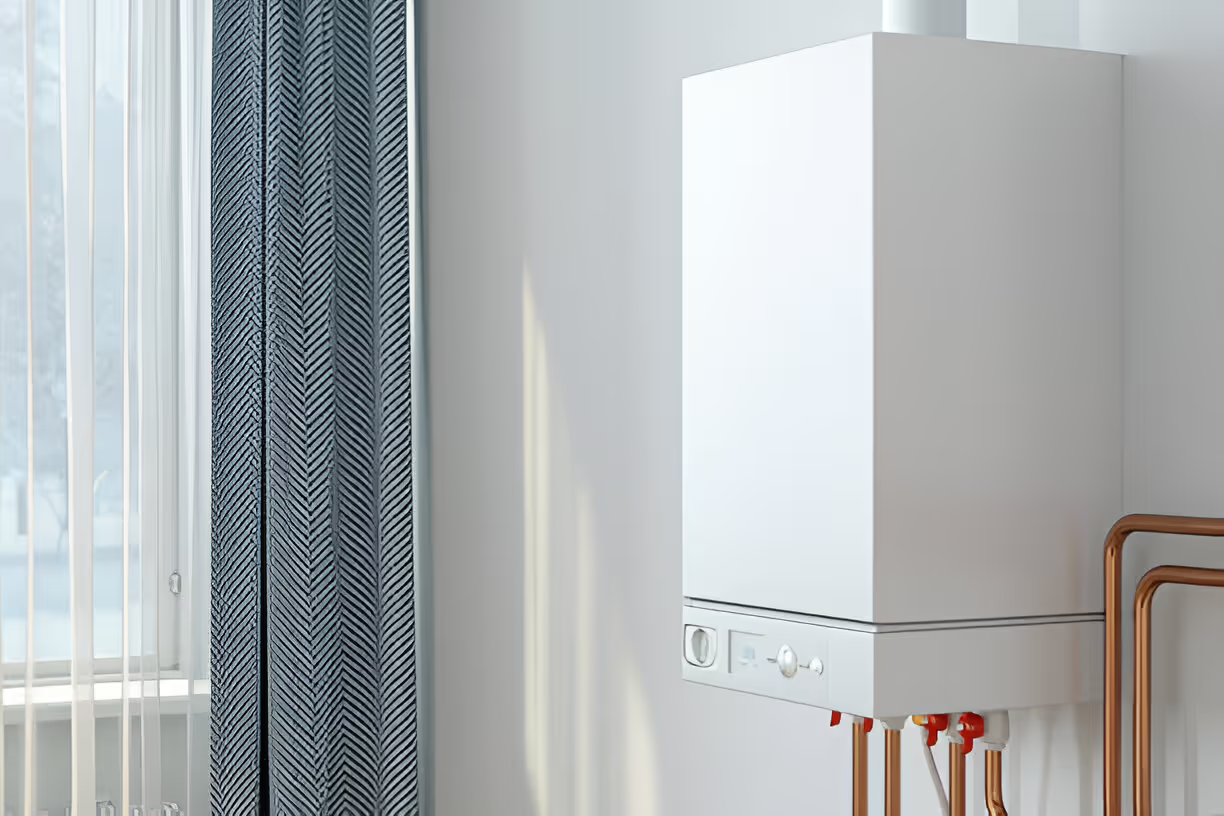
A tankless water heater heats water as it flows through the unit, using a gas burner or electric heating element. When a tap or appliance calls for hot water, flow sensors activate the heater and the heat exchanger raises the incoming water temperature to the setpoint. When demand stops, the unit shuts down. Key components include:
- Flow sensor and control board that detect demand and regulate temperature.
- Heat exchanger where water is rapidly heated.
- Gas burner or electric elements supplying heat.
- Venting or flue system for gas units.
- Filters or inlet screens to protect internal components from debris.
Because the system does not store hot water, standby heat losses are minimal. However, flow rate capacity and incoming water temperature determine the attainable output temperature and whether a single unit can serve an entire household or two units are needed in parallel.
Common tankless water heater issues in Alnwick homes
Understanding typical problems helps you choose the right unit and plan maintenance to avoid interruptions.
- Mineral buildup and scaling on heat exchangers and inlet screens. Hard water in the region increases the risk and can reduce capacity.
- Reduced flow rates when supply lines are undersized or when multiple fixtures run simultaneously.
- Venting problems or combustion air restrictions for gas units in tight or retrofit installations.
- Electrical supply limitations for electric tankless units, as some require significant amperage and dedicated circuits.
- Freeze risk in exterior or poorly insulated installations during cold snaps.
- Error codes from temperature sensors, flow sensors, or ignition systems when components age or become obstructed.
Proactive design choices and routine service minimize these issues and extend system life.
Types of tankless systems and which fits your Alnwick home
- Gas-fired condensing and non-condensing units: Best for whole-house high-demand applications. Condensing models are more efficient and recover more heat from exhaust gases but require corrosion-resistant venting and condensate handling.
- Electric tankless units: Compact and low-maintenance, excellent for point-of-use installation or smaller homes. They require proper electrical capacity and may struggle to meet whole-house hot water demand in cold groundwater conditions without multiple units.
- Point-of-use tankless: Small units installed at or near a fixture to eliminate wait time and conserve water. Ideal for remote bathrooms or additions.
- Multipoint or multiple-unit systems: Two or more tankless units staged or paralleled to meet high simultaneous demand and provide redundancy.
Choosing the right type depends on household size, simultaneous fixture use, available gas and electrical services, and installation space.
Site, piping, and venting requirements for Alnwick installations
Proper site selection and preparation are critical for performance and longevity.
- Location: Indoor installations reduce freeze risk and provide easier access for maintenance. If an exterior unit is used, it must be rated for outdoor conditions and protected from freezing.
- Venting: Gas units require approved venting. Condensing units need PVC or specialized stainless venting with proper slope for condensate drainage. Non-condensing units use conventional metal venting but must meet clearance requirements.
- Gas supply: Many Alnwick homes will need an evaluation of gas line size and pressure. Whole-house gas tankless units can require larger gas mains or upgraded regulators.
- Electrical: Electric units may require dedicated circuits and specific breaker sizes. Even gas units need electrical service for controls and ignition.
- Water piping: Use appropriately sized copper or PEX lines to maintain flow rates. Shorter runs reduce lag time and heat loss. Installing a recirculation loop can improve delivery times but affects sizing and controls.
- Water quality: Hard water calls for water softening or a descaling regimen to protect the heat exchanger. In regions with moderate hardness like Alnwick, pre-treatment is often recommended.
- Condensate management: Condensing units produce acidic condensate that needs neutralization or proper drainage according to code.
Everest Air Heating and Cooling assesses each site in Alnwick to match system requirements with existing utilities and layout.
Installation and retrofit considerations
Replacing a traditional tank with a tankless system is more involved than a simple swap. Typical steps include:
- Comprehensive on-site evaluation of current plumbing, gas, electrical panels, and venting routes.
- Load calculation based on peak simultaneous hot water uses — showers, washing machines, dishwashers — and expected incoming groundwater temperature during winter months.
- Equipment selection that matches capacity needs and homeowner preferences for energy source, brand, and features.
- Preparing the site: cutting access, installing new gas/ electrical connections, mounting the unit, and running venting if required.
- Upgrading gas piping or electrical service where necessary to meet the unit's demand.
- Installing appropriate water treatment or filters when local water hardness is a concern.
- Commissioning: programming temperature settings, conducting combustion analysis for gas units, and testing for flow, leaks, proper venting, and safety controls.
In retrofit scenarios, expect to address physical constraints such as limited utility space, existing venting incompatible with condensing units, or electrical panels lacking capacity. These challenges are manageable with planning and trade coordination.
Maintenance needs specific to Alnwick conditions
Tankless systems require routine maintenance to preserve efficiency and avoid premature failure. Typical maintenance tasks include:
- Descaling or flushing the heat exchanger: Frequency depends on local water hardness and usage. In Alnwick, homeowners with moderate mineral content should plan on annual or semi-annual descaling if no water softener is present.
- Cleaning inlet filters and screens to prevent flow restriction from debris or sediment.
- Inspecting and cleaning the burner and venting on gas units to ensure safe combustion and prevent carbon buildup.
- Checking pressure relief valves, condensate drains, and seals for corrosion or leaks.
- Verifying temperature sensors and control settings to prevent scalding and ensure comfort.
Regular maintenance preserves the unit's rated efficiency and often is required to keep warranties valid. Everest Air Heating and Cooling can tailor a maintenance plan to Alnwick homes that balances performance, local water conditions, and household usage.
Typical costs and payback expectations
While exact cost numbers vary by unit type, brand, home layout, and required upgrades, these are the main factors that influence overall cost and payback:
- Equipment cost: Larger, high-efficiency condensing units cost more upfront than smaller electric or non-condensing units.
- Installation complexity: Upgrading gas lines, adding venting, or increasing electrical capacity raises installation costs.
- Water pre-treatment: Adding a softener or descaling system impacts initial investment but reduces maintenance and prolongs system life.
- Energy savings: Tankless systems eliminate standby heat losses and can reduce energy consumption for water heating by a meaningful percentage, with actual savings depending on hot water use patterns.
- Lifespan: Tankless units typically last longer than storage tanks, which spreads the investment over more years.
- Local utility rates: Natural gas pricing relative to electricity and seasonal usage patterns in Alnwick influence annual operating cost differences.
Payback period can range from a few years to over a decade depending on these variables. For households with high hot water demand and long-term ownership plans, the energy and durability benefits often justify the higher initial investment. For lower-demand homes or those with limited electrical capacity, a point-of-use or hybrid approach may be more economical.
Tankless versus traditional tank water heaters: a practical comparison
- Energy use: Tankless systems avoid standby losses, often offering better energy efficiency, especially in households with intermittent hot water demand.
- Hot water availability: Tankless provides continuous hot water; tanks can run out during peak use.
- Initial cost: Tanks are usually less expensive to purchase and install initially than whole-house tankless systems.
- Lifespan: Tankless units commonly last longer when maintained properly.
- Maintenance: Tanks require less frequent descaling but do need periodic flushing and eventual replacement due to corrosion. Tankless units demand descaling in hard water areas.
- Space: Tankless units save floor space and allow installation in compact areas.
- Recovery time: Tank recovery after depletion can take time, while tankless heats on demand instantly for continuous flow, limited only by maximum flow rate.
- Peak performance in cold months: In Alnwick, colder incoming water reduces flow rate for a given temperature rise, so a larger or additional tankless unit may be necessary for winter peak loads.
Selecting between a tank and tankless solution should be based on household usage patterns, long-term plans, available utilities, and tolerance for upfront investment versus ongoing operating cost.
Common troubleshooting and simple solutions
Many issues can be resolved with targeted maintenance or adjustments:
- Reduced hot water flow or inconsistent temperature: Check inlet filters and screens, descale the heat exchanger, and verify minimum flow requirements are met.
- Error codes: Consult the unit manual for specific code meanings. Common causes include ignition failure, sensor malfunctions, or insufficient gas pressure.
- Cold water sandwich effect: Occurs when hot water is interrupted briefly between uses. Installing a small buffer tank or adjusting plumbing layout can mitigate this.
- Strange noises: Mineral scale or sediment in the heat exchanger can cause banging or whining sounds. Flushing and descaling typically resolve this.
- Flue or venting alarms: Ensure vent termination is unobstructed and condensate lines are draining properly. Improper venting impacts efficiency and safety.
Addressing these problems early reduces emergency repairs and avoids warranty complications.
What to expect during a professional diagnostic and installation
A professional assessment ensures accurate sizing and a clear plan for installation or retrofit. Typical diagnostic steps include:
- Reviewing household hot water profiles, peak simultaneous uses, and future planning like home expansions.
- Measuring incoming groundwater temperature and existing supply pressures.
- Inspecting current water heater location, venting routes, gas and electrical service capacities, and available space for new equipment.
- Presenting equipment options that match demand and site constraints and explaining trade-offs between condensing versus non-condensing, gas versus electric, and single versus multiple units.
- Outlining installation steps, necessary utility upgrades, and maintenance expectations for long-term performance.
Everest Air Heating and Cooling follows industry best practices during installation, focusing on code compliance, safe venting, and appropriate water treatment to protect the heat exchanger. Technicians perform a full commissioning at completion to verify performance and explain operating settings in plain language.
Benefits beyond energy savings for Alnwick homeowners
- Reduced risk of catastrophic leaks from a single large tank, since tankless units store little or no water.
- Improved space utilization in basement, utility closet, or garage installations common in Alnwick homes.
- Potential for increased home value, as many buyers view tankless systems as a modern upgrade with energy appeal.
- Lower long-term repair and replacement frequency when coupled with a routine maintenance plan appropriate for local water quality.
- Flexibility for whole-house or staged solutions to match renovation projects, accessory dwelling units, or additions.
These benefits make tankless systems attractive for homeowners planning to stay in their homes for the medium to long term or those seeking to modernize their hot water supply.
Practical maintenance tips for Alnwick homeowners
- Monitor performance and maintain a yearly log of maintenance tasks, especially descaling intervals if you do not have a water softener.
- Install a sediment filter or screen on the cold water inlet to capture grit that can damage the heat exchanger.
- Consider a whole-house water softener if water hardness tests high; this can significantly reduce descaling needs.
- Choose accessible installation locations to make regular maintenance straightforward and to reduce service costs.
- Keep vent terminations clear of vegetation, debris, and future landscaping obstructions.
- For gas units, have combustion analysis and safety checks performed periodically to ensure proper operation.
A little proactive care extends life and sustains efficiency.
FAQs
Q: How long does a tankless water heater last compared to a traditional tank?
A: Tankless units typically last longer, often 15 to 25 years with proper maintenance, compared to 8 to 12 years for traditional tanks. Longevity depends on water quality, maintenance frequency, and installation quality.
Q: Will a tankless water heater work for a larger family in Alnwick?
A: Yes, but sizing is critical. For larger families with simultaneous showers, laundry, and dishwasher use, either a larger high-capacity unit or multiple tankless units configured to operate together will be necessary to maintain adequate flow and temperature.
Q: Do I need a water softener with a tankless unit in Alnwick?
A: It depends on your water hardness. Moderate to hard water increases scaling risk and typically requires either a water softener or a regular descaling regimen. Testing your water hardness is the first step.
Q: Can a tankless water heater be installed outdoors in Alnwick?
A: Some tankless models are designed for outdoor installation and include freeze protection, but exterior placements increase exposure to weather and debris. Indoor installation is preferred to reduce freeze risk and simplify venting for gas units.
Q: How often should tankless units be serviced?
A: Annual servicing is common, but in areas with harder water or heavy use, semi-annual descaling may be recommended. Filters should be checked more frequently depending on local sediment.
Q: Will switching to tankless save money on my energy bill?
A: Many homeowners see energy savings because tankless units eliminate standby losses. Actual savings depend on hot water usage patterns, fuel costs, and the specifics of the installation.
Q: Are tankless water heaters compatible with solar water heating systems?
A: Yes. Tankless units can work with preheated water from solar thermal systems. Plumbing and control strategies should be designed by a professional to optimize performance.
Q: What should I do before an installer arrives for a tankless retrofit?
A: Prepare by documenting household peak hot water uses, noting existing gas and electrical service types, and ensuring utility space is accessible. If possible, measure water hardness or have recent utility bills available to help assess operating cost comparisons.
hear what our satisfied clients have to say

David P.
Service areas