

HVAC Installation in Loudon, TN
A new HVAC system isn't just an expense; it's a vital investment in your home’s comfort, efficiency, and overall value for years to come. Living in Loudon, TN, we know firsthand how those humid summers and chilly winters really test your heating and cooling equipment. That's why a system that's properly designed and professionally installed by Everest Air Heating and Cooling is crucial – it’s the difference between consistent comfort and frustrating, frequent breakdowns. Everest Air Heating and Cooling handles the entire installation process from start to finish. We focus on accurate assessment, selecting the perfect equipment for your home, ensuring a code-compliant installation, and performing thorough testing, so you can count on your new system to perform reliably right from day one.
.avif)
Why a professional, local HVAC installation matters in Loudon, TN
Loudon homes face specific climate and building characteristics. Summers are hot and humid, which increases the importance of correct cooling capacity and dehumidification. Winter temperatures can drop enough that heat pump efficiency and furnace sizing matter. Many homes in the area are older and may have undersized or deteriorated ductwork, crawlspace access, or mixed insulation levels that affect heating and cooling loads.
A locally experienced installer like Everest Air Heating and Cooling accounts for these regional factors during the design and installation process. That means your new system will be sized and configured for Loudon’s climate, your home’s construction, and your household comfort preferences rather than relying on rule-of-thumb sizing that frequently leads to short cycling, inconsistent temperatures, or high energy bills.
Common HVAC installation scenarios in Loudon, TN
- Full system replacement (split systems): Replacing both outdoor condenser and indoor air handler or furnace for homes with existing ductwork.
- Heat pump installation: Standard and high-efficiency heat pumps for combined heating and cooling needs.
- Ductless Mini Split systems: Ideal for additions, older homes without ducts, or rooms that need independent climate control.
- Ductwork replacement or modification: Repairing or redesigning ducts to eliminate leaks, rebalance airflow, and improve efficiency.
- Zoning and smart thermostat integration: Adding dampers and thermostats to control multiple areas independently.
- Packaged rooftop units or commercial configurations: For small commercial properties or unique installation needs.
Step 1 — Home and system assessment with precise load calculations
A successful installation starts with a detailed assessment of your home and a professional load calculation. Everest Air Heating and Cooling performs a comprehensive on-site evaluation that typically includes:
- Reviewing the home’s square footage, orientation, insulation levels, window types, and attic conditions.
- Measuring existing ductwork, identifying leaks, and noting airflow restrictions.
- Considering occupancy, appliance loads, and occupant comfort preferences.
- Conducting a Manual J load calculation to determine the correct heating and cooling capacity your home needs.
- Completing a Manual D duct design review when new or modified ductwork is required.
The Manual J load calculation is the industry standard. It avoids undersized or oversized equipment by accounting for heat gain and heat loss in each room. Proper sizing helps the system run at optimal efficiency, reduces frequency of repairs, and improves humidity control during Loudon’s humid months.
Step 2 — Guidance on energy-efficient models and brand selection
Selecting the right brand and model affects comfort, efficiency, and long-term operating costs. Everest Air Heating and Cooling helps homeowners weigh the most relevant considerations:
- Efficiency ratings: SEER (Seasonal Energy Efficiency Ratio) for cooling, HSPF for heat pumps, AFUE for furnaces. In Loudon’s climate, higher SEER and HSPF ratings improve summer comfort and reduce energy bills.
- Capacity and staging: Single-stage, two-stage, and variable-speed compressors offer different levels of comfort and efficiency. Variable-speed systems handle humidity better and run quieter.
- Refrigerant type: Newer refrigerants are more environmentally friendly and may affect system selection and future service needs.
- Durability and warranty: Manufacturer reliability and included warranties for both parts and compressors.
- Compatibility with existing ductwork: Selecting an air handler or furnace that pairs correctly with the home’s airflow characteristics.
- Indoor air quality features: Integration with filtration, UV lights, humidification, or energy recovery ventilators.
Everest Air Heating and Cooling discusses brand options that align with your budget and performance goals, explaining tradeoffs so you can make an informed decision.
Step 3 — Ductwork and ductless Mini Split options
Ductwork and distribution choices are fundamental to a successful installation.
Ductwork options:
- Repair and sealing: Many Loudon homes benefit from sealing and insulating ducts in crawlspaces or attics to stop energy loss and improve comfort.
- Partial replacement: Replacing only problem sections is a cost-effective fix when overall duct layout is acceptable.
- Full redesign: When ducts are undersized or poorly configured, redrawing a system using Manual D improves airflow and comfort balance.
- Insulation upgrades: Ensures conditioned air does not lose temperature in unconditioned spaces.
Ductless Mini Splits:
- When to choose ductless: Additions, historic homes, garages converted to living space, or rooms needing independent control.
- Benefits: High efficiency, straightforward installation, zoning without ductwork, and fast payback in targeted applications.
- Considerations: Aesthetics of wall-mounted heads, refrigerant line routing, and placement for optimal dehumidification and airflow.
Everest Air Heating and Cooling explains the pros and cons of each approach in the context of your Loudon home and suggests the option that maximizes performance and value.
Step 4 — Professional installation steps and on-site best practices
A professional installation follows a well-defined sequence to ensure safety and performance. Typical installation steps include:
- Final equipment selection confirmation and delivery scheduling.
- Site preparation, including protecting floors and landscaping around outdoor units.
- Removal and safe disposal of old equipment, following environmental and refrigerant handling regulations.
- Placement of outdoor unit on a level pad or platform, ensuring clearance for airflow and maintenance.
- Indoor unit or air handler installation, duct connections, and condensate drainage setup.
- Refrigerant line set install or connection, vacuum and leak testing to manufacturer specifications.
- Electrical tie-in to the home circuit with proper disconnects and surge protection as required by code.
- Thermostat installation and configuration, including smart thermostat integration where requested.
- System startup, refrigerant charge adjustment, and airflow balancing.
- Safety and combustion checks for equipment with fuel-burning components (furnaces), including carbon monoxide testing if applicable.
Technicians follow manufacturer installation guidelines and document steps to preserve warranties and ensure continued reliability.
Permits, inspections, and code compliance in Loudon, TN
Permitting and code compliance are essential. Everest Air Heating and Cooling coordinates with local building authorities and follows applicable codes and standards, which typically include:
- Securing the necessary building and mechanical permits from Loudon County or the City of Loudon.
- Ensuring installations meet local amendments and the adopted residential and mechanical codes.
- Scheduling required inspections for mechanical, electrical, and fuel systems as applicable.
- Following EPA and refrigerant handling requirements during removal and install of equipment.
Working with a company familiar with local permitting processes reduces delays and avoids costly rework. Everest Air Heating and Cooling documents the installation thoroughly to support smooth inspections and code sign-off.
Warranty, post-install testing, and commissioning
A new HVAC system should be verified and documented by comprehensive testing and commissioning:
- Manufacturer warranty: Information about factory warranties for parts, compressors, and heat exchangers. Everest Air Heating and Cooling ensures the installation process meets warranty requirements.
- Labor warranty: Coverage for workmanship, typically provided by the installing contractor for a specific period.
- Commissioning checks:
- Proper refrigerant charge verified by superheat/subcooling or manufacturer-specified method.
- Airflow measurements and adjustments to meet design CFM for each conditioned space.
- Thermostat calibration and control system verification.
- Condensate drainage and float switch functionality.
- Electrical load and amp draw checks for motors and compressors.
- Combustion analysis and carbon monoxide check for gas-fired equipment.
- Leak test and system pressure checks where applicable.
After testing, homeowners receive documentation of system settings, efficiency ratings, maintenance recommendations, and warranty registration details.
Expected timelines for HVAC installation in Loudon, TN
Install timelines vary with project complexity. Typical ranges:
- Initial assessment and load calculation: 1 day on site; quote typically delivered within 2-4 business days.
- Permit approval: Can range from same-week approvals to 1-2 weeks depending on the volume at the local office and project scope.
- Standard full system replacement: 1 to 3 days for straight swapouts where ductwork is adequate.
- Installations with significant ductwork replacement or redesign: 3 to 7 days or more depending on access, crawlspace work, and attic insulation needs.
- Ductless Mini Split installations: Often completed in 1 to 2 days for a single-zone system; multi-zone systems can take longer.
- Commercial or complex residential projects: Timelines scale based on design, equipment lead times, and permit complexity.
Everest Air Heating and Cooling provides a clear project schedule upfront and coordinates inspections to keep the project moving efficiently.
Financing and special offers (general overview)
Energy-efficient systems can be a significant investment. Financing options commonly available in the industry include:
- Fixed-term installment loans through third-party lenders, with varying terms and interest rates.
- Deferred interest or promotional 0% financing offers for qualified applicants.
- Energy-efficiency financing programs tied to utility or federal incentives that may lower upfront costs.
- Flexible payment plans to spread the cost over time while delivering immediate comfort improvements.
Special offers may be available seasonally or on specific equipment models. Everest Air Heating and Cooling can outline typical financing structures and available promotions that align with your project so you can choose a solution that meets budget and performance goals.
Long-term benefits of professional installation and timely replacement
Replacing an outdated or inefficient HVAC system with a properly installed modern system yields several benefits:
- Improved comfort through more consistent temperatures and better humidity control.
- Lower energy bills when selecting correctly sized, efficient equipment.
- Reduced repair frequency and longer equipment life when installed to manufacturer standards.
- Enhanced indoor air quality via improved filtration and ventilation options.
- Increased home value and marketability with a documented, recently installed HVAC system.
Paying for precision at installation pays off over the life of the system through better performance and fewer unexpected costs.
Maintenance tips after installation
To protect your investment and maintain peak performance, consider the following routine practices:
- Change or clean filters every 1 to 3 months, depending on filter type and household conditions.
- Schedule professional maintenance twice a year: a spring cooling Tune-Up and a fall heating Tune-Up.
- Keep outdoor unit clear of debris, vegetation, and excessive shade to maintain airflow.
- Monitor thermostat settings and consider a programmable or smart thermostat to optimize energy use.
- Watch for unusual noises, odors, or cycling behavior and address issues promptly to avoid larger repairs.
Everest Air Heating and Cooling offers preventive maintenance plans that fit a variety of needs for Loudon homeowners, helping systems stay efficient and reliable year-round.
Common installation challenges and solutions in Loudon homes
- Undersized ducts and uneven airflow: Solution involves a duct assessment, sealing, and rebalancing or selective resizing.
- Limited access in older homes: Solution includes targeted Mini Splits, low-profile air handlers, or creative routing with minimal disruption.
- High humidity during summer: Choose systems with variable-speed compressors and proper dehumidification capability; ensure airflow is balanced for effective moisture removal.
- Poor insulation or inconsistent attic sealing: Combine system upgrades with insulation improvements to get the full energy-saving benefits.
- Long equipment lead times: Plan ahead for replacements during peak seasons to avoid extended waits; consider interim cooling or heating solutions where necessary.
What to expect during the first week after installation
- System will be run through initial cycles and tuned for optimal performance.
- Everest Air Heating and Cooling typically confirms thermostat programming and demonstrates system operation.
- Expect a brief settling-in period for refrigerant pressures and airflow to stabilize; minor adjustments may occur during the first service visit.
- Keep an eye on comfort levels, humidity, and any alarms from the thermostat or safety switches; report anything unusual so it can be addressed under the installation labor warranty.
Frequently asked questions
Q: How do you know if my home needs a full system replacement or only repairs?
A: A thorough assessment including age of equipment, frequency and cost of past repairs, efficiency ratings, and the results of a Manual J load calculation determine whether repair or replacement is the most cost-effective, reliable solution.
Q: Will a new system lower my energy bills?
A: When properly sized and installed, modern high-efficiency systems can significantly reduce energy consumption compared to older, inefficient equipment. Savings depend on equipment efficiency, home envelope, and thermostat usage.
Q: Can you install a heat pump in Loudon’s winter temperatures?
A: Yes. Modern cold-climate heat pumps are effective in much of the Southeast. The decision depends on your home’s heating load and whether supplemental heat is preferred for the coldest days.
Q: How long does a typical HVAC installation take?
A: A standard full replacement in a home with existing compatible ductwork typically takes 1 to 3 days. Projects involving duct redesign or complex routing can take several additional days.
Q: Do you handle permits and inspections?
A: Everest Air Heating and Cooling coordinates permits and inspections with the local building department to ensure installations meet code and pass required inspections.
Q: What warranty coverage will I receive?
A: New equipment carries manufacturer warranties for parts and major components. Everest Air Heating and Cooling also provides a labor or workmanship warranty for a defined period. Warranty details are reviewed at the time of installation.
Q: Are ductless Mini Splits a good fit for Loudon homes?
A: Mini Splits are an excellent option for retrofits, additions, or rooms without existing ducts. They provide efficient zoning and can improve comfort while avoiding major ductwork projects.
Q: How often should I schedule maintenance after installation?
A: Twice-yearly maintenance—spring for cooling and fall for heating—is recommended to preserve efficiency, catch minor issues, and maintain warranty conditions.
Everest Air Heating and Cooling brings local expertise, industry-standard design practices, and meticulous installation to HVAC projects in Loudon, TN. From initial load calculations and equipment selection to permit coordination, professional installation, and thorough post-install testing, the process is designed to deliver reliable comfort, efficient performance, and peace of mind for Loudon homeowners.
hear what our satisfied clients have to say

David P.
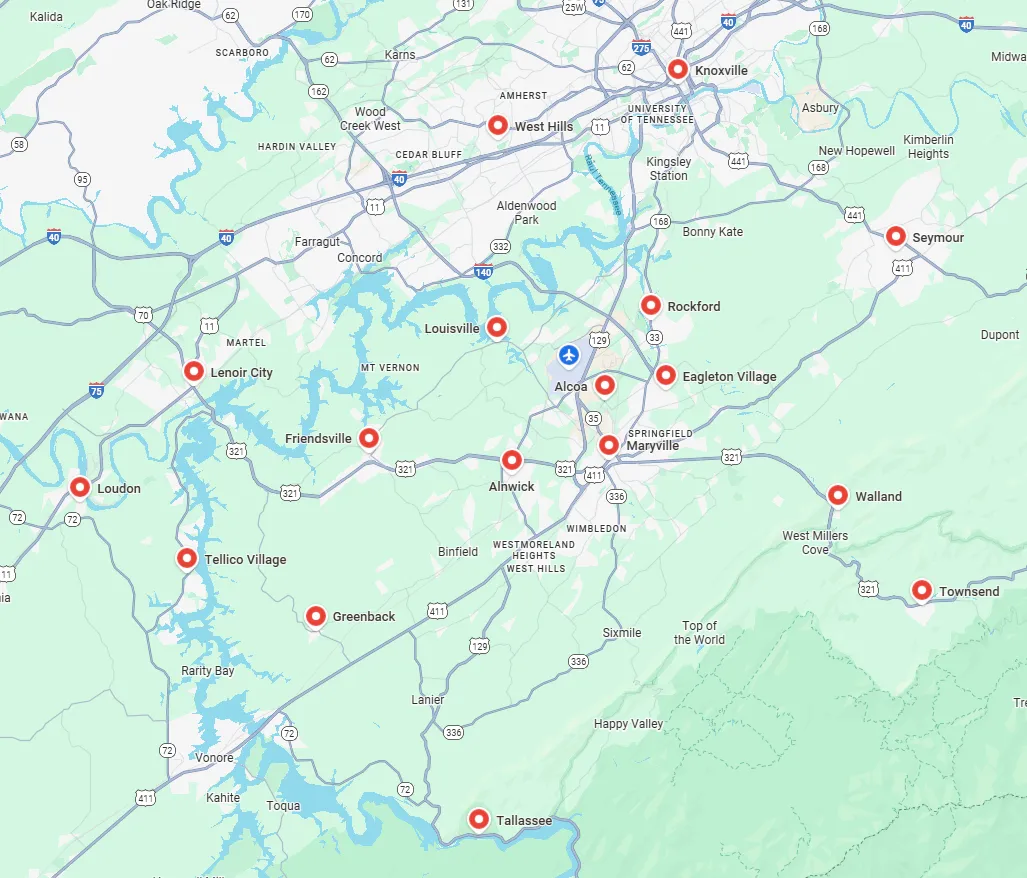
Service areas