

HVAC Installation in Lenoir City, TN
Putting in a new HVAC system is a big deal – it's one of the most impactful investments you'll make in your home. Here in Lenoir City, TN, the right installation means cozy comfort all year, better humidity control during those hot, sticky summers, and lower energy bills when winter chills set in. At Everest Air Heating and Cooling, we pride ourselves on a thorough, code-compliant approach to HVAC installation in Lenoir City. We meticulously focus on getting the sizing just right, recommending energy-efficient equipment, ensuring reliable ductwork, and guaranteeing long-term performance. You deserve to understand every step, and with Everest Air Heating and Cooling, we'll walk you through our full installation process, explain how we tackle common local issues, clarify permit and warranty considerations, and ensure you're comfortable with post-install testing and orientation, all while exploring flexible financing options.
.avif)
Why proper HVAC installation matters in Lenoir City
Lenoir City experiences hot, humid summers and moderate winters. High humidity and seasonal pollen levels place extra demands on equipment and duct systems. A poorly sized or incorrectly installed system will short cycle, struggle to remove humidity, and deliver inconsistent comfort between rooms. Proper installation addresses:
- Correct equipment sizing to match your home and family habits
- Right airflow and duct design to control humidity and reduce allergens
- Energy efficient selections that deliver lower monthly utility bills
- Code-compliant installation that passes municipal inspections
Everest Air Heating and Cooling emphasizes long-term reliability and efficient operation, tailored for Lenoir City homes and local climate conditions.
Common HVAC installation types in Lenoir City homes
- Central air conditioner and gas or electric furnace replacement
- Heat pump installations and heat pump conversions for greater efficiency
- Ductless Mini Split systems for additions, sunrooms, or rooms without ductwork
- Full system replacements when age, refrigerant phase-out, or chronic failures demand new equipment
- Zoning systems and variable-speed upgrades to improve comfort and lower energy use
- Ductwork replacement, sealing, and insulation in older homes with leaky ducts
Site assessment and accurate load calculation
A dependable installation starts with a thorough site assessment and a professional load calculation.
- Home survey and inspection
- Measure square footage of conditioned spaces, ceiling heights, window types, insulation levels, and orientation to the sun.
- Inspect existing ductwork, attic and crawlspace access, condenser pad location, and clearances.
- Note occupant habits and thermostat preferences.
- Manual J load calculation
- A Manual J calculation determines the precise heating and cooling capacity required for each room.
- This prevents oversized or undersized equipment that causes comfort issues, higher energy use, and premature component failure.
- Manual D duct design and airflow analysis
- Where ductwork changes are needed, Manual D sizing ensures balanced airflow and correct static pressure.
- Proper duct sizing and layout minimize hot and cold spots and improve humidity control.
In Lenoir City where older housing stock and mixed construction styles are common, precise load and duct calculations uncover problems that simple rule-of-thumb sizing would miss.
Recommendations for energy-efficient units and ductwork
Everest Air Heating and Cooling recommends equipment that matches your goals for efficiency, comfort, and longevity.
Energy-efficient feature considerations:
- SEER2 and HSPF2 ratings for cooling and heat pump efficiency
- High AFUE ratings for gas furnaces
- Variable-speed compressors and ECM blower motors for quieter operation and improved humidity control
- Two-stage or modulating equipment for better temperature consistency
- ENERGY STAR qualified models where applicable
Ductwork best practices:
- Replace or repair ducts with proper sealing at joints using mastic or UL-approved tapes
- Insulate ducts in attics or crawlspaces to prevent thermal losses
- Ensure proper return air pathways and adequate grille sizing for balanced operation
- Address restricted areas such as knee walls, duct transitions, and undersized boots
Selecting the right combination of efficient equipment and well-designed ducts is particularly valuable in Lenoir City, where summer humidity makes air conditioner performance and dehumidification critical for comfort.
Step-by-step installation procedure
A professional install follows a clear sequence to protect the home and ensure reliable operation.
- Pre-install planning
- Finalize equipment selection based on load calculations and preferences.
- Confirm access points, electrical service, and gas or fuel requirements.
- Obtain required permits and schedule inspections with the Lenoir City or Loudon County building department.
- Site preparation
- Protect floors, landscaping, and belongings with drop cloths and walk-off mats.
- Verify power is isolated and utilities are ready for reconnection.
- Removal of existing equipment
- Recover refrigerant in compliance with EPA regulations and handle disposal of old equipment responsibly.
- Remove old components and prepare mounting surfaces.
- Condenser and air handler/furnace installation
- Set condenser on a level pad or bracket with adequate airflow clearance.
- Place air handler or furnace in the mechanical closet, attic, or crawlspace with proper clearances for service.
- Install proper vibration isolation and drainage for the condensate line.
- Ductwork modifications
- Repair, replace, or augment ductwork per Manual D plans.
- Seal all joints, test for leaks, and insulate as required.
- Refrigerant line set and electrical
- Run copper line set sized for the equipment; properly braze and evacuate the lines before charging.
- Connect electrical wiring to code and install disconnects where required.
- System charging and balancing
- Charge refrigerant according to manufacturer specifications and verify superheat and subcooling when applicable.
- Adjust blower speeds and dampers for correct static pressure and CFM distribution.
- Test airflow and perform room-by-room balancing.
- Controls and thermostat integration
- Install and configure thermostats, smart controls, or zoning panels.
- Test Wi-Fi connections and explain app features if present.
- Final inspection and commissioning
- Conduct a complete commissioning checklist including safety controls, limit switches, gas combustion analysis (for gas systems), and electrical load checks.
- Complete any required municipal inspection and finalize permit paperwork.
- Post-install cleanup and homeowner orientation
- Remove debris and dispose of old equipment.
- Provide a walkthrough covering operation, filter changes, and maintenance schedules.
Typical residential installs can take one to three days. Larger projects or those with significant ductwork changes may require additional time.
Permit and code considerations in Lenoir City, TN
Local building departments regulate mechanical work to ensure safety and code compliance. For Lenoir City installations:
- Mechanical permits are usually required for system replacements and new installations. Expect plan review and on-site inspections during or after the install.
- Electrical permits may be needed for new disconnects, circuits, or panel upgrades.
- Gas line work must follow proper sizing and bonding requirements and often requires inspection by the gas utility or local inspector.
- Refrigerant handling requires EPA-certified technicians and proper refrigerant documentation.
- Local amendments to state or model codes may apply. Everest Air Heating and Cooling coordinates permit submission and inspection scheduling to meet Lenoir City and Loudon County requirements.
Permitting protects homeowners by ensuring the job meets minimum safety standards and helps preserve home resale value and insurance compliance.
Warranty information and documentation
A robust warranty framework protects your investment and clarifies responsibilities.
- Manufacturer warranties: Equipment manufacturers provide parts warranties and sometimes limited unit warranties. Common terms include 10-year parts coverage on compressors and certain parts, and variable lengths for heat exchangers. Registration may be required with the manufacturer to maximize warranty coverage.
- Labor warranties: Contractors often offer limited labor warranties for installation workmanship. Verify the length of coverage and which components are included.
- Extended warranties and service plans: Extended parts or labor coverage can be purchased separately or provided through maintenance plans.
- Documentation: After installation, you should receive manuals, warranty certificates, a detailed invoice listing equipment serial numbers and model numbers, and any necessary permit closure documents.
Everest Air Heating and Cooling documents installations carefully and explains warranty transferability and registration to ensure homeowners in Lenoir City understand their protection.
Post-installation testing and user orientation
Thorough testing and homeowner education are essential to get the most from a new HVAC system.
Performance tests performed after installation:
- Refrigerant system checks: Verify correct refrigerant charge, pressures, and temperature splits.
- Airflow and static pressure: Confirm blower settings and ductwork are delivering intended CFM.
- Electrical checks: Confirm voltage and amperage are within manufacturer tolerances.
- Safety function tests: Check limit switches, rollouts, condensate overflow protection, and gas valve operation.
- Combustion analysis for gas systems: Ensure safe combustion and proper venting.
Homeowner orientation topics:
- Thermostat programming and seasonal adjustments for Lenoir City climates
- Filter types, locations, and replacement intervals
- How to change settings for humidity control and dehumidification
- Basic troubleshooting steps and what to watch for (unusual noises, odors, or error codes)
- Service recommendations to preserve warranty and efficiency
A complete orientation empowers homeowners to operate their system efficiently and detect potential problems early.
Financing options and incentives for Lenoir City homeowners
Financing can make higher efficiency systems affordable while delivering energy savings. Typical financing routes include:
- Installment loans: Fixed monthly payments over a set term that spread equipment cost over time.
- Promotional financing: Short-term deferred interest or low interest promotional periods offered through third-party finance partners.
- Energy-specific financing: Loans tailored to home energy improvements with flexible terms.
- In-house payment plans: Contractor-provided payment options with structured monthly payments.
In addition to financing, homeowners in Lenoir City may qualify for energy incentives:
- Local utility rebates for high efficiency equipment or heat pumps
- State or federal tax credits for qualifying energy efficient upgrades or electrification measures
- Manufacturer rebates on certain models or equipment packages
Everest Air Heating and Cooling assists homeowners in exploring financing and incentive opportunities so they can make an informed choice that balances upfront cost and long-term savings.
Typical installation challenges and solutions in Lenoir City homes
Older homes and regional climate factors create recurring challenges. Common issues and how they are addressed:
- Undersized or oversized systems
- Solution: Use Manual J and Manual D to size equipment correctly and select variable-speed options when appropriate.
- Leaky or undersized ducts
- Solution: Repair or replace ducts, seal joints, and properly insulate to improve airflow and reduce losses.
- High indoor humidity
- Solution: Right-size equipment, add dehumidification features, or select variable-speed systems that run longer for better moisture removal.
- Limited mechanical space
- Solution: Consider compact air handlers, ductless Mini Splits, or relocating components where feasible and permitted.
- Old electrical panels or inadequate service
- Solution: Coordinate with licensed electricians to upgrade service where required for modern equipment.
Everest Air Heating and Cooling evaluates these issues during the site assessment and plans installations to resolve them rather than masking symptoms.
Long-term benefits and maintenance advice
A quality installation yields measurable long-term benefits for Lenoir City homeowners:
- Improved comfort and even temperatures throughout the home
- Better humidity control and reduced mold risk in humid months
- Lower energy bills with properly sized, energy-efficient equipment
- Fewer emergency repairs and extended equipment life with proper maintenance
- Safer operation, especially for gas-fired systems
Maintenance recommendations:
- Replace or clean filters monthly or per manufacturer guidance
- Schedule biannual or annual preventive maintenance, ideally in spring for cooling and fall for heating
- Inspect condensate lines, clear drain pans, and verify proper drainage
- Keep outdoor condenser clear of vegetation and debris
- Consider enrolling in a maintenance plan such as the Y.E.T.I Comfort Plan offered by Everest Air Heating and Cooling for scheduled checkups, priority scheduling, and preventative service discounts
Routine care protects warranty coverage, maintains efficiency, and preserves indoor air quality.
What homeowners should prepare for on installation day
To help the installation proceed smoothly, homeowners can prepare in these ways:
- Clear access to equipment locations, attics, basements, or crawlspaces
- Move vehicles if outdoor equipment access is restricted
- Secure pets and identify any special needs for family members
- Ensure pathways and rooms are accessible by clearing clutter
- Have records of previous service or equipment history available for technicians
Technicians will take measures to protect the home, control dust, and maintain a clean workspace throughout the project.
Equipment options and matching to lifestyle
Choosing equipment depends on comfort priorities and budget:
- Central split systems: Best for whole-house comfort when ductwork is present.
- Heat pumps: Excellent for Lenoir City climates that rarely experience prolonged extreme cold. High-efficiency heat pumps now compete strongly with furnaces for both heating and cooling.
- Ductless Mini Splits: Ideal for additions, garages converted to living space, or rooms without ductwork.
- Hybrid systems: Combine heat pump and furnace for optimized efficiency across seasons.
- Zoning systems: Provide targeted comfort and energy savings for multi-level homes or uneven thermal loads.
Everest Air Heating and Cooling advises homeowners on which option aligns with energy goals, room usage, and budget constraints.
Frequently asked questions
Q: How long does a typical residential HVAC installation take in Lenoir City?
A: Most standard replacements take one to three days. Jobs requiring significant ductwork repair, panel upgrades, or structural changes may take longer. Everest Air Heating and Cooling provides a project timeline during planning.
Q: Will I need a permit for a new HVAC system in Lenoir City?
A: Yes. Mechanical and possibly electrical and gas permits are typically required. Everest Air Heating and Cooling coordinates permit submission and inspections to meet local Lenoir City and Loudon County requirements.
Q: How do I know what system size I need?
A: A Manual J load calculation determines the proper capacity by accounting for home size, insulation, windows, orientation, and occupancy. Proper sizing prevents short cycling and improves comfort.
Q: What efficiency ratings should I look for when replacing my system?
A: Look at SEER2 for cooling, HSPF2 for heat pumps, and AFUE for furnaces. Variable-speed blowers and two-stage compressors improve comfort and dehumidification. Everest Air Heating and Cooling reviews efficiency options and the potential savings for each model.
Q: What warranties come with a new HVAC installation?
A: Manufacturers provide parts and limited unit warranties; contractors provide labor or workmanship warranties. Registration may be necessary to activate full manufacturer coverage. Detailed warranty documents are provided at completion.
Q: Can financing or rebates reduce the cost of a high efficiency system?
A: Financing options like installment loans, promotional periods, and energy-specific loans can spread payments. Utility rebates and possible state or federal incentives may apply for qualifying efficient equipment. Everest Air Heating and Cooling helps homeowners explore available options.
Q: How do I maintain my new system for peak performance?
A: Regular filter changes, seasonal Tune-Ups, duct inspections, and cleaning condensate lines are key. Enrollment in a preventive maintenance plan such as the Y.E.T.I Comfort Plan helps maintain efficiency and reliability.
Everest Air Heating and Cooling provides clear guidance at every stage of HVAC installation in Lenoir City, TN to ensure your home achieves the comfort and efficiency you expect. The combination of accurate sizing, energy-efficient equipment, code-compliant installation, and thorough commissioning delivers a system that performs reliably in Lenoir City’s climate for years to come.
hear what our satisfied clients have to say

David P.
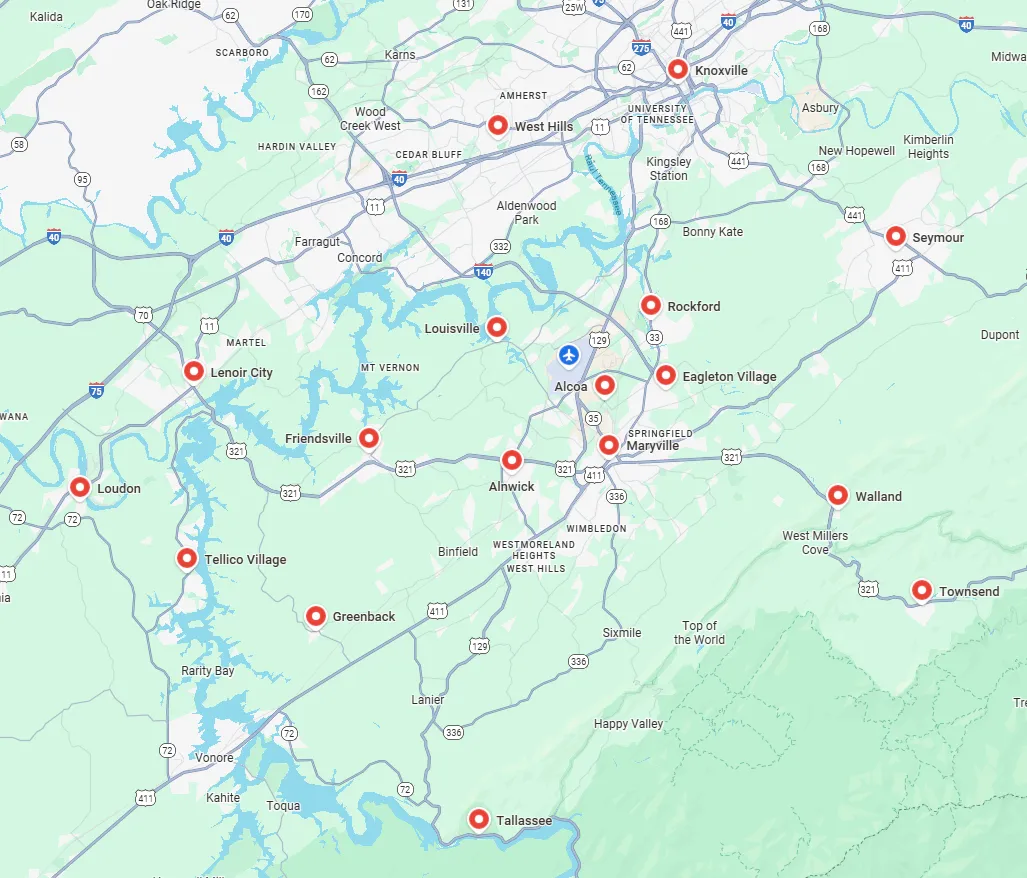
Service areas