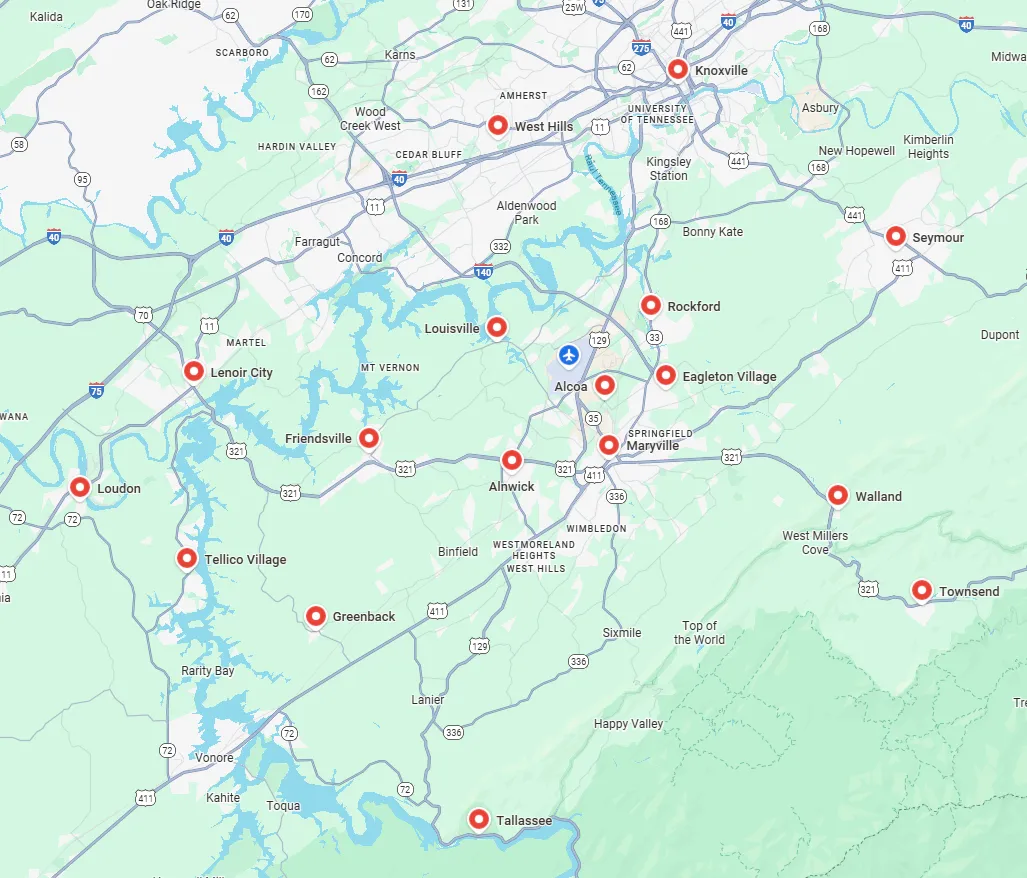


Furnace Replacement in Tallassee, TN
For homeowners in Tallassee, TN, deciding when to replace a furnace is about more than just comfort and safety; it's also about your long-term costs and energy efficiency. Everest Air Heating and Cooling brings local experience and practical guidance directly to Tallassee homes, helping you figure out if a repair or a replacement is truly the smarter investment. We'll explain when a new system is genuinely recommended over a repair, highlighting the clear benefits of modern, high-efficiency furnaces. You'll learn about the step-by-step replacement process we follow, various brand and warranty options, and the energy savings you can expect. Plus, Everest Air Heating and Cooling can help you explore financing or special offers to make that essential upgrade manageable for your family.
.jpeg)
Why consider furnace replacement in Tallassee, TN
Tallassee experiences humid subtropical conditions with mild but occasionally cold winters. While average winter temperatures are moderate compared with northern states, residents still rely on dependable heating during cold snaps. A failing or inefficient furnace can lead to uneven heating, higher utility bills, and increased risk of breakdown during the coldest nights. Common reasons Tallassee homeowners choose replacement include:
- Repeated repairs with rising costs and no clear long-term reliability.
- Furnace age beyond typical service life (commonly 15 to 20 years).
- Noticeably higher heating bills compared to previous seasons.
- Difficulty keeping the home comfortable, with large temperature swings between rooms.
- Safety concerns such as cracked heat exchangers, frequent pilot or ignition issues, or evidence of carbon monoxide risk.
- Desire to reduce energy usage and lower monthly utility costs.
Everest Air Heating and Cooling evaluates these factors in the context of local energy prices, housing styles in Tallassee, and the typical heating season to help homeowners make an informed decision.
When replacement is recommended over repair
Deciding between repair and replacement is a financial and comfort-oriented choice. Consider replacement when any of the following apply:
- The furnace is older than 15 years and showing signs of major wear.
- Repair costs approach or exceed 50 percent of the cost of a new, correctly sized furnace.
- The system needs frequent repairs, indicating diminishing reliability.
- The unit has a cracked heat exchanger, persistent ignition problems, or other safety-related issues.
- Your home has been retrofitted for improved insulation or air sealing and the furnace is now oversized or undersized.
- You want to lower your long-term energy bills and are ready to invest in a high-efficiency model.
Everest Air Heating and Cooling uses a practical checklist that includes equipment age, repair frequency and cost, current efficiency rating, and the homeowner's long-term plans for the house. That local, experience-based evaluation helps Tallassee families choose the most cost-effective path.
Benefits of upgrading to a modern high-efficiency furnace
Upgrading to a modern furnace delivers tangible benefits that matter in Tallassee homes:
- Improved energy efficiency: Modern furnaces offer higher AFUE ratings, converting more fuel into usable heat. That reduces monthly heating costs, especially during extended cold periods.
- More consistent comfort: Variable-speed blowers and modulating gas valves provide steadier temperatures and fewer hot or cold spots throughout the home.
- Quieter operation: Newer units run more quietly than older furnaces, improving overall home comfort.
- Better indoor air quality: Upgraded filtration options and improved blower performance help reduce dust and particulates circulated through the ductwork.
- Smaller environmental footprint: Higher efficiency means less fuel consumption and lower greenhouse gas emissions over the furnace lifespan.
- Enhanced safety features: Modern ignition systems, improved venting and sealed combustion options reduce risk and improve reliability.
- Potential rebates and incentives: Efficiency upgrades may qualify for manufacturer or utility incentives. Everest Air Heating and Cooling will identify available options relevant to Tallassee homes.
Typical efficiency gains translate directly into lower energy bills. For example, replacing an older furnace with an AFUE of 65 to 75 percent with a modern 95 percent AFUE unit can reduce heating fuel consumption by roughly 20 to 35 percent, depending on usage patterns and home insulation. Actual savings depend on fuel type, annual heating hours, and local utility costs.
Types of furnaces suitable for Tallassee homes
Tallassee homeowners commonly choose from the following furnace types, depending on fuel availability, ductwork, and comfort goals:
- Gas furnaces: A popular choice where natural gas or propane is available. Gas furnaces are efficient, cost-effective, and provide rapid heat.
- Electric furnaces: Appropriate for homes without access to gas. Modern electric furnaces paired with heat pump systems can be effective in mixed climates.
- Oil furnaces: Less common in parts of Tennessee but still present in some older properties. Replacement often includes transitioning to gas or heat pump options.
- Modulating and two-stage furnaces: Offer more precise heat control and improved comfort while saving energy compared to single-stage units.
- High-efficiency condensing furnaces: Use secondary heat exchangers to extract additional heat, achieving AFUE ratings commonly in the mid 90s.
Everest Air Heating and Cooling assesses local fuel availability, existing duct systems, and household priorities to recommend the right type and configuration for each Tallassee home.
The replacement process explained
A professional furnace replacement follows a structured process to ensure safety, efficiency, code compliance, and long-term performance. Everest Air Heating and Cooling follows these essential steps for every Tallassee installation:
- Pre-installation evaluation
- Detailed assessment of the existing system, including age, condition, and compatibility with new equipment.
- Home inspection to check ductwork condition, return air paths, combustion air access, and venting or chimney status.
- Manual J load calculation to determine correct furnace sizing based on home square footage, insulation, window types, orientation, and local climate factors in Tallassee.
- Equipment selection and planning
- Recommendation of furnace size and model that match the Manual J calculation and homeowner priorities (efficiency, noise level, indoor air quality).
- Coordination of any required ductwork modifications, venting changes, or gas line adjustments.
- Review of applicable building codes and permit requirements in the local jurisdiction.
- Safe removal of the old unit
- Professional disconnection of fuel, electrical, and venting connections.
- Careful removal and containment of the old equipment to minimize dust and disturbance.
- Proper capping of gas lines and sealing of combustion air openings as required.
- Installation of the new furnace
- Placement and secure mounting of the new unit with attention to service access and airflow.
- Correct installation of venting and exhaust systems, or conversion to sealed combustion if applicable.
- Proper connection to the gas line, electrical supply, thermostat, and any zoning controls.
- Commissioning of the system including airflow balancing, burner firing checks, and verification of safety devices.
- Testing, cleanup, and homeowner orientation
- System start-up and performance testing under load to confirm correct operation.
- Explanation of operation, maintenance tips, and how to use any new thermostats or controls.
- Responsible disposal of the old furnace and packaging in accordance with local regulations.
This systematic approach reduces the risk of premature failure, improves efficiency from day one, and ensures the installation meets code and manufacturer requirements.
Proper sizing and ductwork considerations
Correct furnace sizing is critical. Oversized units cycle on and off frequently, causing higher wear, lower efficiency, and inconsistent comfort. Undersized furnaces struggle to maintain temperature on the coldest days. Everest Air Heating and Cooling uses Manual J load calculations to size furnaces precisely for Tallassee homes, accounting for:
- Square footage and room-by-room heat loss.
- Insulation levels and building envelope tightness.
- Window types and orientation relative to the sun.
- Local climate and expected heating loads in Tallassee.
- Ventilation and indoor humidity considerations.
Ductwork health is equally important. Many replacement projects reveal duct leaks, undersized return paths, or inadequate insulation. Addressing these issues during replacement improves system efficiency and comfort. Common ductwork services include sealing, adding return runs, insulating accessible ducts, and verifying airflow to each room.
Brands, warranties, and components
Everest Air Heating and Cooling works with reputable furnace manufacturers commonly trusted by homeowners in the region. Available brands often include York, American Standard, Goodman, Lennox, Ruud, and Rheem, among others. Each brand offers different features and warranty structures, so selection depends on performance needs and budget.
Warranty considerations:
- Manufacturer parts warranty: Typically covers core components for a set number of years. Registered installations often receive longer coverage.
- Heat exchanger warranty: Critical for safety and durability; many manufacturers offer extended warranties on the heat exchanger.
- Labor warranty: Covers workmanship and installation errors. Everest Air Heating and Cooling provides clarity on labor coverage for installations performed by their technicians.
When comparing warranty options, consider the length of coverage, what components are included, conditions for maintaining warranty validity (such as required maintenance schedules), and whether warranties are transferable if you sell the home.
Energy-savings estimates and what to expect in Tallassee
Replacing an older furnace can yield meaningful savings in Tallassee, although the exact numbers depend on several factors:
- Current furnace efficiency (AFUE) versus new unit AFUE.
- Annual heating degree days in Tallassee and household heating habits.
- Fuel type and local energy prices.
- Improvements to insulation, air sealing, and thermostat control.
As a rough guideline:
- Upgrading from a 70 percent AFUE furnace to a 95 percent AFUE unit can reduce fuel consumption by 20 to 35 percent.
- Switching from an older electric or oil furnace to a high-efficiency gas or condensing furnace may yield even greater savings depending on fuel price differentials.
- Combining a high-efficiency furnace with improved duct sealing and programmable or smart thermostats increases savings potential and shortens payback time.
Everest Air Heating and Cooling provides tailored energy-savings projections based on an assessment of your current system, fuel costs, and household use patterns to give a realistic estimate for Tallassee homes.
Financing and special-offer options
A furnace replacement is a significant investment, and many homeowners prefer financing options to spread costs over time. Typical options that may be available locally include manufacturer financing programs, third-party consumer financing, and occasional seasonal promotions that reduce upfront costs or offer special terms. Utility or municipal programs sometimes provide rebates for high-efficiency equipment, and tax incentives may apply under certain conditions.
Everest Air Heating and Cooling discusses financing and potential incentives during the evaluation phase so homeowners in Tallassee understand available choices and how they affect overall cost of ownership, monthly payments, and long-term savings. Financing terms and availability vary, and eligibility depends on credit, program rules, and current promotions.
Long-term maintenance and durability
A proper installation combined with scheduled maintenance delivers the best long-term value. Routine annual maintenance keeps the furnace running safely and efficiently, includes cleaning burners, checking ignition systems, lubricating moving parts, testing safety switches, and verifying airflow. Regular maintenance also helps preserve warranty coverage and extend equipment life.
Key maintenance tips for Tallassee homeowners:
- Replace or clean filters regularly as recommended by the manufacturer.
- Ensure returns and vents are unobstructed.
- Schedule annual inspections and Tune-Ups before the heating season.
- Monitor for unusual noises, odors, or frequent cycling and address them promptly.
Everest Air Heating and Cooling recommends maintenance plans that align with the Y.E.T.I Comfort Plan principles: regular checkups, priority scheduling, and preventive care to reduce the chance of unexpected breakdowns during cold periods.
Common questions and decision factors
Many homeowners weighing replacement ask the same questions. Addressing these helps clarify the best path for a Tallassee home:
- Is my furnace too old to repair? Age is a strong indicator. At 15 to 20 years, replacement often becomes the most cost-effective option given advances in efficiency and the rising cost of repairs.
- Will a new furnace fit my existing ductwork? Often yes, but duct evaluation is part of the proposal. Some homes require modifications to maximize airflow and efficiency.
- How much will I save with a new unit? Savings depend on efficiency gain, fuel costs, and usage. A detailed assessment provides an estimate tailored to your home.
- Are high-efficiency furnaces more reliable? Modern high-efficiency units deliver improved performance, but reliability depends on installation quality and proper sizing. Professional installation and maintenance are critical.
- What safety checks are included? Technicians inspect heat exchangers, venting, combustion air, and gas connections to ensure safe operation and code compliance.
- How long does the replacement take? Typical residential replacements can often be completed in a day, though complex installs or ductwork upgrades may require additional time.
Everest Air Heating and Cooling provides clear, local answers to these questions so Tallassee homeowners can make confident decisions.
FAQs
Q: How do I know if my furnace is the right size for my home?
A: Proper sizing requires a Manual J load calculation that factors square footage, insulation, window areas, and local climate conditions in Tallassee. This calculation prevents oversized or undersized installations and ensures efficient, comfortable operation.
Q: What is AFUE and why does it matter?
A: AFUE stands for Annual Fuel Utilization Efficiency. It measures how much of the fuel becomes usable heat. Higher AFUE ratings mean lower fuel usage and reduced utility bills.
Q: Will replacing my furnace reduce drafts and improve comfort?
A: Yes. Modern furnaces with variable-speed blowers and proper ductwork modifications deliver more even airflow and reduce temperature swings throughout the home.
Q: Are there environmental benefits to replacing an old furnace?
A: Upgrading to a high-efficiency furnace reduces fuel consumption and associated emissions, contributing to a smaller environmental footprint.
Q: What warranty protections should I expect?
A: Manufacturer warranties typically cover parts for a set period, and some components like heat exchangers have extended coverage. Labor warranties vary with the installer, and routine maintenance may be required to keep warranties valid.
Q: Can a new furnace be integrated with a smart thermostat or zoning system?
A: Yes. New systems commonly support smart thermostats and zoning, which can improve comfort and reduce energy use by tailoring temperatures to occupancy and room-by-room needs.
Q: What happens to the old furnace after replacement?
A: The old unit is removed and disposed of responsibly, following local regulations. Gas lines are safely capped and venting connections are updated to meet code.
Q: How often should a new furnace be serviced?
A: Annual maintenance is recommended. In Tallassee, scheduling a fall inspection before the heating season helps ensure reliable operation during colder months.
Everest Air Heating and Cooling offers knowledgeable, local guidance for each of these areas to help Tallassee homeowners choose a furnace that fits their home, comfort expectations, and budget.
hear what our satisfied clients have to say

David P.
Service areas