

Furnace Maintenance in Tellico Village, TN
Keeping your furnace in peak condition matters year after year, especially in Tellico Village, TN, where lakeside living, seasonal visitors, and changing weather put unique demands on home heating systems. At Everest Air Heating and Cooling, we provide thorough furnace maintenance focused on safety, efficiency, and reliability so your home stays comfortable when you need it most. We'll show you what routine maintenance includes, address common furnace issues specific to Tellico Village homes, walk you through our step-by-step diagnostic and Tune-Up process, explain how preventative care prevents frustrating breakdowns, and detail how maintenance ties into our Y.E.T.I Comfort Plan with priority scheduling and service discounts.
Why furnace maintenance matters in Tellico Village
Tellico Village residents face a mix of local conditions that affect heating systems: cold snaps in winter, humid transitional seasons around the lake, and many homes that are seasonal or used as second properties. Those factors increase the risk of problems such as corroded components, sticky controls, or blocked vents from wildlife nesting. Regular maintenance:
- Ensures safe operation and reduces the risk of carbon monoxide exposure.
- Restores efficient combustion and airflow, which lowers utility costs.
- Catches small issues before they become expensive failures during the coldest days.
- Helps maintain manufacturer warranties and extends equipment life.
- Provides peace of mind for year-round and vacation homeowners alike.
Everest Air Heating and Cooling customizes furnace maintenance to local challenges in Tellico Village while following industry best practices.
Common furnace problems we see in Tellico Village homes
Understanding typical issues helps you recognize when maintenance is overdue. Common problems include:
- Dirty or clogged air filters causing poor airflow and overheating.
- Ignition or pilot failures on older furnaces that prevent reliable starts.
- Burner deposits or misalignment reducing combustion efficiency.
- Weak or failing blower motors and belts leading to inadequate heat distribution.
- Cracked heat exchangers or rollout conditions that pose safety risks.
- Obstructed flues and venting that impair exhaust and increase carbon monoxide risk.
- Thermostat calibration problems that produce uneven temperatures or short-cycling.
- Condensate blockages on high-efficiency furnaces causing shutdowns.
- Electrical connection failures and corroded terminals from lake-area humidity.
- Duct leaks or poor insulation reducing system performance in seasonal homes.
Early detection through routine maintenance dramatically reduces the likelihood of emergency repairs.
What’s included in a full furnace maintenance service
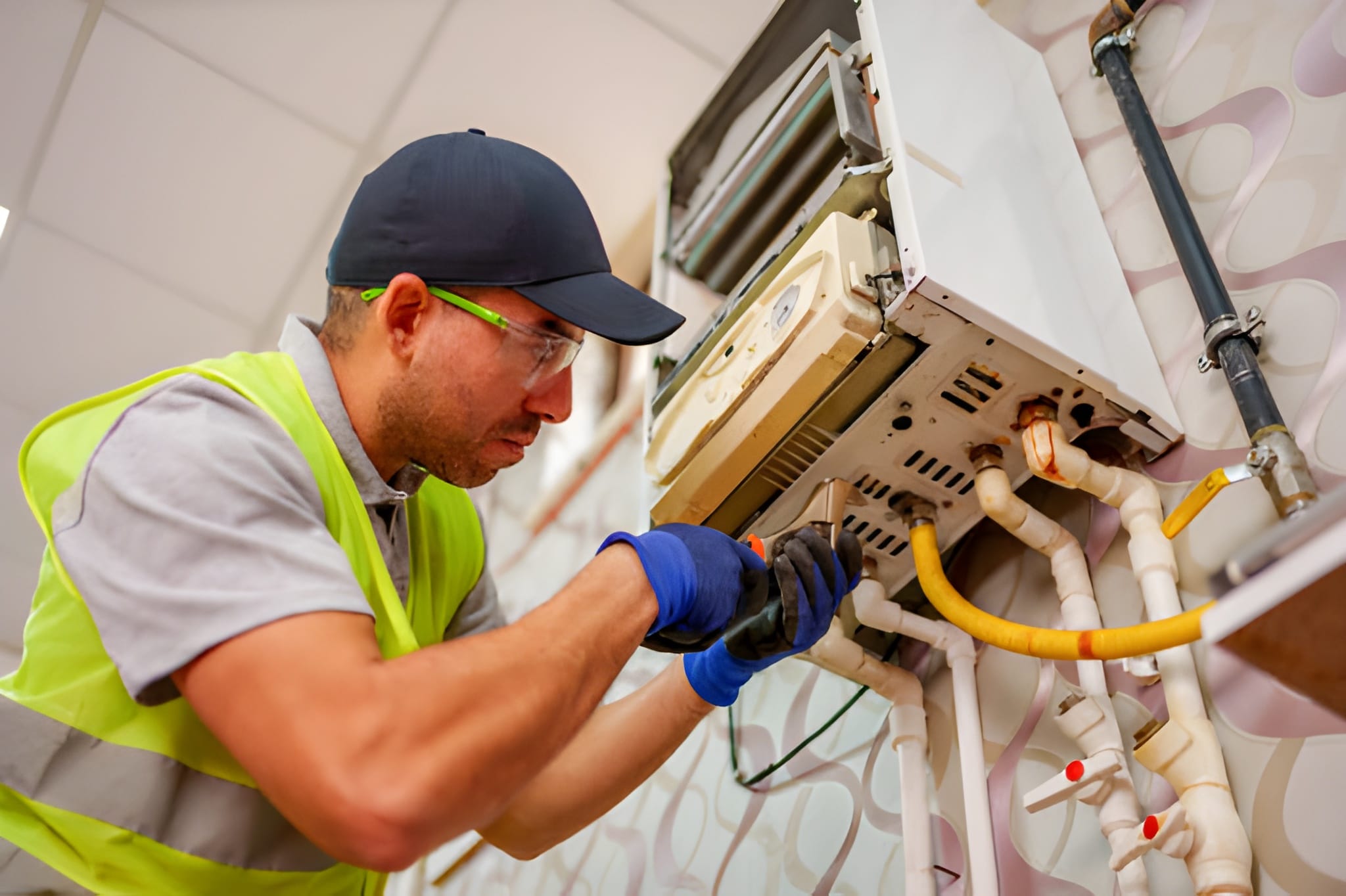
A comprehensive maintenance visit covers safety, performance, and reliability checks. Everest Air Heating and Cooling’s standard furnace maintenance in Tellico Village typically includes:
- Visual inspection of the furnace cabinet, cabinet seals, and surrounding area for debris, pest activity, or water damage.
- Filter check and replacement or guidance on replacement frequency based on filter type and home conditions.
- Thermostat check and calibration to ensure accurate temperature control and proper staging.
- Safety control testing, including limit switches, rollout switches, and pressure switches.
- Burner inspection and cleaning to ensure proper flame shape and combustion.
- Ignition system testing and cleaning for pilot assemblies or electronic igniters.
- Combustion analysis when needed to verify proper gas/air mix and safe exhaust composition.
- Heat exchanger inspection for signs of cracking, rust, or distortion.
- Flue and venting inspection to check for obstructions, corrosion, or improper slopes.
- Blower motor and wheel cleaning, lubrication (where applicable), and electrical testing.
- Electrical component inspection, checking wiring, terminals, and voltage.
- Gas valve and gas pressure check for safe and steady fuel delivery.
- Measurement of temperature rise across the heat exchanger to confirm correct operation.
- Condensate trap and drain inspection and cleaning for high-efficiency condensing furnaces.
- Ductwork visual inspection for obvious leaks, disconnected sections, or severe insulation problems.
- System operation test under normal thermostat call to verify correct sequencing and comfort.
- Maintenance report highlighting findings, recommended repairs, and efficiency observations.
Each step is performed with safety-first protocols and documented so you know exactly what was checked and any recommended next steps.
Detailed diagnostic and Tune-Up process
Knowing what your technician will do helps set expectations and builds trust. A typical diagnostic and Tune-Up follows a consistent process:
- Pre-inspection and homeowner discussion: The technician confirms complaints, recent issues, and home occupancy patterns (full-time vs seasonal).
- Power and safety setup: The furnace is powered down and isolated as required before inspecting components.
- Filter and airflow assessment: The filter is inspected and replaced if needed. Airflow through return and supply vents is evaluated.
- Electrical checks: Voltages and currents are measured on motors and controls to detect underperforming components.
- Burner and ignition evaluation: Burners and ignition systems are inspected, cleaned, and tested for proper sequencing and flame quality.
- Combustion testing (when necessary): A combustion analyzer can detect improper combustion or dangerous carbon monoxide levels; results are reviewed and recorded.
- Heat exchanger and vent inspection: Visual and, when needed, tool-assisted inspection of the exchanger and venting for cracks, corrosion, or blockages.
- Safety control tests: Limit switches, rollout switches, pressure switches, and other safety devices are function-tested.
- Blower and air handler service: The blower wheel and housing are cleaned, motor bearings are lubricated if applicable, belts inspected, and motor amperage measured.
- Startup and performance verification: The system is started and monitored through a complete heating cycle to confirm temperature rise, consistent operation, and thermostat accuracy.
- Homeowner review and maintenance report: Findings, immediate repairs performed, and any recommendations for future work are presented in clear, non-technical language.
This methodical approach is designed to reveal hidden problems while optimizing performance.
Safety checks you should not skip
Safety is the primary reason to keep up with furnace maintenance. Important safety checks include:
- Heat exchanger integrity: Cracks allow flue gases and carbon monoxide to mix with household air.
- Venting and flue clearance: Blocked or improperly pitched venting can cause exhaust to back up into the home.
- Combustion efficiency and CO testing: Verifying proper combustion minimizes CO risk.
- Gas line and valve inspection: Detecting leaks or improper pressure prevents dangerous conditions.
- Safety switch function: Rollout and limit switches stop operation if temperatures or combustion patterns become unsafe.
- Electrical safety: Loose connections can create heat and fire hazards.
Delaying safety checks increases the chance of hazardous conditions developing undetected.
How maintenance prevents breakdowns and saves money
Routine maintenance reduces the probability of emergency calls and costly replacements in several ways:
- Restored airflow and clean burners reduce system strain, extending component life.
- Tightened electrical connections and lubricated motors operate cooler and fail less often.
- Early detection of wear allows targeted repairs instead of full component replacements.
- Efficiency tuning reduces fuel use, lowering bills during the heating season.
- For seasonal or vacation properties in Tellico Village, maintenance prevents frozen pipes and heat-related failures when systems are reactivated.
In short, maintenance is an investment that reduces long-term ownership costs and prevents the inconvenience of heating failures during cold snaps.
Recommended maintenance schedule for Tellico Village homes
Every home has different needs, but these guidelines are a practical baseline for Tellico Village:
- Annual professional inspection and Tune-Up in the fall before the heating season. This is the most important single visit to ensure safe, reliable startup.
- Mid-season check for older systems (10+ years), second homes, or homes with known issues.
- Filter replacement or inspection every 1 to 3 months depending on filter type, pets, and dust levels. Homes near the lake with higher humidity or pollen may require more frequent changes.
- Immediate inspection if you notice unusual noises, frequent cycling, increased bills, smelling of gas or soot, or if the carbon monoxide detector alarms.
- After significant weather events or power outages, have the system checked before extended use.
Following this schedule helps avoid most common failures and keeps your furnace running efficiently.
Signs your furnace needs service right away
If any of these occur, schedule service promptly to avoid further damage or safety risks:
- Yellow flame or irregular flame pattern instead of steady blue flame.
- Soot buildup or black residue around burners or in the combustion area.
- Persistent odors of gas, fuel, or burning insulation.
- Increased frequency of short cycling or loss of heat delivery.
- Visible rust, corrosion, or water around the furnace cabinet.
- Unusual noises such as banging, popping, or grinding.
- Drop in indoor comfort or uneven heating from room to room.
- Carbon monoxide detector activation or symptoms like headaches or dizziness.
These warning signs can indicate serious problems that benefit from immediate attention.
Repairs commonly identified during maintenance
Maintenance visits often reveal items that need repair to ensure safe and efficient operation. Typical repairs include:
- Ignition module or pilot assembly replacement.
- Heat exchanger repair or replacement when cracks or severe corrosion are found.
- Blower motor replacement or belt repair if wear or electrical issues are detected.
- Gas valve replacement or line repair for faulty or leaking components.
- Thermostat replacement or recalibration for accurate control.
- Cleaning or replacement of burners and flame sensors to restore reliable combustion.
- Condensate trap and drain repairs on high-efficiency furnaces.
- Duct sealing or repair where poor airflow is traceable to duct issues.
- Venting or chimney repairs to restore safe exhaust pathways.
A clear explanation of needed repairs is provided after inspection so homeowners can make informed decisions.
Why manufacturer warranties and resale value depend on maintenance
Manufacturers often require regular maintenance to keep warranties valid. Documented annual inspections and Tune-Ups protect warranty coverage for major components. For homeowners preparing to sell, a recent professional maintenance record is a tangible value-add that reassures prospective buyers about system condition and longevity.
How the Y.E.T.I Comfort Plan enhances furnace maintenance value
Everest Air Heating and Cooling offers the Y.E.T.I Comfort Plan to make preventive care more convenient and cost-effective for Tellico Village residents. Key benefits of the program include:
- Fall and spring checkups to prepare both heating and cooling systems for seasonal transitions.
- Priority scheduling, including early morning appointments starting as early as 7 AM, providing prompt service when you need it.
- A 10 percent discount on service calls for members, reducing out-of-pocket costs for diagnostic visits and minor repairs.
- A consistent maintenance schedule that keeps documentation current for warranties and resale.
- Peace of mind for full-time and seasonal homeowners thanks to predictable service windows and system oversight.
Membership in the Y.E.T.I Comfort Plan is especially valuable in Tellico Village where lakeside weather, seasonal occupancy, and storm-related outages can make timely service essential.
Homeowner maintenance tips between professional visits
You can maximize the benefits of professional maintenance with simple actions:
- Check and change filters regularly. Use the filter size on the furnace and choose the appropriate MERV rating for your home's needs—higher MERV improves filtration but can restrict airflow if the system is not sized for it.
- Keep vents and returns clear of furniture, curtains, and rugs so airflow is not restricted.
- Test your carbon monoxide and smoke detectors monthly and replace batteries annually.
- Keep the area around the furnace free of storage, flammable materials, and clutter.
- If you have a second home, maintain a minimum thermostat setting in winter to prevent freeze issues and consider a property monitoring plan.
- Note and report unusual sounds, odors, or performance changes promptly—early reporting prevents larger problems.
- Seal and insulate nearby duct runs in unconditioned spaces to reduce heat loss.
Small, consistent efforts make professional maintenance more effective.
What to expect in your maintenance report
After every visit, Everest Air Heating and Cooling provides a clear, itemized maintenance report that includes:
- The condition of inspected components and any immediate safety concerns.
- Work completed during the visit, including filter changes and parts cleaned or adjusted.
- Measurements taken, such as temperature rise, motor amperage, and combustion readings when performed.
- Recommended repairs or replacements, prioritized by safety and performance impact.
- Suggested timeline for follow-up or replacement based on equipment age and condition.
This transparent documentation helps you plan and budget for necessary work.
Furnace maintenance for seasonal and vacation properties in Tellico Village
Tellico Village has many homes used seasonally or as vacation properties. Maintenance for these homes requires special attention:
- Pre-winter checklist: A thorough fall inspection is essential before the first cold nights to verify burners, ignition, and heat exchanger integrity.
- Winterization planning: For properties left vacant in winter, maintain a safe minimum thermostat setting and ensure pipes are insulated to prevent freeze-related damage.
- Off-season checks: A quick start-up inspection in the fall and another in the spring prevents degradation of components that sit idle.
- Remote thermostat options: Consider thermostats with remote monitoring to keep an eye on interior temperatures while away.
- Pest prevention: Homes near woodlands and lakes are more prone to rodent intrusions that can damage wiring and insulation; have the furnace area inspected for signs of pests.
Proper seasonal maintenance reduces the risk of costly emergency service and property damage.
FAQs
Q: How often should I have my furnace serviced in Tellico Village?
A: You should schedule a professional furnace inspection and Tune-Up once a year, ideally in the fall before the heating season. Homes that are older, used seasonally, or show signs of trouble may benefit from an additional mid-season check.
Q: What does a furnace maintenance visit include?
A: A typical visit includes filter inspection and replacement, burner and ignition testing, safety control checks, heat exchanger and vent inspection, blower cleaning, electrical testing, temperature rise measurement, and a detailed maintenance report with recommendations.
Q: How does furnace maintenance improve safety?
A: Maintenance identifies hazards like cracked heat exchangers, blocked vents, gas leaks, and malfunctioning safety switches. Combustion testing and CO checks ensure safe exhaust and reduce carbon monoxide risk.
Q: How often should I change my furnace filter?
A: Filter frequency depends on filter type, pets, and dust levels. Check filters every 1 to 3 months. Homes with pets or higher dust loads often need monthly changes; high-efficiency filters may need checking more often to avoid restricted airflow.
Q: Will regular maintenance lower my heating bills?
A: Yes. Maintenance restores efficient combustion and proper airflow, which helps your furnace use less fuel to heat your home. While specific savings vary, routine Tune-Ups reduce energy waste and improve system performance.
Q: What is included in the Y.E.T.I Comfort Plan for furnace maintenance?
A: The Y.E.T.I Comfort Plan includes fall and spring checkups, priority scheduling with early appointment options, a maintenance schedule that supports warranties, and a 10 percent discount on service calls for members.
Q: My home in Tellico Village is a vacation property. Are there special maintenance considerations?
A: Yes. Seasonal homes benefit from fall start-up inspections, winterization measures, maintaining a minimum thermostat setting in cold months, and pest checks to prevent rodent damage. Remote monitoring thermostats are also useful for early issue detection.
Q: Can maintenance prevent the need for a furnace replacement?
A: Regular maintenance can extend equipment life and delay replacement by addressing wear and preventing catastrophic failures. However, age, efficiency goals, and repeated major repairs may eventually indicate replacement is the most cost-effective option.
Q: What signs mean I should call for inspection right away?
A: Call for inspection if you notice a yellow or irregular flame, soot buildup, gas-like odors, excessive cycling, strange noises, water around the unit, or a carbon monoxide alarm. These indicate safety or performance issues that require immediate attention.
Q: Do manufacturers require maintenance to keep warranties valid?
A: Many manufacturers require documented annual maintenance to maintain warranty coverage. Keep maintenance records to support warranty claims and demonstrate proper care.
hear what our satisfied clients have to say

David P.
Service areas