

Heat Pump Installation in Lousiville, TN
Thinking about a new heat pump for your Louisville, TN home? You'll want a clear, professional plan covering everything from assessment and equipment selection to permitting, installation, testing, and long-term support. Everest Air Heating and Cooling brings experienced, local HVAC expertise to every installation, ensuring your system is perfectly sized, installed, and commissioned for peak comfort and efficiency in our humid Tennessee climate. We’ll walk you through the complete heat pump installation process, discuss common choices and considerations for Louisville homes, explain warranty and financing options, and outline what to expect after installation. This way, you can make a truly informed and confident decision with Everest Air Heating and Cooling.
.avif)
Why choose a heat pump for Lousiville, TN homes
Lousiville, TN experiences hot, humid summers and generally mild winters with periodic cold snaps. A modern heat pump is a highly efficient choice for this climate because it provides both cooling and heating with a single system and excels at transferring heat in moderate temperatures. Heat pumps reduce reliance on fossil fuels when compared to older gas or electric resistance systems and often deliver lower monthly energy costs and more consistent indoor comfort year round. With the right sizing and installation, a heat pump also helps with humidity control during summer months, making indoor spaces feel more comfortable without overcooling.
Common heat pump types and which suits your home
- Ducted split systems: Standard choice for homes with existing ductwork. These systems pair an outdoor condensing unit with an indoor air handler and work with your home duct system to condition multiple rooms.
- Ductless Mini Splits: Ideal for homes without ductwork, additions, finished basements, or rooms needing independent temperature control. Mini Splits deliver high efficiency and zoning flexibility with wall-mounted or ceiling cassette indoor units.
- Hybrid systems: Combine a heat pump with a gas furnace to optimize efficiency across temperature ranges. These systems switch between fuel types as conditions dictate, which can be advantageous in regions with occasional colder weather.
- Ground source heat pumps: Geothermal systems provide excellent long-term efficiency but require more site work and higher upfront investment. They are less common but suitable for properties with sufficient outdoor space and long-term ownership plans.
Choosing between these options depends on your home layout, existing ductwork, budget, comfort priorities, and long-term efficiency goals.
Initial site assessment and load calculation
A reliable installation begins with a professional site assessment and accurate load calculation. Everest Air technicians perform a Manual J load calculation to determine the exact heating and cooling needs of your Lousiville home. This process evaluates factors such as square footage, ceiling heights, insulation levels, window types and orientation, number of occupants, and local sun exposure. We also conduct a Manual D analysis if ductwork design or modification is needed, ensuring the selected equipment can deliver balanced airflow to every room.
Accurate load calculations prevent two common mistakes: undersizing, which leads to frequent operation and discomfort, and oversizing, which causes short cycling, reduced efficiency, and humidity problems. Our assessment also identifies duct leaks, insulation gaps, and other home performance issues that directly affect heat pump sizing and performance.
Selecting the right-sized and efficient heat pump
Right-sizing is both a science and an experienced judgement. After the load calculation, we recommend models that match your home’s capacity needs while providing energy-efficient performance. Key selection factors include:
- SEER and HSPF ratings: These efficiency metrics measure cooling and heating performance respectively. Higher values mean lower operating costs.
- Variable-speed compressors and inverter technology: These allow the heat pump to modulate output to meet demand smoothly, improving comfort and efficiency.
- Matched system components: Choosing indoor and outdoor units designed to work together optimizes refrigerant charge and airflow performance.
- Ducted versus ductless considerations: For ducted systems, inspect duct condition and sizing. For ductless, plan indoor unit placement for even distribution and aesthetics.
- Sound levels and location: Evaluate outdoor unit placement to minimize noise impact and ensure proper airflow and service access.
Our team provides balanced recommendations to match performance goals with budget and long-term operating costs.
Permits and code compliance in Lousiville and surrounding counties
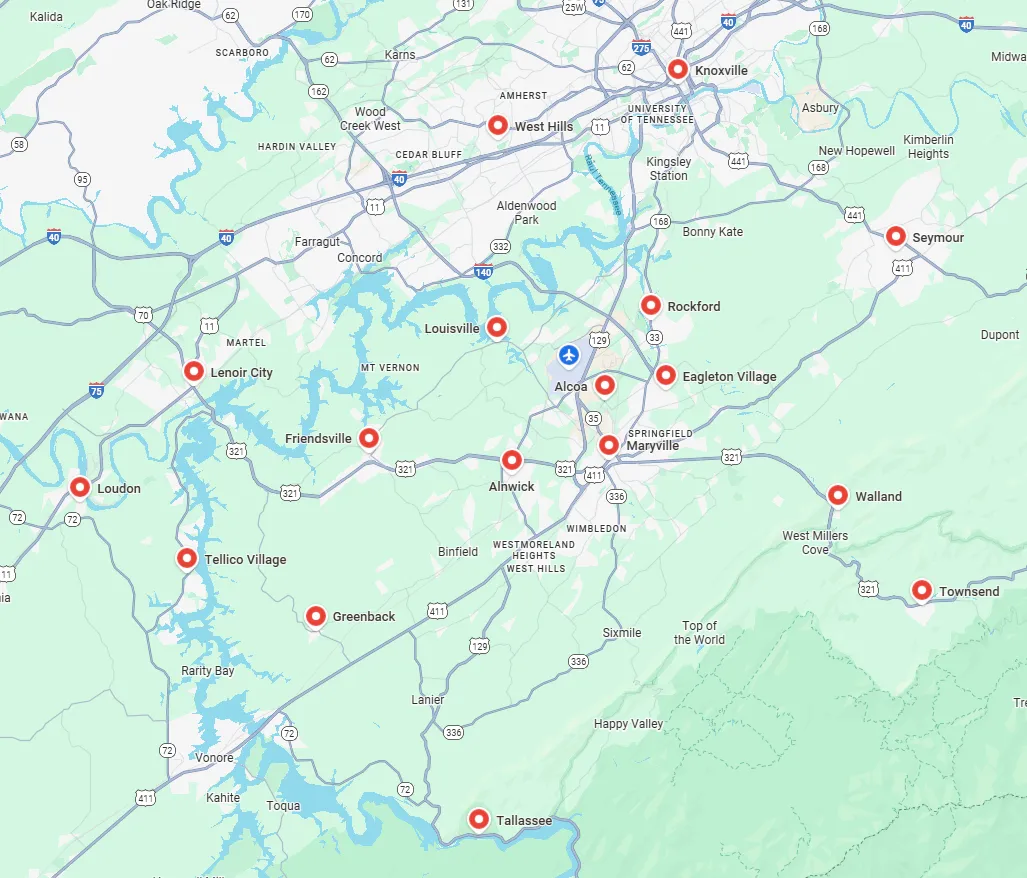
Heat pump installation typically requires local permits and inspections to ensure compliance with building codes, electrical safety standards, and refrigerant handling regulations. Everest Air Heating and Cooling navigates permit requirements for Lousiville, TN and the surrounding service area that includes Blount, Loudon, Knox, and Sevier counties. Permit requirements can include site plans for outdoor unit placement, electrical permits for circuit installations, and final inspections to verify safe connections and system commissioning.
Handling permits properly protects your property value and ensures that warranties remain valid. It also guarantees that installations meet local setback, noise, and discharge regulations, which vary by municipality and county. Our technicians prepare the documentation, submit permit applications when needed, and coordinate inspections to provide a seamless, code-compliant installation.
Professional installation steps: what happens on install day
Every installation follows a consistent, quality-focused process to deliver reliable performance and long equipment life. The main steps include:
- Pre-installation preparation
- Confirm permit approvals and delivery of equipment and materials.
- Protect home interiors and work areas with floor coverings and drop cloths.
- Verify access routes for outdoor unit placement.
- Outdoor unit siting and preparation
- Select a level, well-drained location that allows service access and meets clearances.
- Install a concrete pad or vibration-isolating mounting to reduce noise and settle the unit correctly.
- Plan refrigerant line routing and electrical connections.
- Indoor equipment installation and ductwork
- Install indoor air handler or evaporator coil and connect to ductwork for ducted systems.
- For ductless installations, mount indoor units, run refrigerant, condensate, and control wiring through minimal penetrations.
- Repair or seal duct leaks, adjust ducts for proper airflow distribution, and install necessary accessories like condensate pumps or drain pans.
- Electrical and control wiring
- Install dedicated circuits, disconnects, and breakers sized per manufacturer specifications.
- Wire thermostats, communicating controls, or zoning systems and verify correct sequences.
- Refrigerant charge, evacuation, and leak testing
- Evacuate refrigerant lines to remove moisture and non-condensables.
- Charge the system according to manufacturer specifications and ambient conditions, then perform leak checks.
- Start-up, balancing, and commissioning
- Verify proper airflow, static pressure, and refrigerant pressures.
- Test heating and cooling modes, check temperature splits, and program thermostat settings for optimal performance.
- Explain operation modes, maintenance needs, and thermostat controls to the homeowner.
- Clean-up and final documentation
- Remove job debris, leave work areas clean, and provide all warranty and equipment documentation.
These steps are performed by trained technicians to ensure each component functions correctly at start-up and continues to operate reliably.
Start-up testing and performance verification
Start-up testing is a critical phase that determines whether the system will perform as intended. Everest Air technicians verify refrigerant charge, airflow, static pressures, and electrical operating currents. We measure temperature differentials across the coil, evaluate defrost cycles for cold-weather performance, and confirm that the thermostat and any zoning controls respond accurately.
For ductless systems, we check refrigerant piping routings, indoor unit drain performance, and wireless controls if applicable. For ducted systems, airflow balancing ensures each room receives conditioned air per the design. Performance verification documents are prepared to show that manufacturer installation requirements were met, which supports warranties and helps with potential rebate documentation.
Warranty information and manufacturer assurances
Heat pump installations come with two primary warranties: the manufacturer warranty on the equipment and the installer’s labor warranty. Manufacturer warranties typically cover the compressor, sealed system components, and parts for a specified period. Labor warranties cover the installation work and are provided by the installing contractor. Everest Air Heating and Cooling ensures that all equipment is registered with the manufacturer when required and provides clear paperwork describing both parts and labor warranty terms.
Proper installation, including correct refrigerant charge, electrical protection, and permitting, is essential to preserve manufacturer warranties. We document installation details that manufacturers commonly require, such as start-up settings, serial numbers, and load calculations.
Financing options and rebate assistance for Tennessee homeowners
Many homeowners qualify for financing or rebates that reduce the upfront cost of a high-efficiency heat pump. Options commonly available include:
- Manufacturer financing programs that spread payments over fixed terms with promotional rates.
- Local utility and state incentives for energy-efficient equipment, which can apply to heat pumps carrying specific efficiency ratings.
- Federal tax credits or energy efficiency programs that may apply to qualifying equipment purchases and installations.
- Low-interest loans or energy efficiency financing offered through third-party lenders.
Everest Air Heating and Cooling assists homeowners in Lousiville with paperwork and documentation needed for rebates and tax credit claims. We provide the equipment specifications, model numbers, and installation confirmations typically requested by utilities or rebate administrators. While incentive availability changes, working with a certified installer can improve the likelihood of successful claims.
Common installation challenges in Lousiville homes and how we solve them
- Inadequate ductwork: Older homes often have undersized or leaky ducts. We diagnose duct issues and recommend repairs, sealing, or partial replacement to ensure proper airflow.
- Improper sizing assumptions: Some homeowners expect the largest unit to be best. We prevent oversizing by relying on Manual J and practical experience to match capacity to real loads.
- Tight outdoor spaces or shading: Siting an outdoor unit can be tricky in compact yards. We select appropriate locations that meet clearance and service needs while minimizing visual and noise impact.
- Cold-weather performance: While modern heat pumps work well in most Tennessee winters, we review options like cold-climate heat pump models or hybrid setups for homes that regularly face low temperatures.
- Condensate management: Proper drain routing is critical for Mini Splits and air handlers. We ensure condensate is handled safely to prevent water damage.
Addressing these issues during the design and installation phase preserves efficiency, improves comfort, and extends equipment life.
Commissioning documentation and long-term reliability
After installation, you should receive documentation that includes equipment model and serial numbers, installed capacities, start-up readings, and warranty details. Everest Air Heating and Cooling provides a commissioning report that records system parameters measured at start-up and recommended maintenance intervals. This documentation is essential for warranty claims, tax or rebate applications, and for future service technicians who will maintain the system.
Long-term reliability also depends on regular maintenance. We recommend seasonal Tune-Ups and a structured maintenance program to keep the system operating efficiently and to detect issues before they become major repairs.
Maintenance and the Y.E.T.I Comfort Plan
Routine maintenance is the most effective way to preserve efficiency and avoid unexpected failures. Typical maintenance tasks include:
- Cleaning or replacing filters on a regular schedule.
- Inspecting and tightening electrical connections and controls.
- Checking refrigerant levels and performing leak tests when necessary.
- Cleaning coils and condensate drains to ensure proper heat transfer and drainage.
- Inspecting and sealing ductwork to prevent energy losses.
Everest Air Heating and Cooling offers the Y.E.T.I Comfort Plan, a preventive maintenance package tailored to keep heat pumps operating at peak condition. The plan includes seasonal checkups, priority scheduling, and discounts on service work. Regular maintenance under a plan like Y.E.T.I extends equipment life, maintains manufacturer warranty conditions, and helps keep monthly operating costs down by preserving system efficiency.
Benefits homeowners in Lousiville can expect from a professional installation
- Improved year-round comfort with consistent temperature and humidity control suited to Tennessee weather.
- Lower operating costs compared to older systems, with modern heat pumps offering superior efficiency ratings.
- Reduced carbon footprint when replacing less efficient fossil-fuel-based equipment.
- Increased home value due to an updated, reliable HVAC system and documented professional installation.
- Greater indoor air quality and reduced noise when systems are correctly sized and installed.
A professional installation by Everest Air Heating and Cooling protects your investment, ensures compliance with local codes, and results in a system that performs reliably for years.
What to expect during the first heating and cooling seasons
During the first season, newly installed heat pumps settle into their annual performance profile. It is normal to observe periodic adjustments as controls and thermostats are fine-tuned. Early-season checkups help ensure refrigerant charge and airflow remain optimal after any initial cycling. If your system uses a variable-speed compressor or smart thermostat, seasonal behavior may shift as the equipment learns your home patterns. Ongoing maintenance visits under the Y.E.T.I Comfort Plan keep those adjustments running smoothly and catch any minor issues early.
FAQs
Q: How long does a typical heat pump installation take for a Lousiville home?
A: Most full ducted system installations take one to two days, depending on site complexity, ductwork needs, and permit timing. Ductless Mini Split installations often complete in a single day for straightforward jobs. Additional time may be required for permit processing or if duct repairs are necessary.
Q: Will my heat pump work during Tennessee winters?
A: Yes. Modern heat pumps are designed to operate efficiently in mild to moderate cold. For homes experiencing frequent very low temperatures, there are cold-climate heat pumps and hybrid configurations that combine a heat pump with a backup furnace to maintain comfort on the coldest days.
Q: What permits are required for installation in Lousiville, TN?
A: Permit requirements vary by county and municipality. Typical permits include electrical permits and mechanical permits for HVAC work. Everest Air Heating and Cooling coordinates permit submissions and inspections in the local service area, which includes Blount, Loudon, Knox, and Sevier counties.
Q: How do I know if I should choose ducted or ductless?
A: Choose ducted systems if you have existing, well-sealed ductwork and want whole-house conditioning. Ductless Mini Splits are best when you lack ducts, need targeted comfort for additions or individual rooms, or want zoning flexibility. A professional load and site assessment will clarify the best option for your home.
Q: Are rebates or tax credits available for heat pump installations in Tennessee?
A: Incentives can come from federal tax credits, state programs, and local utilities. Availability changes over time and depends on equipment efficiency and program rules. Everest Air Heating and Cooling assists with documentation and guidance to help homeowners pursue applicable rebates and financing options.
Q: What maintenance is required after installation?
A: Routine maintenance includes changing or cleaning filters, seasonal inspections of electrical connections and refrigerant levels, coil and drain cleaning, and duct sealing checks. Annual or bi-annual professional Tune-Ups are recommended to preserve efficiency and warranty coverage.
Q: What warranties come with a new heat pump?
A: Warranties typically include a manufacturer parts warranty and a labor warranty from the installer. Terms vary by manufacturer and model. Everest Air Heating and Cooling documents warranty details at installation and registers equipment when required to protect those warranties.
Q: Can Everest Air assist with financing options?
A: Yes. There are manufacturer and third-party financing plans that homeowners may qualify for, as well as utility or rebate programs. Everest Air Heating and Cooling provides guidance and documentation needed for financing and rebate applications.
hear what our satisfied clients have to say

David P.
Service areas