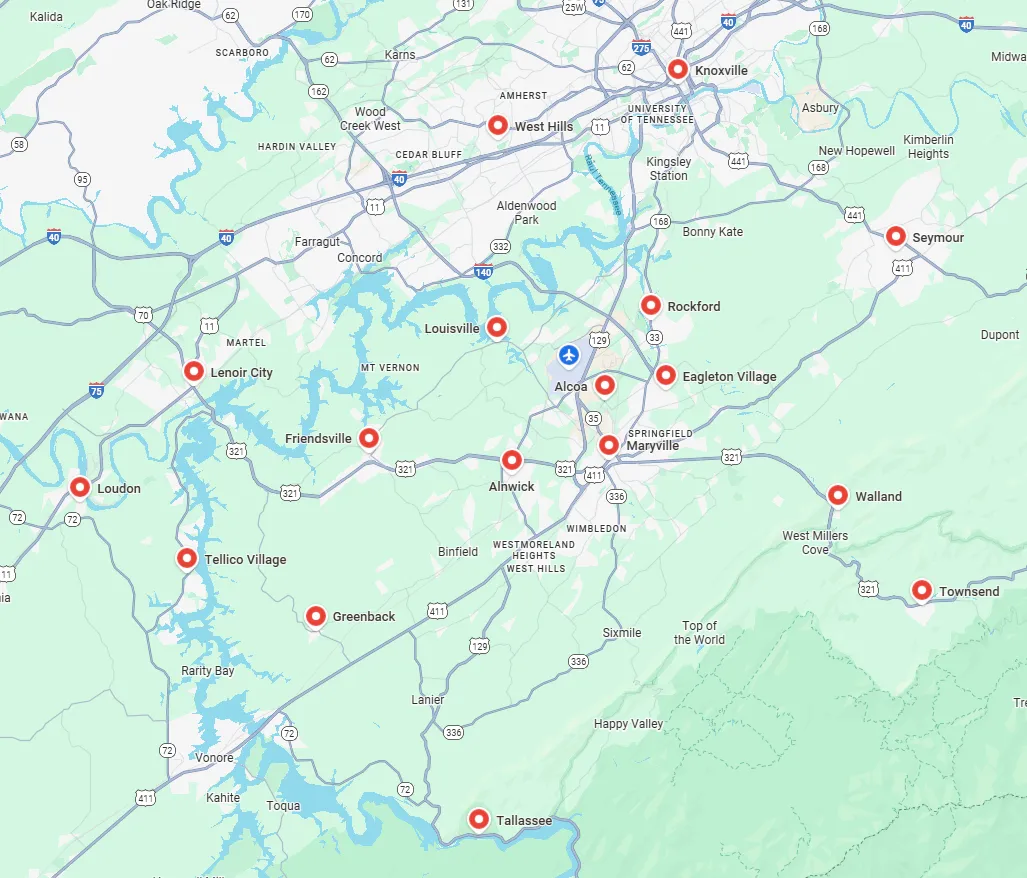


Water Heater Repair in Tellico Village, TN
A malfunctioning water heater can throw a wrench into daily life fast, especially for residents of Tellico Village, TN. From morning routines to lakefront cleanup and staying warm when winter temperatures drop near Tellico Lake, reliable hot water is non-negotiable. That's why Everest Air Heating and Cooling offers professional water heater repair services, specifically tailored for Tellico Village homes. We tackle everything from common failures and diagnostics to emergency response and even help with warranty coordination. Our goal at Everest Air Heating and Cooling is to provide preventive strategies that extend your equipment's life and help you avoid those frustrating, unexpected breakdowns.
.avif)
Why timely water heater repair matters in Tellico Village
Tellico Village has a mix of year-round residents, retirees, and seasonal homeowners with properties near the lake. That mix creates specific priorities:
- Many homes sit near limestone-rich water sources and experience harder water, which accelerates sediment buildup and anode rod corrosion.
- Seasonal or vacation properties face freeze risk and downtime if a heater fails while the home is unoccupied.
- Older systems commonly remain in service in established neighborhoods, making accurate diagnostics and warranty handling important.
- Hot water reliability is critical for household safety and comfort, especially for older adults and families.
Recognizing these local factors, Everest Air Heating and Cooling focuses on fast, thorough repair services that use OEM parts, preserve warranties, and reduce the chance of repeat failures.
Common water heater problems in Tellico Village homes
Below are the most frequent issues our technicians diagnose, with short explanations so you can spot warning signs early.
- Leaks
- Leaks may come from plumbing connections, a failing temperature and pressure relief valve, loose drain valves, or a corroded tank. Any leak merits prompt inspection because even a small drip can indicate a failing tank.
- No hot water or insufficient hot water
- Causes include failed heating elements on electric tanks, a faulty gas pilot or ignition system on gas models, a broken thermostat, or sediment insulating the bottom heating surface and reducing efficiency.
- Inconsistent temperatures or fluctuating hot water
- A bad thermostat, failing mixing valve, or partially clogged dip tube can cause temperature swings.
- Sediment buildup and reduced efficiency
- Hard water deposits accumulate on tank bottoms and heating elements, lowering heating efficiency and increasing energy costs. Sediment also creates hot spots that accelerate tank corrosion.
- Strange noises (popping, rumbling)
- These sounds often signal sediment heated and shifting inside the tank. Left unaddressed, this leads to reduced performance and earlier failure.
- Pilot light or ignition failure (gas units)
- Drafts, improper venting, thermocouple or control valve failures, or gas supply interruptions can prevent reliable ignition.
- Faulty safety components
- A malfunctioning pressure relief valve, high heat limit switch, or cut-off device is a risk to household safety and must be repaired correctly.
- Corrosion and tank failure
- If the tank itself is corroded through, repair is not a long term solution; replacement is usually recommended.
How Everest Air diagnoses water heater problems
A comprehensive, transparent diagnostic process is essential to identify root causes and recommend the right repair or replacement path. Typical diagnostic steps include:
- Visual inspection
- Check for obvious leaks, rust, corrosion, loose fittings, and signs of water damage in surrounding areas.
- Verify power and fuel supply
- Confirm electric breakers are on, check heating elements and thermostats for continuity, or verify gas supply and pilot/ignition operation for gas models.
- Test safety devices
- Inspect and test the temperature and pressure relief valve, high limit switches, and any leak detection systems.
- Check thermostat settings and control operation
- Evaluate whether thermostats and control modules are functioning and calibrated correctly.
- Evaluate sediment and water quality
- Drain a small sample to assess sediment levels and check for mineral content typical of local water that can drive scale buildup.
- Measure heating performance
- Compare incoming cold water temperature, tank recovery rate, and outlet water temperature to determine element or burner performance issues.
- Electrical and combustion testing
- Use a multimeter for elements and control circuits; for gas units, test gas pressure and combustion efficiency where applicable.
- Leak source identification
- Determine whether a leak is from tank corrosion, a fitting, or an external connection.
- Assess age and remaining life expectancy
- Consider model age, maintenance history, and condition of internal components when advising repair versus replacement.
After diagnostics, your report will explain the problem, repair options, and what each option means for reliability and warranty coverage.
Typical repair options and decision guidance
Repair strategies vary by problem and equipment type. Everest Air routinely performs the following repairs using OEM or OEM-equivalent parts to preserve performance and warranties:
- Replace heating elements and thermostats (electric tanks)
- Common, cost-effective repair when elements or controls fail. Follow-up tank flushing is often recommended to protect new elements.
- Replace or repair gas ignition components (gas models)
- Thermocouple replacement, burner cleaning, pilot adjustment, or replacement of electronic ignition modules are frequent fixes.
- Replace sacrificial anode rod
- A consumed anode rod is often the early sign of corrosion. Replacing it can add years to a tank’s life when done before severe corrosion occurs.
- Descale and flush tank
- Power flushing or chemical descaling removes sediment that reduces efficiency and harms heating components. This restores recovery rates and reduces noise.
- Replace pressure relief valve and drain valve
- Safety and drain hardware commonly fail after years of use and should be replaced, not patched, for reliability.
- Repair or replace dip tubes and mixing valves
- When cold water mix or temperature control is the issue, these relatively low-cost repairs restore function.
- Patch or replace tank fittings
- Small fittings and plumbing can be replaced; if the tank itself is compromised, replacement is the safer long-term solution.
- Small fittings and plumbing can be replaced; if the tank itself is compromised, replacement is the safer long-term solution.
- Replace entire unit
- Recommended when a tank leaks, rust is extensive, repair costs approach the cost of replacement, or a homeowner desires a more efficient model (tankless, high-efficiency storage, or heat pump water heater).
Factors influencing the repair versus replace decision:
- Age of the unit (typical storage tank life 8 to 12 years; tankless 15 to 20 years)
- Extent of corrosion or internal damage
- Local water quality and history of sediment issues
- Cost of repair relative to replacement and expected remaining life
- Energy efficiency considerations and long-term savings
Rather than quoting specific prices, the prudent approach is to evaluate repair cost against the remaining useful life and the likelihood of additional failures.
Emergency repair response and safety protocols
Water heater problems can create hazards. Everest Air addresses safety and fast recovery with a disciplined emergency response:
- Safety triage
- For gas odors or suspected gas leaks, the first step is to evacuate the area and ensure gas supply is shut off when safe. For severe leaks or structural flooding, power should be isolated to the unit to limit electrical risk.
- Rapid diagnostics on arrival
- Technicians prioritize safety checks: gas connections, venting, carbon monoxide risks, and signs of imminent tank rupture.
- Temporary solutions
- If a full repair or replacement cannot be completed immediately, temporary measures such as isolation of a leaking tank, bypassing nonessential components, or supplying temporary water heating solutions may be used to restore basic hot water safely.
- Coordinated replacement planning
- For failed tanks, technicians can assess replacement options, ensure proper disposal of the old unit, and coordinate scheduling for lift and installation procedures that meet local code and manufacturer requirements.
Homeowner safety guidance before a technician arrives:
- If you smell gas, leave the home and contact emergency services per local utility guidance.
- Shut off the water supply to the heater if a major leak is present using the shutoff valve.
- If you see electrical arcing or persistent sparking near the unit, shut off the breaker and keep clear.
Emergency response in Tellico Village must account for seasonal occupancy and occasional rural access considerations; technicians are trained to handle winterized or vacant-property scenarios as well.
OEM parts and warranty repair handling
Using OEM parts and following manufacturer repair procedures is critical to protect warranty coverage and ensure proper operation.
- Benefits of OEM parts
- Exact fit and function, compatibility with existing controls, and retention of manufacturer performance expectations. OEM parts also reduce the chance of premature failure and maintain compliance with safety designs.
- Warranty claim coordination
- Many manufacturers require authorized service and documented repairs for warranty claims. Everest Air Heating and Cooling handles the paperwork, documents all repair steps, and works with manufacturers to pursue warranty-covered part replacements when applicable.
- Documentation provided
- Technicians record serial numbers, part numbers, and installation details required by manufacturers. Proper documentation streamlines warranty processing and provides clarity on what repairs were performed.
Using certified parts and following documented procedures helps preserve warranty benefits and reduces homeowner liability in the event of subsequent issues.
What to expect during a professional repair
Everest Air follows a standard, customer-focused process to ensure transparency and reliability. Typical steps during a service visit include:
- Arrival and assessment
- The technician conducts a focused diagnostic to confirm the issue and identify any related concerns.
- Written repair summary
- A clear explanation of findings, recommended repairs or replacement options, and what each option means in terms of reliability and expected lifespan will be provided.
- Work area protection and safety
- Technicians protect flooring and surrounding areas, isolate utilities as needed, and follow safe handling procedures for gas and electrical systems.
- Parts replacement and testing
- Repairs are completed using OEM or high-quality parts, followed by thorough testing: run cycles, water temperature verification, leak checks, and safety device testing.
- Final inspection and documentation
- The technician leaves a report summarizing work performed, parts installed, maintenance tips, and warranty information.
Most common repairs are completed in a single visit when parts availability aligns; more extensive replacements may require additional coordination.
Preventive maintenance and tips to avoid future breakdowns
Preventive care extends water heater life and reduces emergency repair likelihood—especially important for Tellico Village properties that may see seasonal use. Key maintenance tips:
- Annual tank flushing
- Flushing removes sediment that causes noise, inefficiency, and element failure. For hard water areas, more frequent flushing significantly improves longevity.
- Inspect and replace the anode rod as needed
- Checking the anode rod every 1 to 3 years and replacing it before it is fully consumed will protect the tank from internal corrosion.
- Test the temperature and pressure relief valve
- Manually lift the valve to ensure it releases water properly and reseats cleanly.
- Maintain thermostat settings
- Set water temperature to around 120 degrees Fahrenheit for safety and energy savings. Inspect and calibrate thermostats periodically.
- Protect against freezing
- Insulate exposed pipes and consider freeze protection for heaters in unheated basements or crawlspaces; drain or winterize units in homes that will be unoccupied during cold months.
- Consider water treatment options
- If local water hardness is high, a water softener or scale-inhibiting device reduces sediment and prolongs heater life.
- Secure regular professional maintenance
- Scheduled professional inspections detect early wear and help maintain efficiency. Everest Air’s Y.E.T.I Comfort Plan is designed to align maintenance intervals with local climate and usage patterns to reduce failures.
Following a preventive schedule tailored to local water quality and house occupancy patterns prevents many common failures and keeps operating costs lower over time.
When repair is no longer the best option
Repair is usually the right choice for component-level failures and systems still within useful life. However, replacement is recommended when:
- The tank is leaking or shows external corrosion at the bottom.
- Multiple components are failing or repair costs approach the cost of a new unit.
- The system is older than its expected service life and you want improved efficiency, reduced operating costs, or enhanced performance such as instantaneous hot water with tankless or hybrid heat pump systems.
- The property owner plans upgrades for energy efficiency or to accommodate increased household demand.
For Tellico Village homeowners concerned with long-term reliability and efficiency, evaluating replacement models against recurring repair history provides a clear financial and comfort-driven answer.
Benefits of professional repair from Everest Air Heating and Cooling
Choosing a professional repair service ensures:
- Trained technicians who understand local water quality impacts and common failure modes in the Tellico Village area.
- Proper diagnostics that get to root causes and reduce repeat visits.
- Use of OEM parts and adherence to manufacturer procedures that protect warranties.
- Safety-focused handling of gas, electric, and pressure-related issues.
- Preventive guidance that reduces future emergency repairs and improves energy efficiency.
Everest Air Heating and Cooling brings local experience and system-level knowledge to every repair, working to restore hot water reliably and keep your system functioning longer.
FAQs
Q: How do I know whether my water heater needs repair or replacement?
A: If the tank is leaking, shows visible corrosion, or the unit is beyond its expected life, replacement is usually the best long-term choice. For single-component failures like a broken heating element, thermostat, or a failed valve, repairs are often economical. A full diagnostic that considers age, repair history, sediment level, and the cost to repair versus replace will clarify the best option.
Q: What are the most common causes of water heater leaks?
A: Leaks commonly originate from loose fittings, a failed drain valve, a faulty temperature and pressure relief valve, or internal tank corrosion. Minor leaks from fittings can often be repaired; tank leaks typically require replacement to avoid ongoing damage.
Q: How does hard water in Tellico Village affect my water heater?
A: Hard water leads to mineral sediment that settles in the tank and around heating elements, reducing efficiency and causing noise and hot spots. Over time, sediment accelerates corrosion and shortens the unit’s life. Regular flushing and water treatment reduce these impacts.
Q: Can you repair a tankless water heater or only storage tanks?
A: Technicians service both tankless and storage systems. Tankless repairs often involve descaling, replacing ignition modules or sensors, and cleaning filters. Heat exchanger damage may require replacement parts and more extensive work.
Q: How often should I flush my water heater in this area?
A: For homes in Tellico Village with hard water, flushing every 6 to 12 months is recommended. Homes with softer water may flush annually. Properties used seasonally may require flushing before and after vacancy periods.
Q: Will using non-OEM parts void my warranty?
A: Many manufacturers require OEM parts and authorized service to maintain warranty coverage. Using non-OEM parts can jeopardize warranty claims. Everest Air uses OEM or manufacturer-recommended parts and documents repairs to support warranty eligibility.
Q: What immediate steps should I take if I find a leak?
A: Turn off the water supply to the heater using the shutoff valve, move any valuables away from the leak, and shut off power to electric units at the breaker. For gas leaks or a strong gas odor, evacuate the home and follow local emergency guidance. Contact professional service for diagnosis and repair coordination.
Q: How long does a typical water heater repair take?
A: Many component-level repairs such as thermostat or element replacement can be completed the same day. More extensive repairs or full replacements may require additional coordination for parts and installation and could take longer depending on access and the required work.
Q: What maintenance should I perform between professional visits?
A: Homeowners can inspect visible fittings for leaks, verify the relief valve is not leaking, and periodically test the relief valve by lifting its lever to ensure it releases water. Keep the area around the heater clear and check that the unit is stable and properly vented.
Q: Can repairs improve energy efficiency?
A: Yes. Replacing failed heating elements, cleaning burners, removing sediment, and fixing thermostats all improve efficiency. If recurring repairs are needed on an aging unit, upgrading to a newer, more efficient model may offer significant energy savings over time.
hear what our satisfied clients have to say

David P.
Service areas