

Tankless Water Heater in Walland, TN
Thinking about a tankless (on-demand) water heater? For Walland, TN homeowners, it's one of the smartest upgrades you can make to really boost energy efficiency, free up some precious indoor space, and finally say goodbye to those frustrating cold showers. Here at Everest Air Heating and Cooling, we're experts at figuring out if a tankless system is genuinely the right fit for your home. We'll size it perfectly and handle the whole professional retrofit, making sure to consider Walland's unique conditions, like mineral-rich well water, those unpredictable winter temperatures, and whether your home uses propane or natural gas.
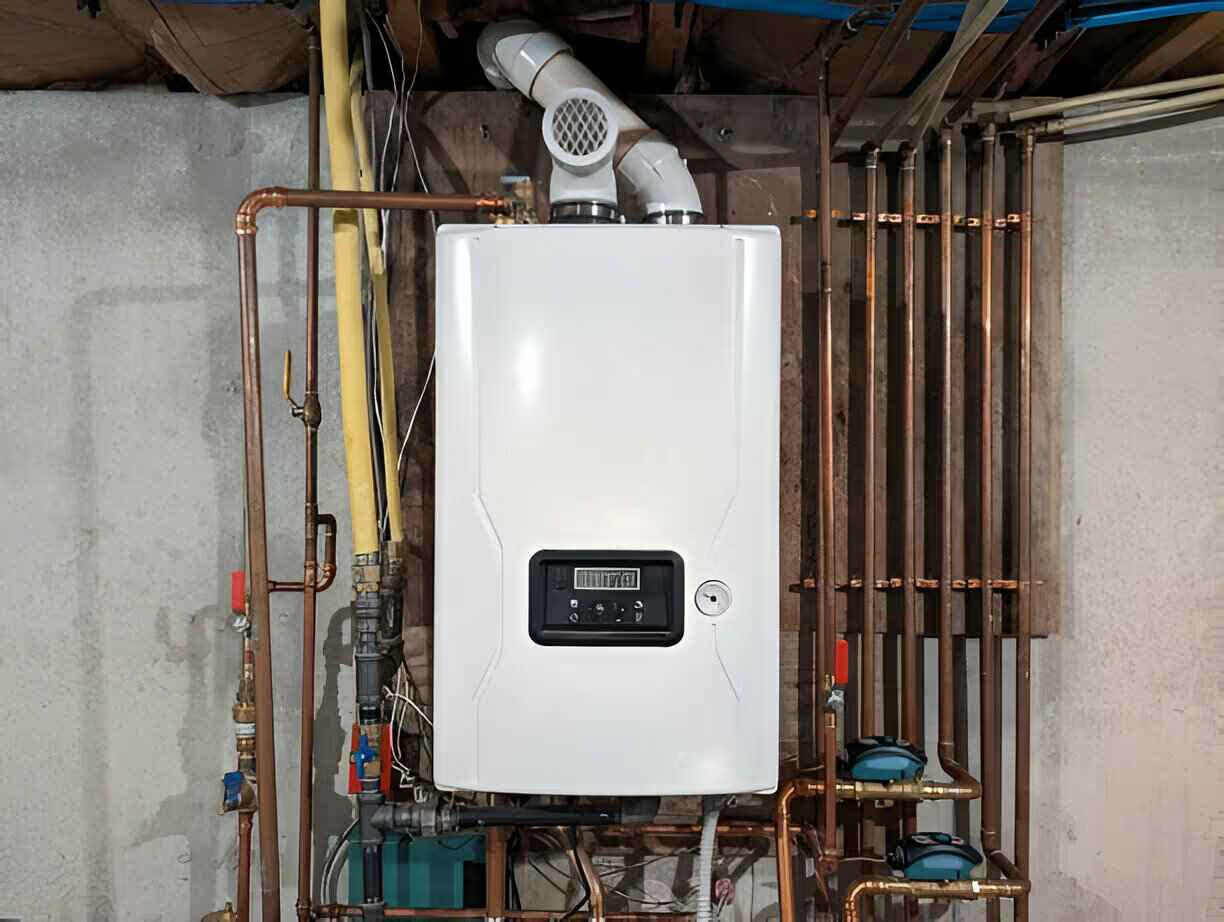
Why a tankless water heater matters in Walland, TN
Walland sits at the edge of the Great Smoky Mountains with seasonal temperature swings and many older homes that were originally built with traditional storage tanks. A tankless water heater provides:
- Continuous hot water for multiple showers, laundry, and dishwasher cycles without waiting for a tank to refill.
- Lower standby energy losses because there is no stored water being kept hot 24 hours a day.
- Space savings, since wall-mounted tankless units typically take up a fraction of the floor or closet space used by a conventional tank.
- Potential long-term energy savings, especially in households with moderate to high hot water use patterns.
Local factors to consider include mineral content in groundwater, which is common across Blount County and can accelerate scale buildup in tankless heat exchangers. Also, many Walland homes use propane or have smaller gas service lines; those conditions affect retrofit requirements and overall system selection.
Common tankless water heater issues and homeowner needs in Walland
Homeowners usually explore tankless systems for one or more of the following reasons:
- Frequent cold showers during periods of simultaneous hot water use.
- High energy bills attributed to water heating standby losses.
- Desire to free up basement, closet, or garage space taken by a storage tank.
- Replacement of a failing tank where infrastructure permits a tankless retrofit.
- New construction or remodels where wall-mounted units are preferred for compact installation.
Common installation or operational issues we address:
- Insufficient gas supply for high-demand units.
- Inadequate electrical service for electric tankless models.
- Scale buildup and reduced flow rate from hard well water.
- Improper venting or condensate disposal in condensing models.
- Incorrect sizing leading to temperature drop when multiple outlets run simultaneously.
Types of tankless systems and which works best for Walland homes
- Gas-fired (natural gas or propane) non-condensing: Simpler venting options, typically lower upfront cost, but less efficient than condensing models.
- Gas-fired condensing: Higher efficiency, recovers heat from exhaust, requires stainless venting and condensate drain; best for colder climates where increased efficiency yields more savings.
- Electric tankless: Easier to install when gas service is unavailable, but requires significant electrical capacity and may not meet peak demand in larger households without major electrical upgrades.
- Point-of-use vs whole-house: Point-of-use is installed near a single fixture for fast delivery and efficiency. Whole-house units are sized for simultaneous demand across multiple fixtures.
In Walland, gas-fired condensing tankless units are often the best long-term option when gas lines and venting can be accommodated. Where propane service or smaller gas lines exist, careful selection and possible gas line upgrades are necessary. For remote cabins or smaller homes with limited hot water needs, a high-capacity electric unit or point-of-use hybrid may be appropriate.
Sizing and flow-rate calculations explained simply
Proper sizing is the most critical step for reliable performance. Tankless systems are rated by maximum flow rate (gallons per minute, GPM) and the temperature rise they can provide at that flow. Follow these steps to estimate your needs:
- Identify peak simultaneous hot water uses (for example, two showers plus a dishwasher).
- Estimate flow rates:
- Shower: 1.5 to 2.5 GPM (older fixtures higher)
- Kitchen sink: 1.0 to 2.2 GPM
- Bathroom sink: 0.5 to 1.5 GPM
- Dishwasher: 1.0 to 1.5 GPM
- Washing machine: 1.5 to 2.0 GPM
- Add flow rates for simultaneous fixtures to get total GPM demand.
- Determine required temperature rise: Subtract incoming cold water temperature from desired outlet temperature (usually 120 F).
- Example: If incoming water is 50 F in winter and you want 120 F output, required rise is 70 F.
- Choose a unit that can deliver the calculated GPM at the required temperature rise.
Example scenarios:
- Small household (1 to 2 people): Typical peak might be a single shower and a sink. Required GPM 2.5 to 3.5. If incoming water is 55 F, a unit rated for 3.5 GPM at 65 F rise may suffice.
- Average family (3 to 4 people): Simultaneous use might be two showers plus a dishwasher. Required GPM 5.0 to 6.5. If winter inlet is 50 F, choose a unit that can deliver at least 5 GPM at a 70 F rise, or consider two units or a larger model.
- Large household (5 or more, or heavy simultaneous loads): May require 7 GPM or more. Consider dual units or a commercial-grade system.
Everest Air Heating and Cooling performs on-site flow and household demand assessments to recommend a properly sized solution. Under-sizing leads to temperature dips; over-sizing increases upfront cost without proportional benefit.
Required upgrades for retrofit installations
Retrofitting a tankless heater into an existing Walland home can require several upgrades depending on the current mechanical setup:
Gas line upgrades
- Many tankless units require higher gas flow and pressure than older tank systems. Upgrading from a 1/2 inch pipe to 3/4 inch or larger might be necessary.
- Homes running on propane will need calculations specific to propane BTU output and possibly larger tanks or higher-pressure regulators.
- Venting and combustion air sizing must follow code and manufacturer requirements.
Electrical upgrades
- Electric tankless units often require dedicated high-amp breakers and heavy-gauge wiring. A 240V supply with 100 to 200 amp equivalent capacity may be necessary for whole-house units.
- Even gas-fired units often need a standard electrical circuit for controls and ignition—verify panel capacity.
Venting and condensate
- Condensing models need corrosion-resistant stainless or PVC venting and a properly routed condensate drain. Non-condensing gas units require different venting clearances and materials.
- Structural considerations include routing vent pipes through walls or roofs to meet code and manufacturer specs.
Water quality and circulation
- Hard water common in Eastern Tennessee can cause scale buildup. Installing a whole-house water softener or scale mitigation device prolongs heat exchanger life.
- Recirculation loops and thermostatic mixing valves can be integrated to reduce hot water wait times and ensure safe outlet temperatures.
Permitting and inspections
- Local building codes in Blount County require permits for gas and major plumbing or electrical modifications. Inspections ensure safe venting, combustion air, and proper connections.
Installation process you can expect
A professional installation typically follows these phases:
- On-site evaluation: Technicians assess current piping, gas service, electrical panel, venting routes, water quality, and the family hot water profile.
- System selection and planning: Select the appropriate unit (or units) and plan necessary upgrades for gas, electrical, and vent paths.
- Permitting: Secure required permits for gas, plumbing, and electrical work.
- Pre-installation upgrades: Increase gas line size, upgrade electrical circuits, and make any structural preparations for venting.
- Removal of old tank: Safely disconnect and remove the existing storage heater if present.
- Unit installation: Mount the tankless unit, connect gas, water, and electricity, and install venting and condensate drains as required.
- System testing: Check gas pressure, combustion efficiency, venting integrity, water temperature rise at various flow rates, and leak testing.
- Final inspection: Coordinate local inspection of gas and electrical work when required.
Installations in Walland often require special attention to venting in homes with steep roofs or limited exterior wall access, and to propane supply sizing in rural areas.
Maintenance and expected lifespan
Tankless water heaters are not maintenance-free. Regular care preserves performance and helps avoid costly repairs:
Recommended maintenance tasks
- Annual descaling or flushing: In areas with hard water, descaling every 6 to 12 months is common to remove mineral scale from the heat exchanger.
- Clean or replace inlet water filter screens as recommended by the manufacturer.
- Inspect venting and condensate drains for blockages or corrosion.
- Verify gas pressure and burner operation annually.
- For condensing units, inspect condensate traps and check for proper neutralization if required by local code.
Expected lifespan
- Properly maintained tankless units commonly last 15 to 25 years, compared to 8 to 12 years for conventional tanks. Longevity is heavily influenced by water quality and maintenance frequency.
Everest Air Heating and Cooling offers maintenance guidance consistent with manufacturer schedules and local conditions in Walland. Participation in a maintenance plan like the Y.E.T.I Comfort Plan reduces the risk of unexpected failures and keeps efficiency high.
Cost versus long-term savings
While tankless systems usually cost more up front than conventional tanks, they offer energy-saving opportunities that can create favorable long-term economics for many households.
Cost considerations
- Upfront equipment cost is higher for tankless units, particularly high-capacity or condensing models.
- Retrofit costs increase with requirement for gas line enlargement, electrical upgrades, venting modifications, and water treatment installation.
- Maintenance for descaling is an ongoing cost, especially with hard well water.
Long-term savings
- Energy savings come primarily from eliminating standby losses. Savings vary widely based on household hot water use patterns.
- For households with moderate to high hot water use, tankless units often show meaningful energy savings and reduced utility bills over time.
- Extended lifespan of tankless systems reduces replacement frequency, improving life-cycle cost.
When evaluating cost effectiveness, consider:
- Household size and simultaneous hot water demand.
- Frequency of descaling required by local water hardness.
- Whether propane or natural gas fuel is used and relative local fuel costs.
- Anticipated home ownership duration.
Everest Air Heating and Cooling provides individualized comparisons that include installation complexity, required upgrades, and estimated operating savings based on typical Walland utility rates and water conditions.
Who is a good candidate for a tankless system in Walland
- Families with medium to high hot water demand who want continuous hot water and energy savings.
- Homeowners seeking to free up basement or garage space used by a storage tank.
- New construction or major remodels where venting and gas routing can be planned from the start.
- Owners of vacation homes or intermittent-use properties who want to avoid reheating a large tank after long idle periods.
- Homes with reliable natural gas service and adequate supply; with propane or limited gas supply, additional analysis is necessary.
- Properties with well water should plan for water treatment to prevent accelerated scaling.
Less suitable candidates without upgrades
- Very large homes with multiple simultaneous high-demand fixtures may require multiple units or commercial-grade systems, increasing complexity.
- Homes with extremely hard water that cannot be mitigated may face frequent maintenance unless water softening is installed.
- Multi-family units or homes where electrical service cannot be upgraded may find electric tankless impractical.
Practical tips and system options for Walland homeowners
- Consider condensing gas units for colder months. Their higher efficiency tends to yield more savings where winter inlet temperatures demand larger temperature rises.
- If your property uses well water, budget for a water softener or scale inhibitor to protect the heat exchanger and maintain warranty coverage.
- Evaluate point-of-use units for distant bathrooms to reduce hot water wait time and conserve water.
- In homes with limited gas capacity, installing two smaller units staged for demand or a combination of a tankless for primary loads and a small buffer tank for peak surges can provide reliable performance.
- Insulate hot water lines to reduce heat loss in longer runs common in older Walland homes.
The Everest Air Heating and Cooling approach
Everest Air Heating and Cooling brings a systematic, transparent approach to tankless water heater installations in Walland, TN. Our technicians evaluate the full home piping and fuel delivery system, recommend the right unit type and capacity, and lay out required upgrades so homeowners understand tradeoffs between upfront investment and long-term savings. We emphasize proper venting, compliance with local permit requirements in Blount County, and water quality solutions tailored to the region.
We also help homeowners weigh alternatives such as high-efficiency storage tanks, hybrid electric heat pump water heaters, and combinations of tankless plus buffer or recirculation options. The goal is reliable hot water that fits your household routines and budget while addressing the specific mechanical realities of homes in Walland.
FAQs
Q: Will a tankless water heater eliminate the chance of running out of hot water?
A: Tankless units provide continuous hot water as long as the combined demand does not exceed the unit capacity. Proper sizing for simultaneous fixtures is essential to avoid temperature dips during peak use.
Q: How does hard well water in Walland affect tankless units?
A: Hard water causes scale buildup in the heat exchanger, reducing efficiency and potentially causing failures. Installing a water softener or scale inhibitor and following regular descaling schedules mitigates these risks.
Q: Can I replace my existing tank with a tankless unit without changing my gas line?
A: That depends on current gas pipe size, length, and the required BTU demand of the tankless unit. Many retrofits require gas line upsizing to meet higher continuous gas flow requirements.
Q: What is the expected lifespan of a tankless water heater?
A: With proper maintenance, tankless water heaters typically last 15 to 25 years, which is longer than conventional storage tanks.
Q: Are electric tankless water heaters a good option for Walland homes?
A: Electric tankless units remove the need for gas but often require significant electrical upgrades to the service panel. They are best suited to smaller homes or point-of-use applications unless the electrical system is already robust.
Q: Do tankless units require permits and inspections?
A: Yes. Gas, venting, plumbing, and electrical work associated with tankless installations commonly require permits and inspections per Blount County codes and manufacturer installation requirements.
Q: What maintenance is required after installation?
A: Annual inspection is recommended, and descaling should be performed every 6 to 12 months in hard water areas. Inlet filters, condensate drains, and venting should be inspected regularly.
Q: Can I reuse my existing water heater vent when switching to tankless?
A: Some existing vents may not meet the material or size requirements for the selected tankless model, especially for condensing units that require corrosion-resistant venting. Each installation must be evaluated.
Q: Will switching to tankless save me money?
A: Many households realize energy savings because tankless heaters eliminate standby heat loss and can be more efficient. Actual savings depend on household hot water usage patterns, local fuel costs, maintenance needs due to water quality, and initial retrofit costs.
Q: Is Everest Air Heating and Cooling experienced with propane tankless systems?
A: Yes. Everest Air Heating and Cooling evaluates propane supply, regulator sizing, and pipe sizing specific to Walland properties to ensure safe and reliable operation of propane-fired tankless units.
By addressing sizing, fuel supply, water quality, venting, and maintenance from the outset, Walland homeowners can achieve a dependable hot water solution that matches lifestyle, reduces wasted energy, and fits the unique characteristics of homes near the Smokies. Everest Air Heating and Cooling integrates local experience and technical best practices to align system selection and installation with what will perform reliably in your home.
hear what our satisfied clients have to say

David P.
Service areas