

Tankless Water Heater in Tallassee, TN
For homes in Tallassee, TN, picking the right water heating system is truly one of the smartest upgrades you can make. A tankless water heater isn't just about endless hot water; it also frees up space and can really cut down on energy use compared to those bulky traditional tanks – especially when it's sized and installed properly. At Everest Air Heating and Cooling, we bring our local experience right to your Tallassee home. We'll help you figure out if a tankless system is the perfect long-term fit, walk you through all the installation details, and clearly explain what to expect for maintenance and repairs, ensuring you'll always have reliable hot water, all year long.
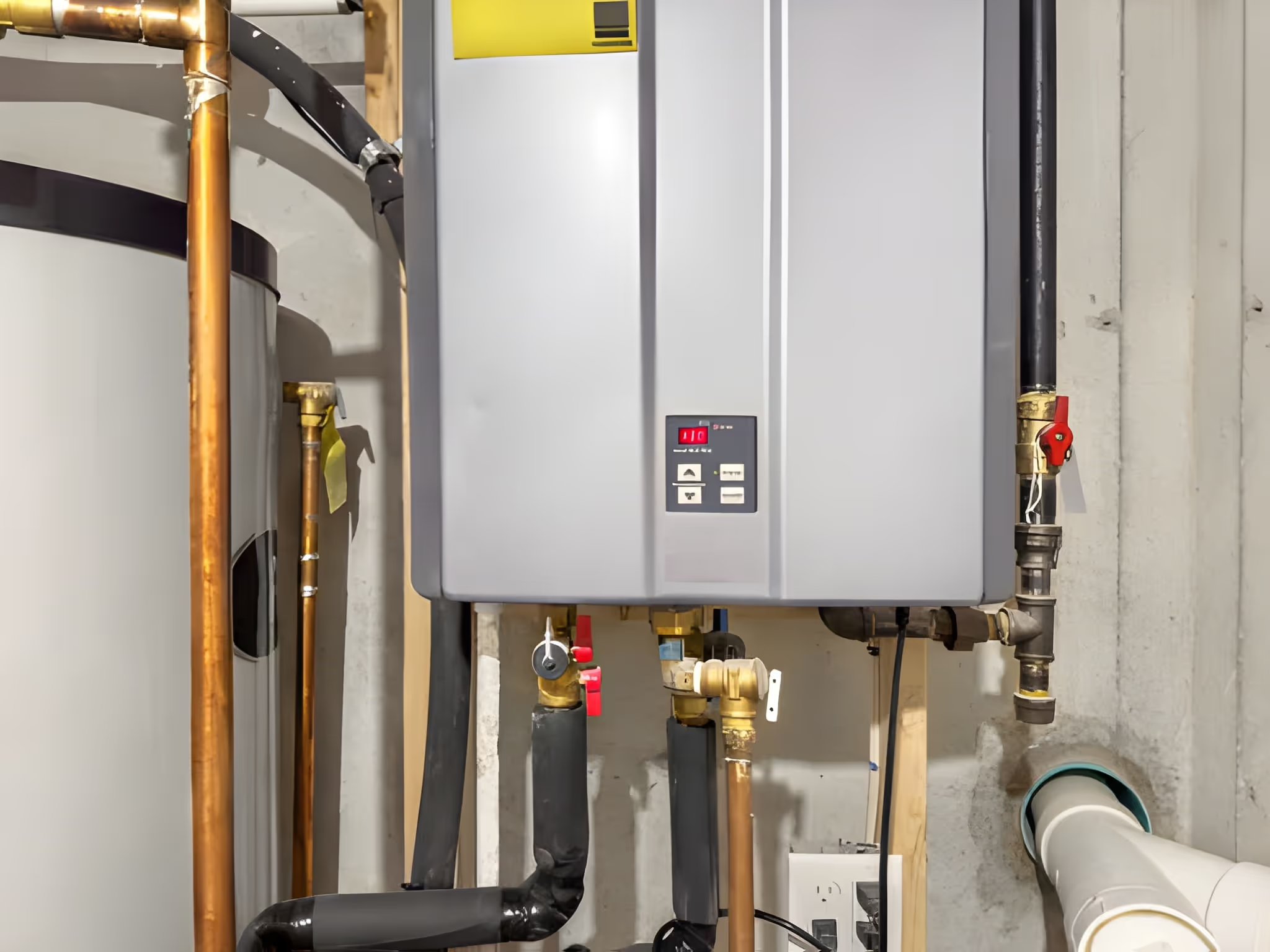
Why a tankless water heater matters for Tallassee homes
Tallassee experiences warm, humid summers and cool winters with occasional freezes. These seasonal swings affect how much hot water households use and how quickly systems must recover after heavy demand. Key reasons homeowners in Tallassee consider tankless systems:
- On-demand hot water for long showers, simultaneous laundry and dishwashing, and outdoor chores without waiting for a tank to refill and reheat.
- Energy savings through elimination of standby heat loss common to storage tanks, especially helpful where utility rates or gas usage matter.
- Space savings which is valuable for smaller basements, closets, or homes with limited mechanical space.
- Longer expected service life when maintained properly, which can offset higher upfront costs over time.
- Reduced risk of catastrophic leaks from large storage tanks; tankless units contain far less standing water.
Everest Air Heating and Cooling advises homeowners to weigh these benefits against household hot water patterns, local water quality, and installation requirements before choosing a tankless system.
Common tankless water heater types and which suits Tallassee homes
There are several configurations, each with advantages depending on fuel, household size, and installation constraints:
- Gas-fired tankless (natural gas or propane)
Best for larger homes or households with simultaneous high flow demands. Gas units typically deliver higher maximum flow rates and faster temperature rise. They require proper venting and combustion gas supply. - Electric tankless
Easier to install in spaces without gas lines but require significant electrical capacity. Good for smaller homes, point-of-use applications, or where retrofit electrical panels can be upgraded. - Condensing tankless (high-efficiency gas)
Capture additional heat from exhaust, improving efficiency. They often need specialized venting and drainage for condensate. - Point-of-use tankless
Compact units installed near a single fixture (sink, bathroom) to eliminate lag and reduce pipe heat loss. Useful for additions, garages, or remote bathrooms common in rural properties.
For Tallassee homes with well water or high mineral content, Everest Air Heating and Cooling typically assesses water hardness before recommending a system, since mineral scale can significantly impact performance and longevity.
How to size a tankless water heater: flow rate and temperature rise
Sizing a tankless unit correctly is critical to avoid frustration from inadequate hot water delivery. Two primary factors determine sizing:
- Maximum simultaneous flow rate (GPM) — Add flow rates for fixtures likely to run at the same time. Typical estimates:
- Shower: 1.5 to 2.5 GPM
- Kitchen sink: 1.0 to 2.0 GPM
- Washing machine: 1.5 to 2.5 GPM
- Dishwasher: 1.0 to 1.5 GPM
- Required temperature rise — Difference between incoming ground water temperature and desired delivery temperature (usually 110 to 120 F). Ground water temperatures in the Tallassee region tend to be cooler in winter, so winter temperature rise requirements are higher.
A practical approach Everest Air Heating and Cooling uses:
- List the fixtures that will run simultaneously.
- Sum their flow rates to determine required GPM.
- Calculate wintertime incoming water temperature (local averages) to determine temperature rise.
- Match those numbers to a unit’s performance chart (GPM at a given temperature rise).
For example, a household with two simultaneous showers and a dishwasher needs a higher GPM unit than a two-person household with occasional showers and a single sink running. Improper sizing is a leading cause of dissatisfaction with tankless systems, so professional load calculations and performance matching are essential.
Installation requirements: venting, gas, electrical, and placement
Tankless installation differs from storage tanks in several important ways:
- Venting
Gas-fired units require venting for combustion gases. Venting type (direct vent, power vent, or concentric) depends on the model and home layout. Condensing units often require stainless or PVC venting suitable for lower temperature exhaust. In Tallassee, where many homes have tight mechanical spaces, vent routing often drives installation complexity. - Gas supply
Gas units need adequate gas line diameter and pressure. Many older homes in the region require a gas line upgrade to meet the higher instantaneous demand of a tankless unit. - Electrical requirements
Electric tankless heaters and some gas units require dedicated circuits and substantial amperage. Panel capacity and breaker sizing must be verified. For homes on older electrical systems common in the service area, panel upgrades may be necessary. - Water supply and quality
Hard water accelerates scale buildup. Installers may recommend water softening or a dedicated scale prevention strategy where mineral content is high. Well water often needs additional filtration for sediment before a tankless unit. - Condensate drainage
High-efficiency and condensing units produce acidic condensate that must be drained properly to a location that can accept it, or neutralized first. - Clearance and stacking
Units require specific clearances from combustion air openings, windows, and adjacent materials. Placement near point-of-use fixtures reduces lag and minimizes pipe heat loss but may increase the number of units needed for full coverage.
Everest Air Heating and Cooling evaluates these factors on-site in Tallassee to provide installation plans that meet code and perform reliably in our local climate and home construction types.
Typical costs and payback considerations (without specific price points)
While initial costs for tankless systems are generally higher than traditional tanks, several factors influence the long-term economic case:
- Upfront costs include the unit, venting work, gas line or electrical upgrades, water treatment, and labor for installation.
- Operating costs hinge on fuel type, local energy rates, and household usage patterns. Tankless units reduce standby losses, which can lead to lower utility bills in many scenarios.
- Maintenance costs include regular descaling and system checks to maintain efficiency and prevent failures.
- Expected payback period depends on energy savings versus additional upfront expenses. In households with high hot water demand or year-round use, payback is usually faster. Where hot water use is limited, payback may take longer.
- Hidden savings such as extended equipment life and reduced water heater footprint (freeing up space) should be included in homeowner calculations.
Everest Air Heating and Cooling helps Tallassee homeowners model payback by comparing household hot water profiles, local fuel costs, and projected maintenance needs to provide a realistic timeline rather than generic price figures.
Maintenance needs: keep the system efficient and reliable
Proper maintenance preserves performance and prevents premature failure—especially important with local water conditions:
- Annual or biannual descaling for areas with moderate to hard water. Scale reduces heat transfer efficiency, increases energy use, and can shorten component life.
- Inlet filter and sediment removal. Sediment from well water can clog flow sensors and restrict performance.
- Combustion and vent inspection on gas units to ensure safe operation and proper airflow.
- Electrical and control checks to verify ignition and safety mechanisms function.
- Flow rate verification to ensure sensors and pressure regulators are operating within specifications.
Everest Air Heating and Cooling advises a maintenance plan that fits the home’s water quality and usage pattern. For example, homes on well water may need more frequent descaling and filtration checks than those on municipal supplies.
Common repairs and troubleshooting
Tankless systems are reliable when properly installed and maintained, but typical issues include:
- Scale and mineral buildup causing reduced flow, poor temperature consistency, or system shutdowns. Symptoms include fluctuating temperatures during showers and error codes related to flow or heat exchange.
- Ignition or combustion failures on gas units resulting from dirty burners, blocked vents, or faulty gas valves.
- Flow sensor failures that misreport demand and prevent the unit from firing.
- Error codes from inadequate fuel supply or electrical faults on electric models.
- Freeze damage to exterior units or exposed piping during rare but possible Tennessee cold snaps if proper freeze protection is not provided.
- Condensate drain clogs on condensing units causing shutdowns or inefficiency.
Troubleshooting commonly starts with error code diagnostics, flow and temperature checks, fuel and vent integrity inspections, and a visual check for scale. Many issues are preventable with routine maintenance; when repairs are needed, using manufacturer-approved parts and trained technicians preserves warranty coverage and system longevity.
Warranty and reliability expectations
Tankless manufacturers typically offer warranties on various components—heat exchangers often carry longer coverage than electronic or ignition parts. Warranty terms vary by brand and model and may require:
- Proof of professional installation,
- Regular maintenance records,
- Use of recommended water treatment methods in hard water areas.
Everest Air Heating and Cooling helps homeowners understand manufacturer warranty terms and documents maintenance work necessary to keep warranties valid. A well-maintained, professionally installed tankless heater can provide years of reliable service and predictable performance.
Is a tankless system the right choice for your Tallassee home?
Consider these decision points specific to Tallassee homes and lifestyles:
- Household hot water usage: If multiple showers, simultaneous laundry, or frequent long baths are common, a properly sized gas tankless can perform well. For smaller households or single-point requirements, point-of-use electric units can be economical.
- Water quality: Where water is hard or from a well, plan for softening or regular descaling. The cost and frequency of this maintenance affect the long-term value proposition.
- Home infrastructure: Older homes may need gas line or electrical panel updates. Vent routing for gas units in confined spaces can increase installation complexity.
- Space and layout: If freeing mechanical room space matters, tankless units offer compact footprints and the ability to mount on walls or in tight closets.
- Energy goals: If reducing energy consumption is a priority, tankless offers savings potential, particularly in homes with steady hot water demand throughout the year.
- Resilience and reliability: In areas prone to power loss, gas-fired tankless units can continue to provide hot water without electricity if they have a standing pilot or battery-assisted ignition, but many modern units require some electrical power for controls. In such cases, consider backup strategies or hybrid approaches.
Everest Air Heating and Cooling evaluates these factors during on-site assessments to provide the most realistic outcome for Tallassee homeowners.
Typical installation process (what to expect during a professional install)
A professional installation process helps minimize surprises and ensures code compliance:
- Site assessment and load calculation: Measure likely simultaneous demand and incoming water temperature to select an appropriately sized unit.
- Pre-install planning: Decide on unit location, venting path, fuel or electrical upgrades, and any water treatment needs.
- Permitting and code compliance: Secure required local permits and ensure installation meets combustion air, venting, and plumbing codes.
- Removal of existing equipment: Safely disconnect and dispose of the old tank if replacing one.
- Infrastructure upgrades: Install or upgrade gas lines, electrical circuits, vents, and condensate drains as needed.
- Mounting and connections: Secure the tankless unit, connect gas, water, condensate, and venting, and verify clearances.
- System commissioning: Run the unit through startup procedures, verify flow rates and temperature rise, and set safety controls.
- Owner education: Demonstrate basic operation, maintenance intervals, and error code meanings.
This thorough approach reduces callbacks and ensures the system performs efficiently in Tallassee’s seasonal conditions.
Long-term benefits and practical tips for Tallassee homeowners
- Plan maintenance around seasonal peaks: Descale and inspect before heavy summer use or after the highest demand period to avoid service interruptions.
- Address water hardness proactively: A water softener or inline descaling program keeps systems running efficiently longer.
- Consider hybrid solutions: In very high-demand homes, a small buffer tank or a hybrid system can smooth peak loads while retaining much of the efficiency advantage.
- Insulate hot water lines: Especially for homes with long pipe runs, pipe insulation reduces heat loss and shortens wait time for hot water.
- Document maintenance: Maintain a record of annual service and descaling to ensure warranty compliance and preserve resale value.
Everest Air Heating and Cooling recommends a holistic view: equipment, installation quality, local water characteristics, and ongoing service determine whether tankless becomes a cost-effective, comfort-enhancing investment for your Tallassee home.
Common questions Tallassee homeowners ask
Q: How much space will a tankless unit save compared with a traditional water tank?
A: Tankless units are wall-mounted and occupy a fraction of the footprint of a storage tank, making them ideal for closets, basements, or areas where space is limited.
Q: Will a tankless system handle multiple showers at once?
A: A correctly sized gas tankless system can handle multiple showers simultaneously. Accurate sizing based on likely simultaneous flows and winter temperature rise is essential to meet expectations.
Q: How does hard water in Tallassee affect tankless performance?
A: Hard water causes mineral scale buildup that reduces heat transfer and flow. Regular descaling and pre-treatment (water softening or filtration) are recommended to protect system performance.
Q: Can a tankless system run on propane if natural gas is not available?
A: Many gas tankless models are available for propane as well as natural gas, but they require proper configuration and fuel line sizing specific to propane.
Q: What maintenance is required and how often?
A: Maintenance typically includes annual or biannual descaling in hard water areas, inlet filter cleaning, vent inspections, and control checks. Frequency depends on water quality and usage.
Q: Do tankless units cost more to repair than traditional tanks?
A: Repair complexity varies. Tankless units have more electronic components and sensitive sensors, so some repairs can be more technical. Preventive maintenance reduces most common repair needs.
Q: How long do tankless systems last compared with traditional tanks?
A: With proper maintenance, tankless units often have longer useful lives than storage tanks, commonly reaching 15-20 years or more for the heat exchanger while electronic components may vary.
Q: Will a power outage affect my tankless unit?
A: Many modern units require electricity for controls and ignition; however, certain gas models with standing pilots can operate without grid power. Confirm specific model capabilities when choosing equipment.
Q: Is a point-of-use electric tankless a good option for a bathroom addition?
A: For small, isolated demands such as a single bathroom or remote sink, point-of-use electric tankless units are often an efficient and cost-effective solution.
Q: What warranty coverage should I expect?
A: Warranties vary by component and manufacturer. Heat exchangers typically have longer warranties than electrics and ignition parts. Professional installation and regular documented maintenance are often conditions for full warranty validity.
Everest Air Heating and Cooling provides knowledgeable inspections and helps Tallassee homeowners match a tankless solution to their needs, ensuring the system performs reliably and economically for years to come.
hear what our satisfied clients have to say

David P.
Service areas