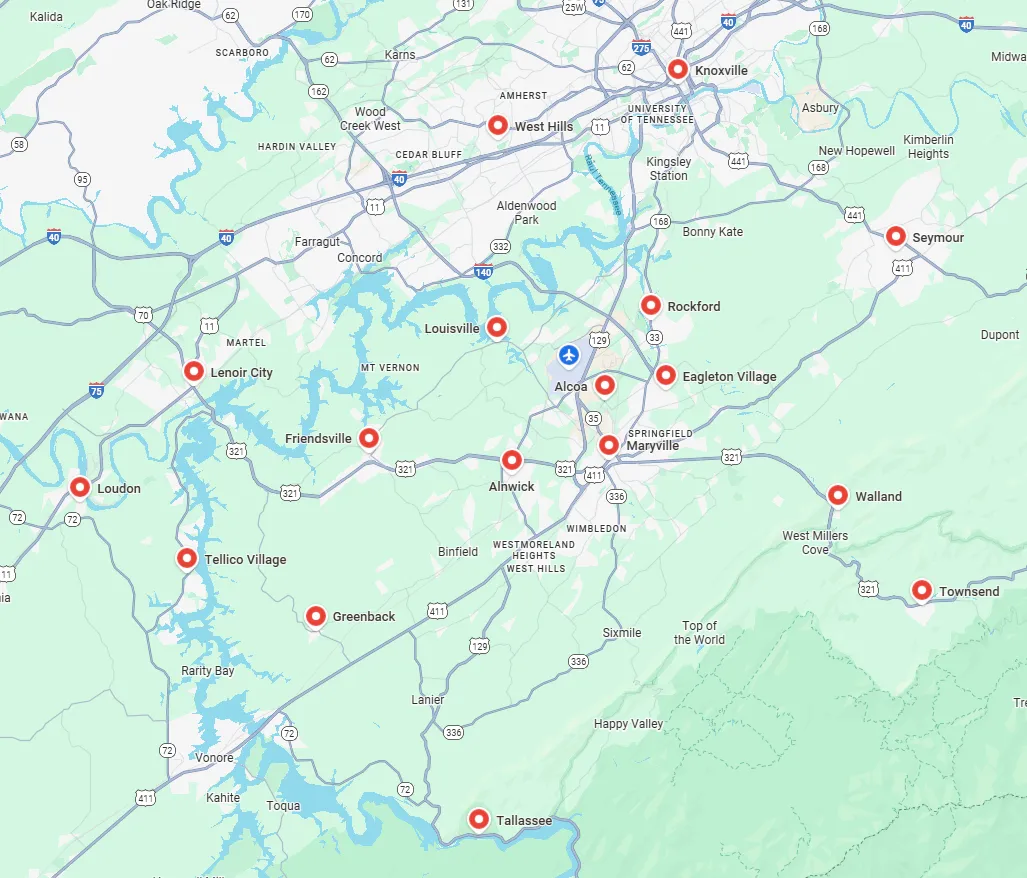


HVAC Repair in Tellico Village, TN
Your home in Tellico Village deserves dependable, timely HVAC repair that genuinely understands our local weather patterns, lakefront humidity, and how you use your system throughout the seasons. Everest Air Heating and Cooling provides experienced diagnostics and repairs for heating and air conditioning systems, focusing on quickly restoring your comfort and giving you clear explanations of what went wrong and how we'll fix it. We cover common HVAC failures in Tellico Village homes, detailing how we diagnose problems, standard repair procedures for things like motors, compressors, and thermostats, our transparent flat-rate service call approach, and practical temporary comfort strategies to keep you comfortable while we work. With Everest Air Heating and Cooling, you're in good hands.
.avif)
Why targeted HVAC repair matters in Tellico Village, TN
Tellico Village sits on Tellico Lake with humid summers, frequent late-summer storms, and chilly winter nights. Those environmental factors create specific HVAC stressors:
- High summer humidity increases runtime and accelerates component wear, especially compressors and blower motors.
- Lake-effect moisture can accelerate corrosion on outdoor condensing units and electrical connections.
- Rapid temperature swings in spring and fall prompt frequent cycling that exposes failing control boards and capacitors.
- Many homes in Tellico Village have mixed-use occupancy patterns—seasonal residents combined with year-round houses—so systems may sit idle for stretches, which can lead to stiff bearings, condensate blockages, or refrigerant migration.
Understanding these local influences helps pinpoint root causes faster and choose repairs that hold up in this climate.
Common HVAC problems in Tellico Village homes
Homeowners in the region typically call for the following issues:
- System not cooling or heating effectively
- Short cycling (system turns on and off rapidly)
- Noisy operation from the outdoor unit or furnace
- Inconsistent temperatures between rooms
- Thermostat non-responsiveness or erratic behavior
- Frequent tripping of breakers or blown fuses
- Water leaks from the indoor unit or condensate pan
- Outdoor unit not running after storms or power events
Each symptom can stem from multiple causes; accurate diagnostics prevent unnecessary part swaps and unnecessary expense.
Diagnostic process: how Everest Air approaches HVAC repair
A methodical diagnostic approach reduces downtime and avoids surprise costs. Typical steps include:
- Visual inspection: look for obvious issues such as burned wires, corroded terminals, oil stains (possible refrigerant leaks), debris around the outdoor unit, or frozen evaporator coils.
- Safety check: confirm breakers, disconnects, and safety switches are intact. Check condensate safety switches and float switches that can shut down systems to prevent water damage.
- Thermostat verification: confirm thermostat settings, batteries, wiring integrity, and communication with the system. Smart thermostats are tested both locally and via connectivity when available.
- Electrical testing: measure voltage and amperage on compressor and blower circuits, check capacitor values, and verify contactor operation.
- Refrigerant and pressure testing: measure refrigerant pressures and superheat/subcooling to evaluate charge and identify leaks where present.
- Airflow and duct inspection: measure static pressure, inspect filters, and assess return/supply vents for blockages or closed dampers.
- Component testing: bench-test motors, capacitors, and control boards where possible to isolate failures.
- Diagnostic report: provide a clear explanation of findings, repair options, expected parts and labor needs, and an estimated timeline.
This process emphasizes transparency—Everest Air Heating and Cooling documents findings so you know exactly what needs repair and why.
Emergency troubleshooting you can do now (safely)
If you are experiencing a sudden failure, these steps can help maintain safety and comfort until a technician arrives:
- Check breakers and disconnects: reset a tripped breaker or replace a blown fuse only if you are comfortable doing so.
- Replace or check thermostat batteries and set to a stable temperature setting (not auto changeovers).
- Inspect and replace a dirty air filter—restricted airflow causes many performance problems.
- Look for visible ice on evaporator coils. If present, turn off the system and run the fan to allow thawing.
- Clear debris around the outdoor unit and ensure at least two feet of clearance for airflow.
- If there is water pooling, locate the condensate emergency switch or float and gently lift it to see if it resets; do not force or bypass safety devices.
- Use portable fans, ceiling fans, or shaded cooling for temporary relief when cooling is lost. For heating loss, safe space heaters or layered clothing can help; avoid improvised heating methods that produce carbon monoxide or fire hazards.
These steps prioritize safety and short-term comfort while preserving evidence for accurate repair.
Typical repair procedures explained
Repairs vary by fault, system age, and component accessibility. Below are common repairs explained in non-technical terms so you understand what is done and why.
Motors and blower assemblies
- Problem: Failed blower motors or worn bearings lead to weak airflow or loud noises.
- Procedure: Inspect motor windings and bearings, test capacitor and motor draw. If repairable, replace bearings or lubricate where applicable. Otherwise replace the motor assembly, test the new motor under typical operating conditions, and verify proper airflow and amperage draw.
Compressors and refrigerant-related repairs
- Problem: Compressor failures, low refrigerant, or refrigerant leaks cause insufficient cooling and may damage components if left unchecked.
- Procedure: Verify refrigerant charge and pressures, inspect refrigerant lines and fittings for oil or dye that indicate leaks, perform electronic leak detection or bubble testing. If a repair requires opening the sealed refrigerant circuit, evacuate and recover refrigerant per environmental regulations, perform the mechanical repair, pressure test, evacuate moisture, and recharge to factory specifications. Test run and document final pressures and temperatures.
Control boards and electrical components
- Problem: Failed control boards or relays can cause intermittent operation or complete shutdown.
- Procedure: Remove and bench-test suspect boards where possible. Replace boards with compatible OEM or high-quality aftermarket assemblies. Reprogram settings if required and confirm that inputs and outputs respond correctly. Inspect wiring harnesses and connectors for corrosion caused by lake humidity or storms.
Thermostat replacement and calibration
- Problem: Thermostats that lose calibration, fail to control HVAC systems, or have connectivity issues.
- Procedure: Verify wiring and power at the thermostat, test sensors and battery power. Recalibrate or replace with a compatible thermostat. For smart thermostats, assist with network setup if applicable. Confirm system responds correctly in heat and cool modes.
Capacitors, contactors, and start components
- Problem: Failed capacitors or contactors prevent motors and compressors from starting.
- Procedure: Test capacitance and contactor continuity under load. Replace failed capacitors or contactors and retest start-up current and run current for proper operation.
Condensate drain and safety switch repairs
- Problem: Clogged condensate drains cause water backup and safety switch activation.
- Procedure: Clear lines mechanically or with safe cleaning solutions, inspect condensate pump operation where applicable, and replace damaged pans or float switches as required.
Duct and airflow repairs
- Problem: Uneven temperatures and poor efficiency due to leaks or blockages in ductwork.
- Procedure: Inspect accessible ducts for damage, reseal joints with approved mastic or metal tape, and recommend insulated returns or fixes for poorly performing runs. Perform airflow balancing where needed.
Each repair includes a quality check to confirm the system operates within design parameters. Everest Air Heating and Cooling provides clear documentation of what was replaced and why.
Flat-rate service call information explained
A flat-rate service call is designed to make diagnostics straightforward and predictable:
- What it covers: The flat-rate diagnostic covers on-site arrival, a full safety inspection, basic testing (electrical checks, thermostat verification, filter inspection), and a written diagnosis with repair options.
- Why it helps: Flat-rate diagnostics prevent surprise hourly charges during the troubleshooting phase. It provides a fixed, transparent fee for the time spent diagnosing and outlining repair recommendations.
- After diagnosis: If you approve repairs, the diagnostic charge is typically applied toward the repair invoice per company policy. If additional diagnostic equipment or extended troubleshooting is required beyond the standard flat-rate scope, that will be documented and discussed before proceeding.
This model gives you clarity on diagnostic costs and a documented decision pathway for repairs or replacements.
Parts and labor policies to know up front
Understanding parts and labor policies helps you make informed decisions:
- Parts selection: Everest Air Heating and Cooling will explain the differences between OEM parts and quality aftermarket alternatives. OEM parts are recommended when long-term compatibility or manufacturer warranty considerations matter, while vetted aftermarket parts can be a cost-effective option for older equipment.
- Approval process: No major parts are ordered or installed without homeowner approval. We provide clear estimates for parts and the labor required and outline any lead times for special-order components.
- Warranties and workmanship: Repairs typically come with a workmanship guarantee for a defined period. Parts may carry manufacturer warranties which vary by supplier and component. Warranty terms will be documented at the time of repair.
- Replacement considerations: When repair costs approach or exceed replacement thresholds, you will receive an honest assessment comparing repair versus replacement, factoring in system age, efficiency, and reliability in Tellico Village conditions.
- Emergency parts: For urgent failures, temporary measures or loaner components may be used to restore function until permanent parts arrive; those measures are discussed and approved beforehand.
Clear policies reduce surprises and help you plan for reliable, long-term comfort.
Timeframes and typical repair durations
Repair duration depends on the issue and parts availability:
- Simple fixes (capacitor, contactor, thermostat): usually completed the same day during the visit.
- Motor replacements or blower assembly work: often completed same day if stock parts are available; otherwise scheduled when parts arrive.
- Compressor or sealed-system work: can take longer due to evacuation, leak repair, and part lead times; expect multiple steps over a day or two for comprehensive service.
- Control board replacements: typically completed in a single visit once the correct board is on hand, including reprogramming and testing.
Everest Air Heating and Cooling documents expected timelines and gives realistic expectations based on local parts availability and system specifics.
Temporary comfort solutions while repairs are completed
When repair work will take time, safe temporary measures can keep your home comfortable:
- Use shaded, high-efficiency window fans and ceiling fans to improve perceived comfort by increasing air movement.
- Close blinds and curtains on sun-facing windows to reduce heat gain in summer.
- Zone rooms: close off unused rooms and close vents to concentrate conditioned air where you need it most, watching static pressure if many vents are closed.
- Portable cooling and heating: use certified portable air conditioners or space heaters with built-in safety features and follow manufacturer wiring recommendations. Do not overload circuits with multiple high-amp appliances on the same breaker.
- Dehumidification: in Tellico Village summers, a dehumidifier can dramatically improve comfort even if cooling capacity is reduced.
- Safe heating practices: use electric space heaters with tip-over and overheat protection; never use gas ovens or outdoor grills for indoor heating.
- Temporary supplemental equipment: in some cases, Everest Air Heating and Cooling may recommend or supply temporary units to maintain comfort during extended repairs or replacements.
- Preventive actions: replace clogged filters, seal windows or doors with weather stripping, and use programmable thermostats to avoid unnecessary cycling.
These steps reduce discomfort and protect your system from further damage while awaiting repairs.
When repair is the right choice vs replacement
Age, frequency of breakdowns, comfort needs, and energy costs determine whether repair is sensible:
- Repair is appropriate when failures are isolated, parts maintain efficiency, and the system is under about 10-12 years for typical split systems.
- Replacement should be considered when the system has multiple failures, the compressor or heat exchanger is compromised, frequent refrigerant leaks occur, or efficiency is significantly below modern standards. Replacement also becomes more sensible when repair costs approach a substantial portion of replacement cost.
- Everest Air Heating and Cooling will provide balanced comparisons that factor in system age, expected remaining service life, and long-term operating costs—important in Tellico Village where humidity and lake proximity influence wear rates.
Maintenance to extend system life — Y.E.T.I Comfort Plan alignment
Preventive maintenance is the best way to reduce emergency repairs and extend equipment life. The Y.E.T.I Comfort Plan aligns directly with repair prevention by offering seasonal checkups, priority scheduling, and benefits like diagnostic discounts. Routine maintenance typically includes:
- Seasonal Tune-Ups for heat and cooling systems
- Cleaning coils and condensate lines
- Checking refrigerant levels and electrical integrity
- Inspecting ductwork and airflow
- Calibrating thermostats
Regular maintenance reduces the likelihood of sudden failures in high-demand periods and helps maintain consistent comfort in Tellico Village homes.
Why trust local, experienced technicians
Local technicians understand regional stressors—humidity, storm-related electrical surges, and lake-driven corrosion—and can preemptively address conditions that out-of-area contractors might miss. Everest Air Heating and Cooling combines local experience with methodical diagnostics, transparent flat-rate service calls, clear parts and labor policies, and recommendations tailored to Tellico Village homes.
Frequently Asked Questions
Q: What does a flat-rate service call cover?
A: A flat-rate service call covers the technician's arrival, a safety inspection, basic electrical and airflow checks, thermostat verification, and a documented diagnosis with repair options. Any additional extended diagnostics or special equipment needs will be communicated before proceeding.
Q: How quickly can you diagnose an HVAC problem in Tellico Village?
A: Most standard issues are diagnosed within the initial visit using a structured inspection and testing protocol. Some sealed-system or electrical issues may require additional testing or parts and so can span multiple visits.
Q: Will I be charged for parts I do not approve?
A: No. Parts are not ordered or installed without homeowner approval. You will receive a clear estimate for parts and labor and be informed of any lead times before any work begins.
Q: Are replacement parts OEM or aftermarket?
A: Everest Air Heating and Cooling explains the pros and cons of OEM versus high-quality aftermarket parts. OEM parts are typically recommended for long-term compatibility and warranty retention, while aftermarket parts can be a cost-effective option for older systems.
Q: Can I get temporary cooling or heating while my system is being repaired?
A: Yes. There are safe temporary solutions such as portable air conditioners, dehumidifiers, and fan strategies for cooling, or certified space heaters for heating. Always follow manufacturer safety guidance and avoid overloading circuits.
Q: How long do typical repairs take?
A: Simple repairs such as replacing capacitors, contactors, or thermostats often complete the same day if parts are available. Compressor or sealed-system repairs can take longer due to evacuation and refrigerant handling requirements and possible parts lead time.
Q: What if my HVAC stops working after hours or during a storm?
A: Emergency troubleshooting steps you can take include checking breakers, replacing thermostat batteries, replacing a dirty filter, and clearing debris from the outdoor unit. Everest Air Heating and Cooling documents findings and advises on safe next steps; availability for after-hours service may vary.
Q: Do repairs come with a warranty?
A: Repairs typically include a workmanship guarantee, and parts often carry manufacturer warranties. Warranty durations vary by part and manufacturer and will be provided with the repair documentation.
Q: How does Tellico Village climate affect my HVAC system?
A: High humidity and lake proximity increase runtime and can cause more rapid corrosion and component stress. Seasonal swings in temperature lead to frequent cycling that can expose weak components sooner. Regular maintenance helps mitigate these effects.
Q: When should I consider replacing my system instead of repairing it
?A: Replacement is worth considering when the system has multiple recent failures, when major components like compressors or heat exchangers are failing, or when repairs approach a significant portion of replacement cost—especially if energy efficiency and long-term reliability are priorities.
Everest Air Heating and Cooling applies local experience, thorough diagnostics, and clear policies to keep homes in Tellico Village comfortable and reliable. Thoughtful repairs, transparent flat-rate diagnostics, and maintenance guidance protect your investment and reduce the likelihood of repeated breakdowns.
hear what our satisfied clients have to say

David P.
Service areas