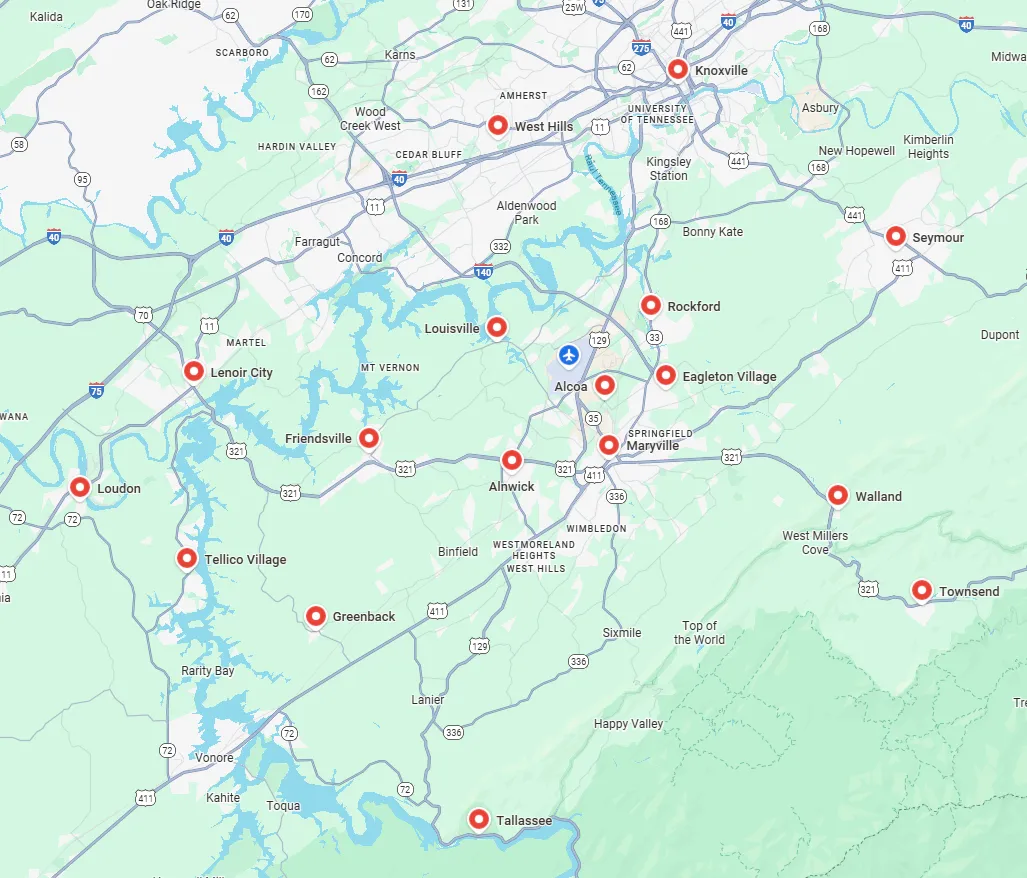


Commercial HVAC in Tallassee, TN
Managing the climate control for a commercial property in Tallassee, TN, isn't something you can do with a 'one-size-fits-all' solution. We know our local summers are hot and humid, pollen season brings indoor air quality concerns, and older buildings often have their own unique airflow and equipment access quirks. That's why Everest Air Heating and Cooling offers commercial HVAC services specifically tailored to these realities. We handle everything from commercial system installation, preventative maintenance contracts, and rapid-response repair plans, to accurate system sizing for larger buildings, retrofit and energy-efficiency upgrades, and ensuring full compliance with commercial codes and standards. With Everest Air Heating and Cooling, commercial property owners, facility managers, and business operators in Tallassee can truly reduce downtime, control operating costs, and keep everyone comfortable and safe.
.avif)
Why specialized commercial HVAC matters in Tallassee, TN
Commercial buildings face different demands than homes. Retail spaces, restaurants, offices, warehouses, schools, and medical offices each have specific ventilation, zoning, humidity control, and occupancy patterns. In Tallassee, seasonal humidity and pollen create a higher risk of mold and coil fouling; older ductwork and rooftop units often struggle to maintain consistent temperatures. Addressing these issues with commercial-grade planning and service is essential to avoid tenant complaints, lost productivity, and unexpected capital expenses.
Everest Air Heating and Cooling combines local experience with industry-standard engineering to match system type and capacity to building needs. The goal is reliable, efficient performance that respects local climate patterns and code requirements.
Common commercial HVAC services for Tallassee businesses
- Commercial system installation for new construction and replacement of end-of-life equipment
- Preventative maintenance contracts with scheduled inspections and seasonal Tune-Ups
- Rapid-response repair plans and emergency service options to minimize downtime
- Professional load calculation and system sizing for larger buildings and multi-zone applications
- Retrofit projects to improve energy efficiency and extend equipment life
- Controls and building automation integration for optimized operations
- Indoor air quality assessments and upgrades, including filtration and ventilation improvements
- Code compliance support for permits, inspections, and documentation
Typical commercial HVAC issues we see in Tallassee
- Inconsistent cooling during hot, humid summer months due to undersized units or poor airflow
- Frequent coil fouling and reduced efficiency from pollen, dust, and higher outdoor humidity
- Duct leakage and poorly balanced systems causing hot and cold spots across zones
- Refrigerant leaks and failing compressors on aging rooftop units
- Control system obsolescence that prevents demand-based ventilation and efficient staging
- Corrosion and condensate drainage problems on exterior equipment exposed to seasonal freeze-thaw cycles
- Inadequate ventilation rates in renovated spaces that increase VOC and CO2 levels
Understanding the local drivers behind these issues helps shape the right solution from the start.
How Everest Air assesses your commercial HVAC needs
A thorough commercial HVAC project begins with assessment and diagnostics. Everest Air Heating and Cooling follows a structured approach so decisions are data-driven and long-term costs are considered.
- Site survey and walkthrough: Evaluate building envelope, rooftop conditions, mechanical rooms, ductwork accessibility, and current equipment nameplate data.
- Occupancy and operational review: Understand hours of operation, occupant density, process loads, and special requirements such as kitchen exhaust or medical ventilation.
- Load calculation: Use industry-standard methods and ASHRAE guidance to size equipment correctly for current and projected loads.
- Duct and air distribution analysis: Test static pressure, airflow, and duct leakage to confirm system performance and identify necessary repairs or redesign.
- Energy and controls review: Audit controls, thermostats, economizers, and building automation systems to identify opportunities for efficiency gains.
- Code and compliance check: Verify ventilation rates, refrigerant handling, and mechanical room requirements against local and state codes and relevant standards.
- Cost and lifecycle analysis: Evaluate initial capital, operating costs, and projected lifecycle to recommend the most cost-effective solution for your facility.
This combination ensures the installed system supports occupant comfort, operational reliability, and energy performance.
Commercial system installation: what to expect
Commercial HVAC installations have multiple layers of planning and execution. Typical phases include:
- Design and specification: Create system layouts, equipment schedules, ductwork sizing, and control sequences based on load calculations and building constraints.
- Permitting and code coordination: Prepare documents for local permitting and coordinate any required inspections.
- Pre-construction planning: Coordinate site access, crane or hoist needs for rooftop units, staging areas, and safety protocols for occupied buildings.
- Equipment delivery and installation: Install rooftop packaged units, split systems, chillers, boilers, ductwork, and controls with careful attention to manufacturer and code requirements.
- Piping and refrigerant work: Properly size and install refrigeration lines or hydronic piping, following EPA and state refrigerant handling rules.
- Commissioning and startup: Balance airflow, verify control sequences, check refrigerant charge and pressures, and perform system performance verification under load.
- Documentation and training: Provide operation manuals, as-built drawings, and training for facility staff on routine checks and basic troubleshooting.
Well-executed installations reduce future service calls and extend equipment life, particularly in the Tallassee climate where equipment often runs year-round.
Preventative maintenance contracts for commercial properties
Preventative maintenance is the most effective way to lower total cost of ownership and prevent emergency failures. Commercial maintenance plans typically include:
- Scheduled seasonal inspections (spring and fall) to prepare for peak cooling and heating periods
- Filter management program with scheduled replacement and inventory control
- Coil cleaning, condensate drain checks, and corrosion prevention on exposed components
- Motor, belt, and bearing inspections with lubrication and adjustments
- Refrigerant level checks and leak detection sweeps
- Controls verification and sensor calibration
- Airflow testing and rebalancing as needed
- Priority scheduling, documented service histories, and personalized equipment lists
For Tallassee facilities, maintenance plans pay dividends by preventing humidity-related failures and maintaining efficient operation through pollen-heavy seasons. Proper maintenance reduces emergency repairs, saves energy, and preserves occupant comfort.
Rapid-response repair and emergency planning
When a commercial system fails, rapid recovery is critical to avoid business interruption. Everest Air Heating and Cooling organizes repairs with the needs of commercial operators in mind:
- Emergency response plans with defined response windows and escalation protocols
- Parts stocking and vendor relationships to shorten lead times for replacement components
- Temporary HVAC solutions and staging to maintain critical operations during major repairs
- Diagnostic-driven repair strategy to identify root causes rather than temporary fixes
- Documentation of repairs and follow-up recommendations to prevent recurrence
A prepared repair plan reduces downtime and keeps businesses in Tallassee operating smoothly when unexpected failures occur.
System sizing and design for larger buildings
Correct system sizing for multi-zone and large spaces is essential to performance and efficiency. Everest Air uses a combination of load calculations and practical design strategies:
- Zoned systems and ducted split configurations to serve variable occupancy areas efficiently
- Rooftop units sized for peak loads with staged operation to meet partial-load efficiency
- Chilled water systems and air handlers for buildings with centralized HVAC needs
- Redundancy planning such as N+1 configurations for critical operations and server rooms
- Duct distribution designed to minimize static pressure and deliver balanced airflow
- Consideration of roof structure and mechanical room access for equipment placement and maintenance
Proper sizing avoids the cycle of short-cycling, insufficient dehumidification, and excessive energy use—common problems in improperly designed Tallassee installations.
Retrofit and energy-efficiency upgrades
Retrofitting existing systems often provides the best return on investment. Common upgrade pathways include:
- Replacing single-stage equipment with variable-speed compressors and ECM motors to improve part-load efficiency
- Installing advanced controls and building automation for demand-based ventilation and optimized staging
- Adding heat recovery systems and economizers to capture waste energy and reduce HVAC loads
- Upgrading filtration and UV systems to improve indoor air quality and protect coils from fouling
- Duct sealing and insulation to reduce losses and improve airflow
- Integrating energy metering and remote monitoring to track performance and identify issues early
In Tallassee, energy upgrades help manage the higher summer cooling loads and reduce monthly utility bills while improving occupant comfort.
Indoor air quality and ventilation considerations
Commercial spaces in Tallassee face IAQ challenges from humidity, pollen, and occupant density. Key strategies:
- Meet or exceed ASHRAE 62.1 ventilation requirements for fresh air and CO2 management
- Implement demand-controlled ventilation where occupancy varies to save energy while ensuring adequate outdoor air
- Upgrade filtration to MERV-rated filters appropriate for the space and filtration upgrade goals
- Address moisture control with proper dehumidification and coil maintenance to prevent mold growth
- Use UV-C or other coil sterilization options for high-risk environments like medical offices or food service areas
Good IAQ reduces sick days, improves productivity, and protects sensitive equipment and products.
Compliance with codes and standards
Commercial HVAC work must satisfy a mix of local, state, and national requirements. Everest Air ensures projects adhere to:
- Local and state building and mechanical codes and permit processes
- ASHRAE guidelines for ventilation and load calculations
- EPA refrigerant handling regulations and proper refrigerant recovery documentation
- Fire and life safety codes where HVAC interacts with smoke control, exhaust, or pressurization systems
- SMACNA and ACCA standards for ductwork design and balancing
Compliance protects building owners from fines and liability while ensuring occupant safety.
Measuring success: performance metrics and cost control
Facility managers need clear metrics to evaluate HVAC performance and return on investment. Typical benchmarks include:
- Energy use intensity (EUI) and utility consumption trends pre- and post-upgrade
- Equipment uptime and mean time between failures for major assets
- Temperature and humidity stability across occupied hours
- Filter and coil cleanliness indices tied to scheduled maintenance
- Indoor air quality metrics such as CO2, particulate counts, and relative humidity
- Lifecycle cost comparisons that account for maintenance, energy, and replacement timing
Everest Air Heating and Cooling provides data-driven reviews so facility owners can track performance and make informed decisions about capital improvements.
Maintenance best practices for Tallassee commercial properties
- Establish a preventative maintenance contract that includes seasonally timed inspections and filter schedules.
- Prioritize coil cleaning and condensate maintenance before and after peak pollen and humidity seasons.
- Balance ventilation to meet code while minimizing excessive outdoor air conditioning during peak heat.
- Use variable-speed drives and zoning to reduce part-load energy use.
- Keep refrigeration and hydronic systems properly charged and leak-free through scheduled checks.
- Document all service work and maintain an equipment history to simplify future troubleshooting and replacement planning.
Following these best practices reduces emergency repair frequency and keeps equipment running efficiently in Tallassee conditions.
Why choose a local partner for commercial HVAC
Local knowledge matters. A Tallassee-based approach understands:
- Seasonal humidity patterns and their impact on dehumidification needs
- Common building types in the area and the typical equipment you will find
- Local permitting processes and inspection timelines
- Practical access and staging options for rooftop or retrofit work in older buildings
- Relationships with regional suppliers and parts inventories that speed repairs
Everest Air Heating and Cooling combines local service expectations with professional engineering and installation practices to deliver reliable commercial HVAC solutions that match Tallassee realities.
Long-term planning and lifecycle thinking
A strategic HVAC plan considers the next 5 to 20 years:
- Schedule replacement cycles based on actual operating hours and lifecycle costs, not just age
- Consider modular or staged systems to allow capacity growth without full replacement
- Invest in controls and monitoring early to capture savings over time
- Prioritize high-return retrofits like variable-speed drives and efficient economizers
- Keep maintenance budgets predictable with fixed preventative contracts and documented service intervals
This long-term view keeps buildings comfortable, code-compliant, and cost-effective over the life of the assets.
Frequently Asked Questions
Q: What types of commercial HVAC systems are best for multi-tenant buildings in Tallassee, TN?
A: Multi-tenant buildings often benefit from zoned rooftop units or variable refrigerant flow systems that enable individual tenant control while centralizing maintenance. Redundancy and proper zoning minimize tenant complaints and balance energy use.
Q: How often should commercial HVAC systems be serviced in Tallassee?
A: Typical commercial schedules include biannual inspections and seasonal Tune-Ups, with more frequent filter changes if the building experiences high occupant loads or heavy pollen seasons. Critical facilities may need quarterly or monthly checks.
Q: Can retrofit work on my existing rooftop units actually save energy?
A: Yes. Replacing single-stage compressors with variable-speed units, adding economizers, upgrading fans to ECM motors, and improving controls can significantly reduce energy consumption and improve comfort, especially during Tallassee summers.
Q: How does humidity in Tallassee affect HVAC performance?
A: High humidity increases latent cooling loads, causing coils to work harder and increasing the chance of mold or coil fouling. Proper sizing, dehumidification strategies, and regular coil maintenance are important to maintain efficiency and IAQ.
Q: What code and compliance concerns are common for commercial HVAC projects?
A: Common concerns include meeting ventilation rates, refrigerant handling compliance, mechanical room clearances, fire and smoke control integration, and proper permitting. Adherence to ASHRAE and local mechanical codes is essential.
Q: What is involved in a commercial preventative maintenance contract?
A: A commercial plan typically covers scheduled inspections, filter management, coil cleaning, refrigerant checks, motor and belt service, controls verification, and documented reports. Plans can be customized to the building needs and equipment types.
Q: How do you size an HVAC system for a large warehouse or retail space?
A: Sizing is based on detailed load calculations considering occupancy, solar gains, internal process loads, insulation levels, and ventilation requirements. Warehouse spaces often emphasize ventilation and makeup air, while retail spaces require careful zoning.
Q: Will upgrading controls reduce my utility costs?
A: Yes. Modern controls and building automation enable demand-based ventilation, optimized staging, and setback schedules that cut energy use. Controls also provide remote monitoring to catch inefficiencies early and reduce service costs over time.
Q: Are refrigerant leaks a big issue for older commercial units in the area?
A: Refrigerant leaks are common as equipment ages and can cause reduced efficiency, capacity loss, and environmental concerns. Regular leak detection and repair are critical, and eventual replacement with modern equipment can provide operational and environmental benefits.
Q: What performance documentation will I receive after an installation or major service?
A: Owners typically receive test and balance reports, commissioning documentation, equipment manuals, as-built drawings, warranty papers, and a recommended maintenance schedule to protect the investment and ensure consistent performance.
hear what our satisfied clients have to say

David P.
Service areas