

Heat Pump Repair in West Hills, TN
When your heat pump isn't heating or cooling your home the way it should, you need reliable, fast service. At Everest Air Heating and Cooling, we specialize in expert diagnostic and repair services for heat pumps in West Hills, TN. We're dedicated to getting your comfort back quickly, always explaining the problem and your options in clear, easy-to-understand terms. Whether your unit won't start, is making strange noises, or just isn't keeping your home comfortable during our humid summers or chilly winter snaps, we'll walk you through common issues, our diagnostic process, and realistic repair timelines. This way, you'll feel confident making the right decision for lasting comfort with Everest Air Heating and Cooling.
.avif)
Why heat pump repair matters in West Hills, TN
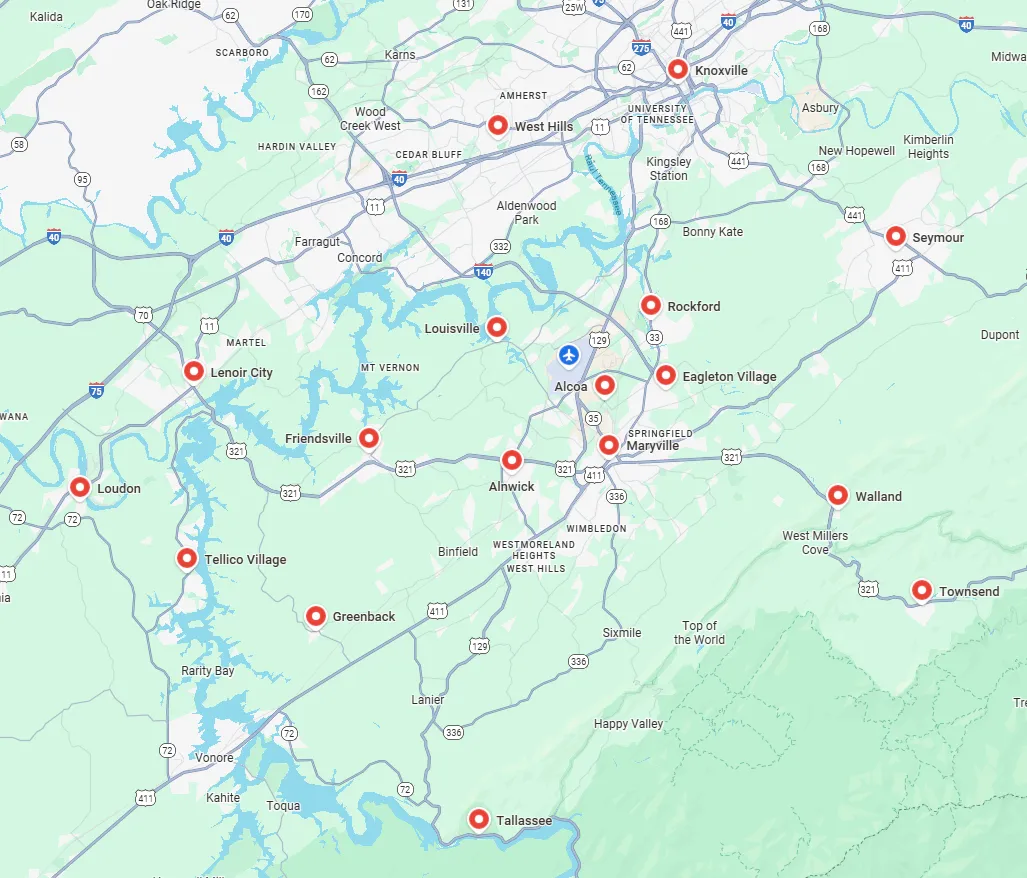
West Hills is part of the greater Knoxville area where humid summers and variable winters place unique demands on heat pumps. Many homes rely on heat pumps for efficient year-round comfort: cooling during the hot, humid months and providing heat through moderate winters. That means timely repair preserves energy efficiency, prevents secondary damage to indoor equipment and ductwork, and avoids expensive full replacements later. Everest Air Heating and Cooling brings local knowledge to each repair, accounting for regional load cycles, humidity effects on coils, and common wear patterns we see across Knox County homes.
Common heat pump failure modes in West Hills homes
Below are the most frequent issues homeowners experience, how they present, and what they often require.
- No heating or cooling output
- Symptoms: system runs but indoor temperature does not change, long run cycles, or short cycling.
- Frequent causes: low refrigerant due to leak, compressor failure, faulty reversing valve, or airflow problems from dirty filters or blocked ducts.
- Outdoor unit not running (compressor or condenser fan motor issues)
- Symptoms: outdoor fan not spinning, loud grinding or squealing noises, outdoor unit runs then stops.
- Frequent causes: failed fan motor, bad capacitor, seized bearings, contactor failure, or electrical supply issues.
- Refrigerant leaks and low charge
- Symptoms: reduced capacity, ice forming on coils, hissing noises, higher energy bills.
- Frequent causes: aging lines, corroded fittings, previous improper repairs. Refrigerant repairs require leak detection, repair, evacuation, and recharge.
- Reversing valve or defrost system failures
- Symptoms: poor heating during cold conditions, outdoor unit frosting without proper defrost, heat pump stuck in one mode.
- Frequent causes: stuck or failed reversing valve, defrost control board issues, faulty sensors.
- Electrical component failures (capacitors, contactors, transformers)
- Symptoms: unit will not start, intermittent operation, humming sounds or tripping breakers.
- Frequent causes: worn start/run capacitors, burned contactor points, voltage irregularities, poor connections.
- Thermostat and control problems
- Symptoms: incorrect setpoint response, system won’t call for heat or cooling.
- Frequent causes: misconfigured or failing thermostat, communication errors with control board.
- Airflow problems (indoor blower, ducts, filters)
- Symptoms: weak airflow, uneven heating or cooling, increased humidity.
- Frequent causes: dirty filter, failed blower motor, clogged or leaky ducts, closed dampers.
- Unusual noises and vibration
- Symptoms: rattling, banging, hissing or loud hums.
- Frequent causes: loose panels, failing fan motors, refrigerant line vibration, failing compressor components.
Diagnostic workflow: how Everest Air approaches heat pump problems
A systematic diagnostic process reduces guesswork and delivers solutions that last. Typical steps our technicians follow for heat pump diagnostics in West Hills, TN:
- Phone triage and history
- Collect symptoms, when the problem started, prior repairs, and any recent events (storms, power surges). This narrows potential causes before arriving.
- Visual and safety inspection
- Check electrical disconnects, breakers, visible wiring, and general condition of outdoor and indoor units. Verify safety switches and clearances.
- Thermostat and control verification
- Confirm thermostat is set correctly, check batteries and wiring continuity, and ensure the control board is registering commands.
- Electrical testing
- Measure voltages at the condenser, test capacitors and contactors, and inspect relays and transformers. Look for shorted or open circuits.
- Airflow assessment
- Inspect filters, blower wheel, evaporator coil, and return grills. Test static pressure and measure airflow to ensure adequate movement across the coil.
- Refrigerant system evaluation
- Connect gauges, measure operating pressures, and compare to manufacturer specifications. Use electronic leak detectors and UV dye or bubble testing for suspected leaks.
- Mechanical checks
- Inspect compressor behavior, listen for abnormal sounds, check fan motors and bearings, and evaluate the reversing valve and defrost cycle operation.
- Run test and performance validation
- Run the system through heat and cool modes to observe cycling, capacity, and response. Measure temperature splits and verify steady-state conditions.
- Diagnosis report and options
- Provide a clear explanation of the problem, recommended repairs, parts needed, estimated timeline, and implications (repair now vs replacement later).
This workflow ensures repairs address root causes rather than temporary symptoms, which is especially important in West Hills where repeated humid and cold cycles can exacerbate unresolved issues.
Typical repairs and what they involve
Below are common repair types and what homeowners can expect during service:
- Capacitor replacement
- Why: Capacitors wear out with motor-start cycles.
- Process: Power down, discharge and test existing capacitors, replace with properly rated part, test motor start and run.
- Timeframe: Often same-day, typically 1-3 hours for diagnosis and replacement.
- Contactor and relay repair
- Why: High-cycle wear creates pitting and failure.
- Process: Inspect contactor, replace with OEM-equivalent or approved aftermarket part, test unit operation.
- Timeframe: Frequently same-day.
- Fan motor replacement
- Why: Bearings seize, windings fail, or motors overheat.
- Process: Remove old motor, verify fan blade balance, install new motor, test run and vibration.
- Timeframe: Usually same-day to next-day depending on part availability.
- Compressor repair or replacement
- Why: Loss of capacity, failure to start, overheating, or internal mechanical failure.
- Process: Comprehensive diagnosis to confirm compressor failure, recover refrigerant, replace compressor and associated components like filter driers and possibly the reversing valve or expansion device, evacuate and recharge system, and test. Because the compressor is central to the refrigerant circuit, proper evacuation and recharging are critical.
- Timeframe: Often 1-5 days depending on parts availability and whether additional components need replacement.
- Why: Loss of capacity, failure to start, overheating, or internal mechanical failure.
- Refrigerant leak detection and repair
- Why: Low refrigerant leads to poor performance and coil freezing.
- Process: Locate leak using electronic detectors, fluorescent dye, or pressure testing. Repair solder joints or replace leaking sections of line set, pressure test, evacuate, and recharge to manufacturer specifications.
- Timeframe: 1-3 days typically, depending on leak location and access.
- Reversing valve or defrost control replacement
- Why: System remains stuck in a mode or does not defrost properly.
- Process: Confirm valve operation or defrost board signals, replace faulty valve or control, purge and test system operation.
- Timeframe: 1-3 days based on parts.
- Air handler or blower repairs
- Why: Reduced airflow, noisy blower, or burned motor.
- Process: Inspect motor and capacitor, clean blower wheel, replace motor or bearings as needed, verify duct pressure and balancing.
- Timeframe: Same-day to next-day for part-dependent repairs.
Emergency and same-day repair options in West Hills
Heat loss during a cold night or loss of cooling during a hot humid day can be urgent. Everest Air Heating and Cooling provides emergency and same-day repair services when possible and prioritizes safety and comfort:
- Same-day repairs
- Available for many electrical and mechanical component replacements such as capacitors, contactors, and fan motors when parts are on the service vehicle or readily available locally.
- Emergency response
- For true emergencies like a complete system failure during extreme weather, technicians perform prioritized diagnostics and implement temporary measures when necessary to restore heating or cooling as soon as possible.
- Priority scheduling
- Customers enrolled in the Y.E.T.I Comfort Plan receive priority scheduling and faster response times during peak seasons, which is particularly valuable during heat waves or cold snaps in West Hills.
Availability depends on time of day, parts inventory, and seasonal demand, but emergency calls are triaged to get the fastest and safest resolution.
Parts replacement and warranty information
Understanding warranties and what is covered gives peace of mind after a repair.
- Manufacturer warranties
- Major heat pump manufacturers typically provide limited warranties on compressors and sealed system components that can span multiple years. Coverage depends on the original equipment and whether components have been registered.
- Parts warranties
- Replacement parts installed by Everest Air Heating and Cooling generally carry manufacturer or supplier warranties. Common warranties include one-year to ten-year coverage on specific components depending on the part type.
- Labor warranties
- Labor warranties for repairs can vary; Everest Air documents labor coverage on the repair invoice. Typical labor warranties range from 30 days to one year depending on the repair type and company policy. Warranty terms are explained in writing after a repair is completed.
- Y.E.T.I Comfort Plan benefits
- Preventive maintenance plans such as the Y.E.T.I Comfort Plan include benefits that reduce future repair risks and can include priority scheduling and service discounts. Regular maintenance helps maintain warranty compliance and prolong equipment life.
Always retain invoices and warranty paperwork. If an OEM warranty applies, replacement parts and repairs may be coordinated through the manufacturer per warranty terms.
Repair timelines and what to expect
Timelines vary by issue complexity and parts availability. Typical expectations for West Hills residents:
- Simple electrical or component replacements (capacitor, contactor, thermostat): same day to 24 hours.
- Fan motor or blower repairs: same day to 48 hours if stock parts are available.
- Refrigerant leak detection and repair: 1-3 days depending on access to the leak and parts required.
- Compressor replacement or major sealed-system repairs: 1-5 days, potentially longer if a specific compressor model must be ordered.
- Full system replacement recommendations: scheduling and installation timeframe varies and may take several days to coordinate.
Technicians provide an estimated timeline during the diagnostic phase and update you if parts lead times or other factors affect completion.
When repair is not the best option
There are times when repair is sensible and other times replacement offers better long-term value. Consider replacement when:
- The heat pump is older than 10-15 years and facing major sealed-system failures.
- Multiple major components are failing in sequence (compressor, reversing valve, and control board).
- Frequent repairs over recent seasons approach or exceed the cost of a new system.
- The unit is undersized for the home or uses outdated refrigerants with limited replacement options.
In these cases, replacing the heat pump with a modern, more efficient model can reduce energy bills, increase reliability, and improve comfort—especially important in West Hills where seasonal demands vary.
How to prepare for a service visit
Preparing your home and system helps a technician diagnose and complete repairs efficiently:
- Clear the area around the indoor air handler and outdoor unit to provide easy access.
- Note any patterns: times when the system fails, thermostat settings used, and noises heard.
- Secure pets and ensure someone over 18 is present if possible.
- Have past service records available to assist in diagnosis.
- Turn off utilities to the unit only if instructed by the technician.
During the visit you can expect a written diagnosis, explanation of options, and documentation of parts and warranty terms after repairs are completed.
Post-repair testing and maintenance
After repairs, technicians perform a full run test to verify performance in both heat and cooling modes as applicable. They measure:
- Temperature differentials and airflow
- Electrical currents and voltages
- Refrigerant pressures and superheat/subcooling as required
- Proper defrost and reversing operation
Routine preventive maintenance, such as regular Y.E.T.I Comfort Plan checkups, helps catch small issues before they become major repairs. Maintenance typically includes filter checks, coil cleaning, motor lubrication where applicable, electrical tightening, and performance testing.
Why local expertise matters
Everest Air Heating and Cooling understands West Hills homes and the local climate. Our technicians see the wear patterns caused by Knoxville-area humidity and seasonal cycles, allowing them to diagnose more accurately and recommend repairs that last. Local knowledge also helps identify issues tied to common installation practices in the region, such as duct sizing, outdoor unit siting, and refrigerant line routing.
What to expect in terms of transparency and documentation
A quality repair process includes clear documentation:
- Written diagnosis outlining findings and recommended repairs.
- Parts list with manufacturer part numbers when available.
- Labor warranty and parts warranty details in writing.
- Post-repair performance data showing the system’s restored capability.
Everest Air Heating and Cooling emphasizes no hidden costs and clear explanations so homeowners in West Hills can make informed decisions about repairs versus replacement.
FAQs
Q: How do I know if my heat pump needs repair or replacement?
A: If your heat pump is less than 10 years old, a targeted repair is often sensible. For units older than 10 to 15 years with multiple major failures, replacement may offer better long-term value. Consider frequency and cost of recent repairs, energy costs, and comfort levels when deciding.
Q: Can you repair refrigerant leaks, and will that be a long process?
A: Yes. Repairing refrigerant leaks requires locating and repairing the leak, pressure testing, evacuating the system, and recharging to manufacturer specifications. Typical timelines are 1-3 days depending on access and parts needed.
Q: Are same-day repairs available in West Hills?
A: Many common repairs like capacitor, contactor, and thermostat replacements can be completed same day when parts are available. Emergency and same-day availability depends on technician schedule and part stock.
Q: How long does a compressor replacement take?
A: Compressor replacement is more involved because it requires recovering refrigerant, replacing the compressor and associated components, evacuating, and recharging the system. Expect 1-5 days depending on part availability.
Q: What warranties cover parts and labor?
A: Manufacturer warranties cover many parts according to the original equipment terms. Replacement parts carry their own manufacturer or supplier warranties, and labor warranties vary by company. Everest Air documents warranty terms in writing after each repair.
Q: Will a refrigerant leak damage my heat pump if not fixed promptly?
A: Yes. Running a system with low refrigerant can cause coil freezing, compressor damage from overheating or slugging, and reduced efficiency. Prompt repair prevents secondary damage and higher energy costs.
Q: Does regular maintenance prevent heat pump failures?
A: Preventive maintenance catches issues like worn capacitors, dirty coils, and airflow restrictions before they lead to failure. The Y.E.T.I Comfort Plan includes seasonal checkups to reduce repair risk and extend system life.
Q: What should I do before the technician arrives?
A: Clear access to indoor and outdoor units, secure pets, have recent service history available, and note specific symptoms and times when issues occurred to help with diagnosis.
Q: Can you fix units with older refrigerants?
A: Repairs are possible, but availability of replacement parts and refrigerant options influences choices. In some older systems using phased-out refrigerants, replacement may be the more practical long-term solution.
Q: How do you verify a successful repair?
A: Technicians run the system through heat and cool modes, measure temperature splits, check electrical readings, verify refrigerant pressures, and observe defrost cycles when relevant to confirm the system is operating within expected parameters.
Everest Air Heating and Cooling provides experienced, local heat pump repair service in West Hills, TN with clear diagnostics, documented warranty coverage, and options that prioritize long-term reliability and efficiency.
hear what our satisfied clients have to say

David P.
Service areas