

AC Tune-Up in Maryville, TN
Keeping your air conditioning running reliably through Maryville summers means more than just switching on the thermostat and crossing your fingers. With humid, hot months and seasonal pollen and dust from our surrounding ridgelines, regular AC Tune-Ups are absolutely essential to preserve efficiency, prevent mid-season breakdowns, and maintain consistent indoor comfort. Everest Air Heating and Cooling provides comprehensive AC Tune-Up services right here in Maryville, TN. Our service is designed to thoroughly diagnose, clean, adjust, and protect your system so it performs at peak levels precisely when you need it most. Trust Everest Air Heating and Cooling to keep you cool all summer long.
Why an AC Tune-Up matters in Maryville, TN
- Maryville experiences hot, humid summers and occasional late spring pollen that stress HVAC systems and clog filters and coils faster than in drier climates.
- Humidity increases runtime and compressor workload, which can accelerate wear on electrical components and moving parts.
- Older homes in the area may have legacy ductwork, insulation gaps, or attic heat gain that reduce system efficiency and mask underlying problems.
A properly performed Tune-Up addresses those local challenges before they become costly repairs, restoring airflow, improving cooling capacity, and extending equipment life.
What an AC Tune-Up covers: a technician checklist
A professional AC Tune-Up is a systematic inspection and service of every major component that affects cooling, safety, and efficiency. Everest Air Heating and Cooling follows an industry-standard process focused on both visible issues and root causes:
- Visual system assessment
- Inspect outdoor condenser and indoor air handler for obvious damage, rust, or debris.
- Evaluate system age, recent service history, and any documented performance complaints.
- Air filter inspection and replacement or cleaning
- Check filter type and condition; replace disposable filters or clean reusable filters.
- Confirm filter sizing and seating to prevent bypass and maintain proper airflow.
- Evaporator and condenser coil cleaning
- Remove dirt, pollen, and grime from evaporator coils indoors and condenser coils outdoors.
- Straighten coil fins and clear coil surface to restore heat transfer efficiency.
- Refrigerant system check
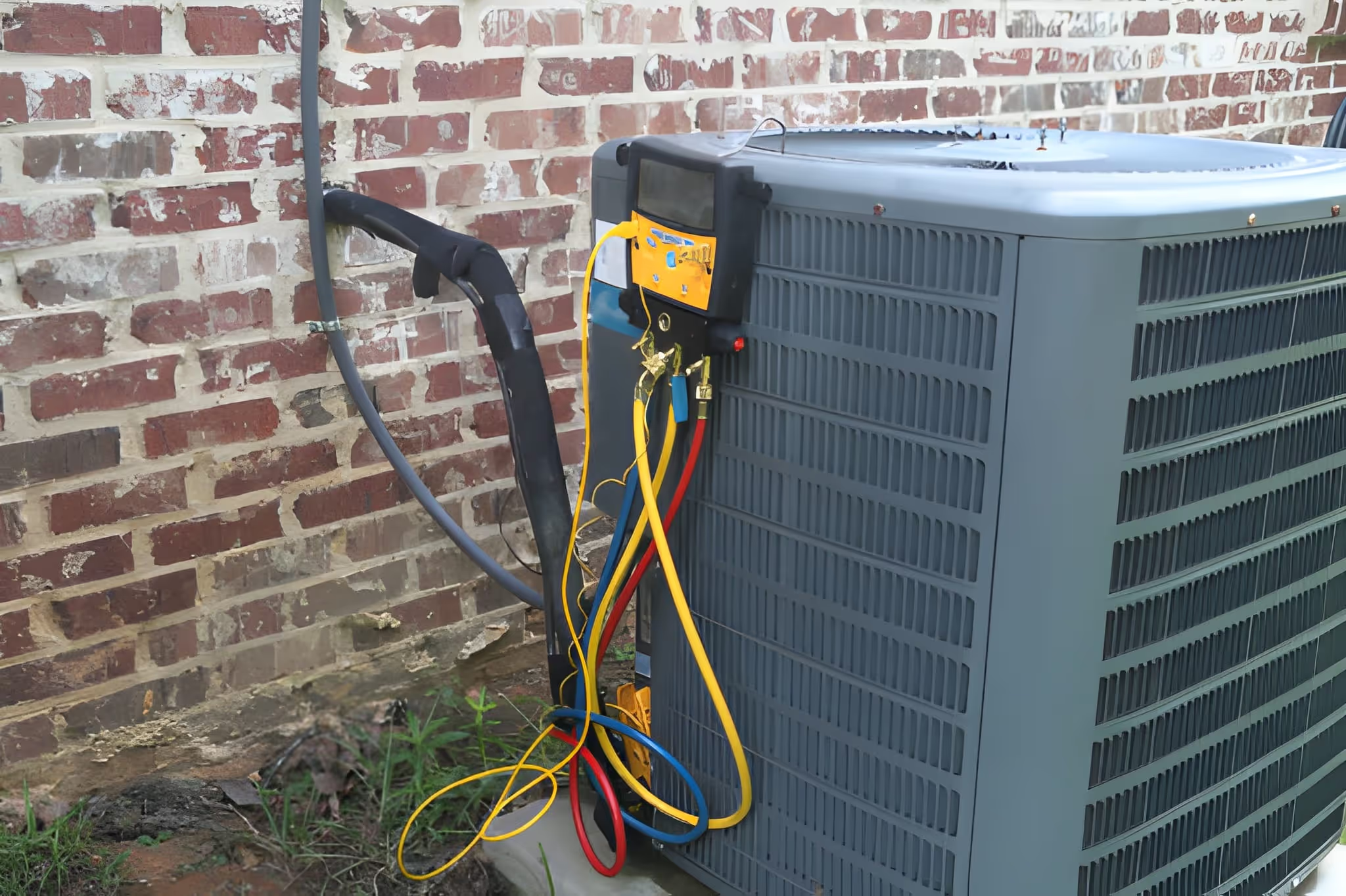
- Measure refrigerant pressures and temperatures to confirm correct charge and detect leaks.
- Compare readings to manufacturer specifications and diagnose undercharge or overcharge conditions.
- Electrical inspection and tightening
- Inspect wiring, terminals, contactors, and control boards for wear, corrosion, or loose connections.
- Tighten electrical connections and test safety switches and fuses to reduce fire risk and intermittent failures.
- Capacitor and contactor testing
- Test capacitors, run capacitors, and contactors for correct operation and capacitance within tolerance.
- Replace marginal parts that could cause compressor or fan motor failure during peak loads.
- Motor, fan, and belt inspection
- Check condenser and blower motors for smooth operation, unusual noise, and proper amperage draw.
- Lubricate motors and bearings when serviceable, and inspect belts for wear and proper tension.
- Blower assembly and airflow measurement
- Clean blower wheel and housing; verify blower motor operation.
- Measure static pressure and airflow to ensure proper distribution and to detect duct restrictions.
- Thermostat calibration and control verification
- Confirm thermostat location, calibration, and correct wiring.
- Test system cycles and control responses to ensure accurate cooling and correct staging.
- Confirm thermostat location, calibration, and correct wiring.
- Condensate drain and pan service
- Clear condensate lines and trap; inspect and clean drain pan to prevent overflow and mold growth.
- Add treatment where needed to reduce future algae and biofilm buildup.
- Safety and performance test
- Verify high and low pressure safety cutouts, ensure proper cycling, and record system operating temperatures for a performance baseline.
- Provide a written report documenting findings, recommended repairs, and performance data.
Specific Maryville considerations technicians check during a Tune-Up
- Outdoor coil obstructions from seasonal tree debris or pollen common near the Great Smoky Mountains foothills.
- Signs of scale or corrosion from humid summers that can accelerate electrical issues.
- Ductwork located in unconditioned crawlspaces with condensation or mold risk in older Maryville homes.
- Attic heat gain patterns that may exacerbate undersized systems during midday peaks.
Common AC problems a Tune-Up prevents
- Reduced cooling capacity or uneven cooling across rooms because of clogged coils, dirty filters, or low refrigerant.
- Short cycling due to improper charge, faulty capacitors, bad thermostats, or restricted airflow.
- Increased energy bills caused by dirty components, poor airflow, or failing motors that force the system to run longer.
- Refrigerant leaks left undetected that damage the compressor and lead to expensive replacements.
- Condensate backups and overflow that cause water damage and indoor air quality issues.
- Electrical failures caused by loose connections, worn contactors, and aging capacitors.
How the Tune-Up process uncovers and solves issues
A Tune-Up is both preventive and diagnostic. Technicians do more than clean: they use measurements and tests to identify failing parts before they break. For example:
- Measuring refrigerant pressures and temperatures will reveal an undercharged system that might otherwise limp through the season and fail when temperatures spike.
- Testing capacitor microfarad values and motor amperage spots a weakening component that could cause a sudden motor failure and larger repair bill.
- Airflow measurements detect clogged ducts or restrictive returns; fixing these restores capacity and reduces run time.
- Tightening electrical connections reduces resistance and heat at terminals, lowering the chance of arcing and sudden shutdowns.
- By replacing worn components during a Tune-Up or providing a prioritized repair list, the technician saves the homeowner emergency service fees and expensive midseason replacements.
Timing and frequency recommendations for Maryville homes
- Annual spring Tune-Up: Schedule a full AC Tune-Up before the first hot spell of the season. For Maryville, ideal timing is March to early May to prepare for humid June through August.
- Twice-yearly service for high-use or older systems: Homes with high cooling loads, systems older than 10 years, or households with sensitive occupants (allergies, immune concerns) will benefit from both spring and fall checks.
- After extreme events: Following storms that drop debris into condenser units or following unusual performance (frequent cycling, odd noises), request a focused inspection to avoid larger failures.
Benefits you can expect from a professional AC Tune-Up
- Improved efficiency and lower monthly energy use: Cleaning coils, replacing filters, and correcting refrigerant charge typically reduce run time and lower electric consumption.
- Fewer breakdowns during peak heat: Addressing failing capacitors, contactors, and loose wiring prevents sudden system stoppages when you need cooling most.
- Extended equipment life: Reducing strain on compressors and motors can add years to the useful life of your system, delaying replacement.
- Better indoor air quality: Replacing or cleaning filters and clearing condensate lines reduces dust, pollen, and biological contaminants.
- More consistent comfort and recovery times: Restoring airflow and coil performance shortens the time it takes for your home to reach target temperatures.
- Safety and warranty compliance: Many manufacturers require annual maintenance for warranty validity. Documentation from a professional Tune-Up supports warranty claims when parts fail.
Y.E.T.I Comfort Plan: membership and maintenance value
Everest Air Heating and Cooling offers the Y.E.T.I Comfort Plan as a membership-based maintenance program tailored for Maryville homes. The plan consolidates preventive care into a predictable package and includes benefits designed specifically to reduce homeowner stress and expense:
- Spring and fall system checkups that align with the ideal service windows for Maryville weather.
- Priority scheduling that helps reduce wait times during peak service periods.
- Discounts on eligible service calls and repairs, ensuring members receive maintenance-first treatment at a consistent level of care.
- Documented maintenance records that support warranty and insurance claims.
- Membership options provide ongoing preventive attention that lowers the likelihood of emergency repairs, improves seasonal performance, and gives homeowners a single, consistent provider who knows their system history.
What to expect on the day of your Tune-Up
- Professional assessment: The technician begins with a system history review and a walkaround to note any accessibility issues or system obstructions.
- Thorough service sequence: The technician follows the multi-point checklist described earlier, using proper tools and gauges to measure performance.
- Transparency and documentation: After completing the Tune-Up, you receive a written report summarizing what was inspected, measurements taken, recommended repairs, and the system’s current performance baseline.
- Safety focus: All work is performed with safety best practices in mind, including proper lockout procedures for electrical components and safe handling of refrigerants per regulations.
How Tune-Ups fit into broader maintenance and repair decisions
- Prioritize small repairs: Tune-Up findings often identify inexpensive fixes, such as replacing a failing capacitor or sealing a duct leak, that yield immediate performance gains.
- Evaluate replacement when appropriate: If a system is old, inefficient, or repeatedly failing, Tune-Up documentation helps determine whether repair or replacement is the most cost-effective option.
- Combine with duct inspection and sealing: For many Maryville homes, improving duct insulation and sealing return leaks complements the Tune-Up and increases overall system effectiveness.
- Track seasonal changes: Annual reports create a historical record showing trends like decreasing refrigerant levels or rising motor amps, which point to looming issues before they become emergent.
Common questions homeowners in Maryville ask about Tune-Ups
Q: How long does a typical AC Tune-Up take?
A: A standard residential AC Tune-Up usually takes 60 to 90 minutes depending on system condition, accessibility, and whether any corrective actions are required. Older or neglected systems may take longer if extensive cleaning or component testing is needed.
Q: Will a Tune-Up fix a unit that is not cooling at all?
A: A Tune-Up will diagnose why a unit is not cooling and may resolve certain issues like dirty coils, clogged filters, or tripped safety switches. However, significant failures such as a burned compressor, major refrigerant leak, or failed control board will require additional repair work beyond a Tune-Up.
Q: How often should I replace air filters in Maryville?
A: Typical disposable filters should be replaced every 1 to 3 months, depending on household factors such as pets, allergies, and usage. During Tune-Ups the technician will recommend the best filter type and cadence for your home.
Q: Does an AC Tune-Up include refrigerant recharge?
A: A Tune-Up includes checking refrigerant charge and diagnosing leaks. Refrigerant recharge is an additional service and is performed only after locating and repairing any leaks according to best practices and regulations.
Q: Will a Tune-Up reduce my energy bills?
A: A properly performed Tune-Up often results in measurable efficiency improvements through restored airflow, clean coils, and correct refrigerant charge, which can reduce run time and lower energy consumption.
Q: Is the Y.E.T.I Comfort Plan worth it?
A: For Maryville homeowners who want predictable maintenance, priority scheduling, and reduced risk of emergency service, the Y.E.T.I Comfort Plan consolidates preventive care and support. Membership typically pays for itself by preventing costly midseason repairs and maintaining efficient operation.
Signs your system needs a Tune-Up now
- Unusual noises such as screeching, grinding, or repeating clicks during startup.
- Noticeably higher electric bills without corresponding temperature changes.
- Weak or uneven airflow from vents or rooms that never reach set temperature.
- Frequent short cycling or the system running constantly without achieving cooling.
- Musty odors or visible mold near registers or the indoor unit indicating blocked drains or microbial growth.
- If any of these signs appear, a professional Tune-Up and inspection can determine whether a simple maintenance action or a repair is required.
Documentation and post-service recommendations
After each Tune-Up, Everest Air Heating and Cooling provides a clear service report detailing:
- Measurements taken during the Tune-Up such as refrigerant pressures, temperature splits, and amperage draw.
- Notes on any worn or failing parts and recommended next steps.
- Preventive recommendations like filter replacement frequency, duct sealing, or attic insulation improvements.
- This documentation helps homeowners plan budgets, track system health over time, and retain warranty eligibility.
Maintenance tips for Maryville homeowners between Tune-Ups
- Replace or clean filters regularly based on recommendations and household conditions.
- Keep outdoor condensers free of plants, toys, and debris; maintain a two-foot clearance around the unit.
- Shade outdoor units when possible without restricting airflow; shading reduces compressor workload during peak heat.
- Ensure attic access panels and duct runs are insulated in older homes to reduce heat gain and increase efficiency.
- Monitor indoor humidity levels and use bathroom and kitchen fans to reduce moisture that can affect coil performance.
hear what our satisfied clients have to say

David P.
Service areas